
Caricamento
Caricamento

The Formula 1 circus arrives in Doha for the 23rd and penultimate round of the 2025 Formula One World Championship, carrying with it a level of tension and narrative complexity rarely seen in the sport's modern history. The 2025 Qatar Grand Prix, set to take place under the dazzling floodlights of the Lusail International Circuit from November 28 to November 30, is no longer just another race on the calendar; it has mutated into a high-stakes arena where the World Drivers' Championship could be decided, or spectacularly prolonged to a winner-takes-all finale in Abu Dhabi.
The paddock enters Qatar in a state of shock following the seismic events of the Las Vegas Grand Prix. What was intended to be a celebratory coronation procession for McLaren has descended into a frantic scramble for survival. The disqualification of both Lando Norris and Oscar Piastri in Nevada---stripping them of critical points due to technical infringements---has fundamentally rewritten the script of the season's climax. The comfortable buffer Lando Norris enjoyed has evaporated, leaving him exposed to the relentless pursuit of Max Verstappen, the defending champion who smells blood in the water.
This weekend in Qatar is also a Sprint weekend---the sixth and final one of the 2025 season---which injects further volatility into the equation. With a maximum of 34 points available across the Sprint and the Grand Prix, the margin for error is non-existent. Teams are not only battling each other but are also warring against the circuit itself. The Lusail International Circuit, a high-speed ribbon of asphalt originally designed for motorcycle racing, imposes such ferocious lateral loads on the cars that Pirelli has been forced to mandate a strict 25-lap limit on tyre life to prevent catastrophic structural failure. This intervention transforms the strategic landscape from a game of conservation into a series of flat-out sprints, removing the art of tyre management and replacing it with raw, unadulterated speed.
As the sun sets over the Persian Gulf and the humidity rises, the stage is set for a confrontation that will define careers. McLaren arrives as the newly crowned Constructors' Champions, a title they secured in Singapore, yet their focus is entirely on salvaging the Drivers' title that threatens to slip through their fingers. Red Bull, wounded but dangerous, arrives with a car that has struggled for balance but remains lethal in the hands of Verstappen. Ferrari and Mercedes, with their star-studded lineups including the debuting Kimi Antonelli and the departing Lewis Hamilton, stand ready to play the role of kingmakers. This report provides the definitive, exhaustive guide to every facet of the upcoming weekend, analyzing the technical, sporting, and strategic elements that will determine the outcome of the 2025 Qatar Grand Prix.
To truly comprehend the gravity of the upcoming weekend in Lusail, one must first dissect the tectonic shifts that occurred on the streets of Las Vegas mere days ago. The 2025 season has been a year of two halves: the early dominance of Red Bull followed by the meteoric, irresistible rise of McLaren. However, the narrative arc took a sharp, jagged turn in Nevada, creating a psychological and mathematical pressure cooker heading into Qatar.
The Las Vegas Grand Prix was poised to be the moment Lando Norris placed one hand firmly on the World Championship trophy. Having crossed the line in second place, Norris appeared to have successfully limited the damage inflicted by a race-winning Max Verstappen. Combined with Oscar Piastri's fourth-place finish, McLaren seemed to have weathered the storm.
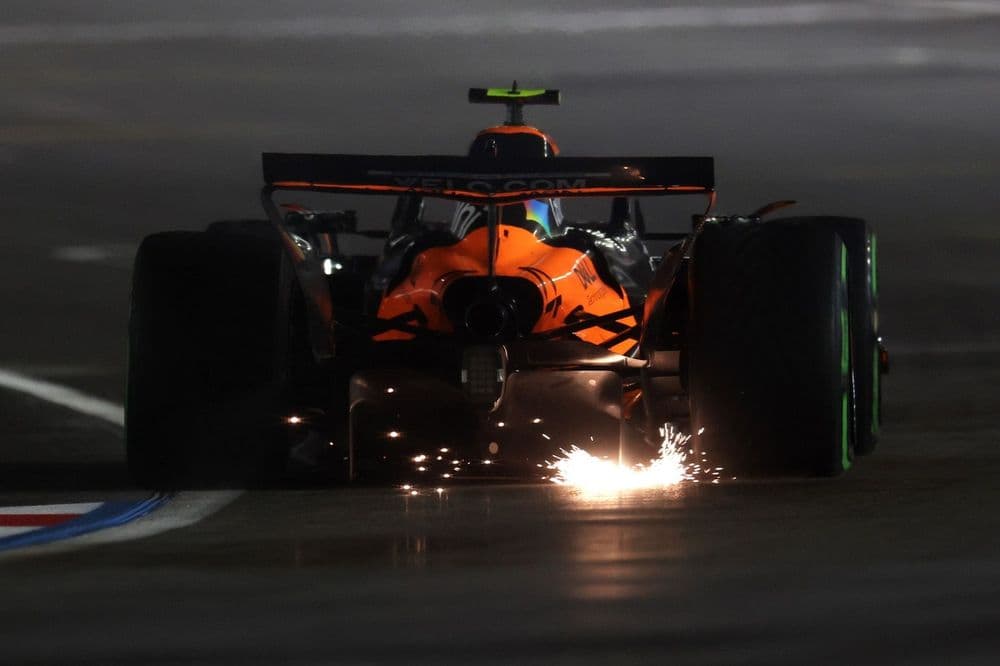
However, in the dark hours following the race, the FIA technical delegates discovered a breach that would send shockwaves through the sport. The skid blocks---or "planks"---on the underside of both McLaren MCL39s were found to be worn beyond the permissible tolerance defined in the Technical Regulations. The rules state that the plank, a composite material strip running along the centerline of the car's floor, must maintain a minimum thickness of 9mm. The FIA's measurements, conducted with high-precision Mitutoyo micrometers, revealed that the planks on both car #4 (Norris) and car #81 (Piastri) were marginally below this threshold.
The consequences were absolute and devastating. Disqualification is the standard penalty for technical infringements, regardless of intent. Norris lost his 18 points for second place; Piastri lost his 12 points for fourth.
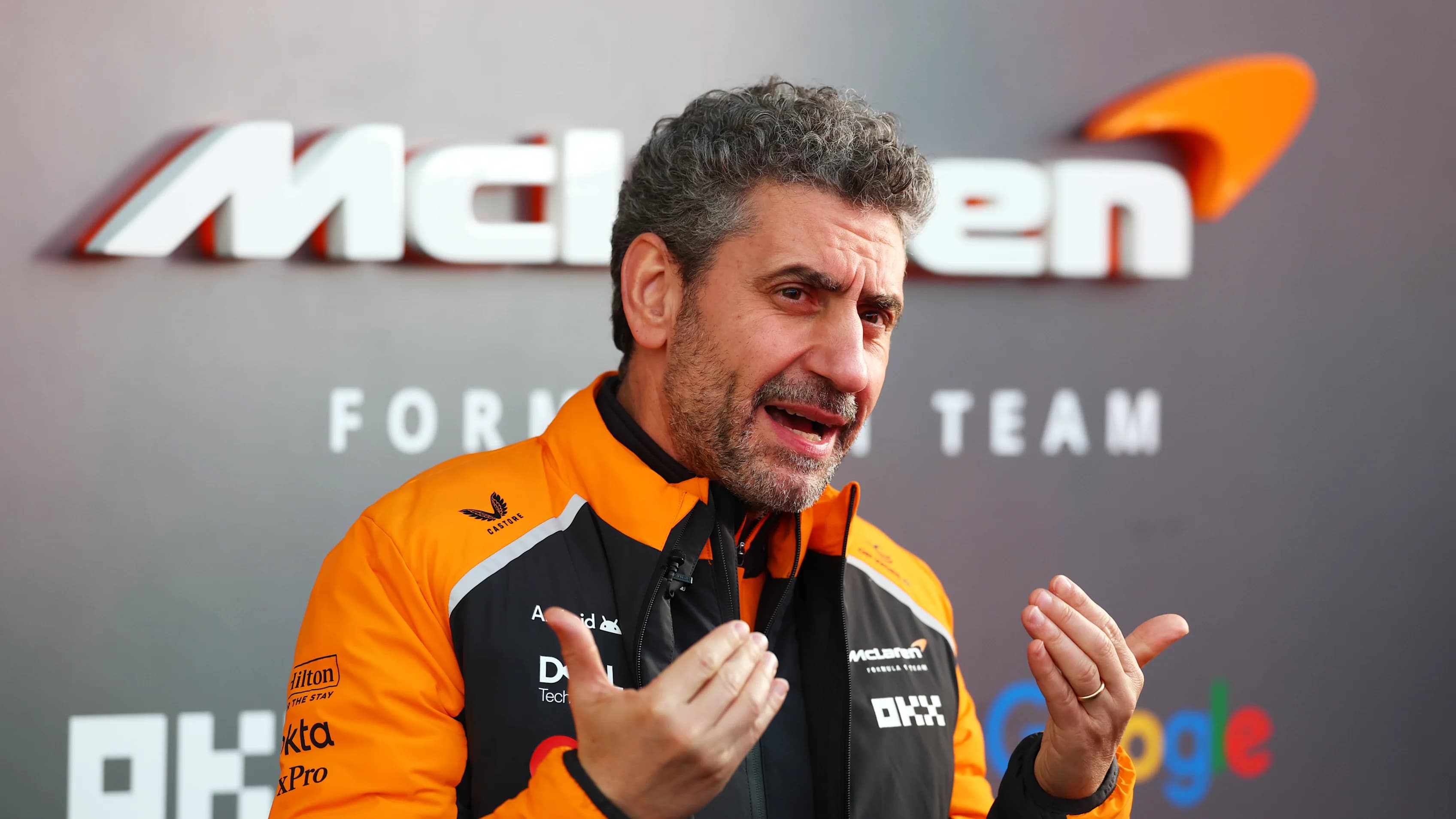
McLaren Team Principal Andrea Stella later revealed the cause of the infringement. The team had encountered unexpected "high levels of porpoising" during the race---a violent aerodynamic oscillation where the car bounces on its suspension---that was not present during practice sessions.
Setup error: In an attempt to maximize aerodynamic efficiency and compensate for the MCL39's drag deficit on the long Las Vegas straights, McLaren had run the cars with an aggressively low ride height.
Conditions: The colder temperatures and lack of fuel load data for long runs (due to disrupted practice sessions) meant the team miscalculated the dynamic ride height evolution as the fuel burned off and speeds increased.
Result: The car bottomed out aggressively against the track surface, grinding away the plank material.
This "egregious error," as described by some analysts, essentially handed a lifeline to Max Verstappen. Had the results stood, Norris would have likely carried a lead of over 40 points into Qatar, needing only a steady finish to clinch the title. Instead, the gap was slashed, and the psychological momentum swung violently back toward the Red Bull garage.
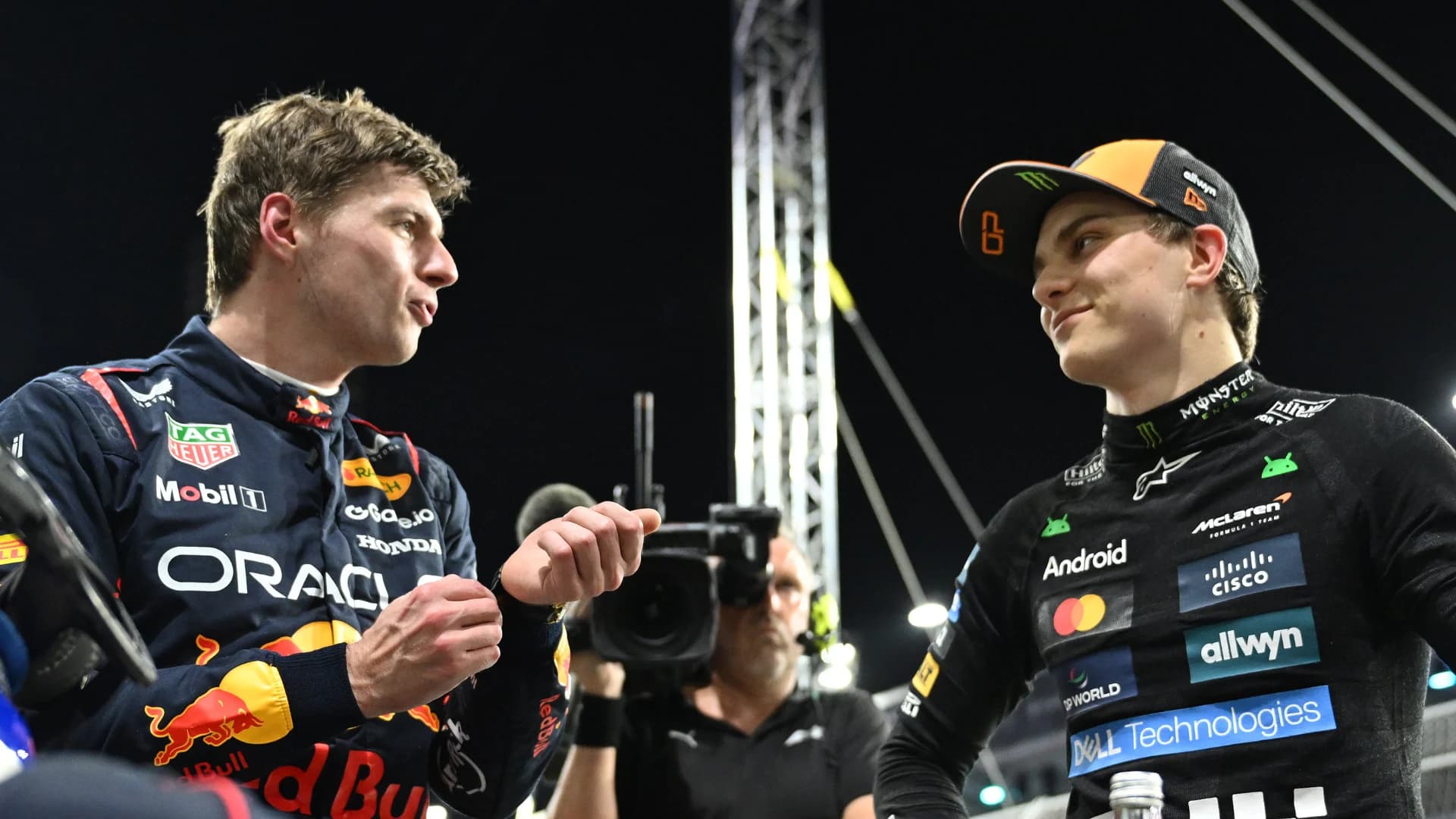
The disqualifications have compressed the championship battle into a claustrophobic fight for survival. As the paddock sets up in Lusail, the standings present a scenario where a single DNF (Did Not Finish) or a strategic error could decide the title instantly.
Lando Norris (390 pts): Still leads, but the 24-point buffer is dangerously thin. A race win is worth 25 points. If Norris fails to finish in Qatar and Verstappen wins, Verstappen would take the championship lead heading into the final round.
Oscar Piastri & Max Verstappen (366 pts): Tied for second place. This creates a fascinating dynamic. Piastri is technically Norris's teammate, but he is mathematically level with the primary rival. Does he race for himself or for the team? Verstappen, meanwhile, has nothing to lose. He has won the Qatar Grand Prix for the last two years running (2023, 2024) and knows the track favors his aggressive driving style.
It is important to note that the Constructors' Championship is already decided. McLaren secured their 10th title---and their first since 1998---at the Singapore Grand Prix earlier in the season. With 756 points, they are mathematically unreachable by Mercedes (431 pts) or Red Bull (391 pts). This liberation from the team title fight means McLaren can, in theory, throw all their resources behind their drivers. However, it also removes the unifying goal that keeps teammates from fighting each other; without the team title at stake, the drivers' rivalry could become ungovernable.
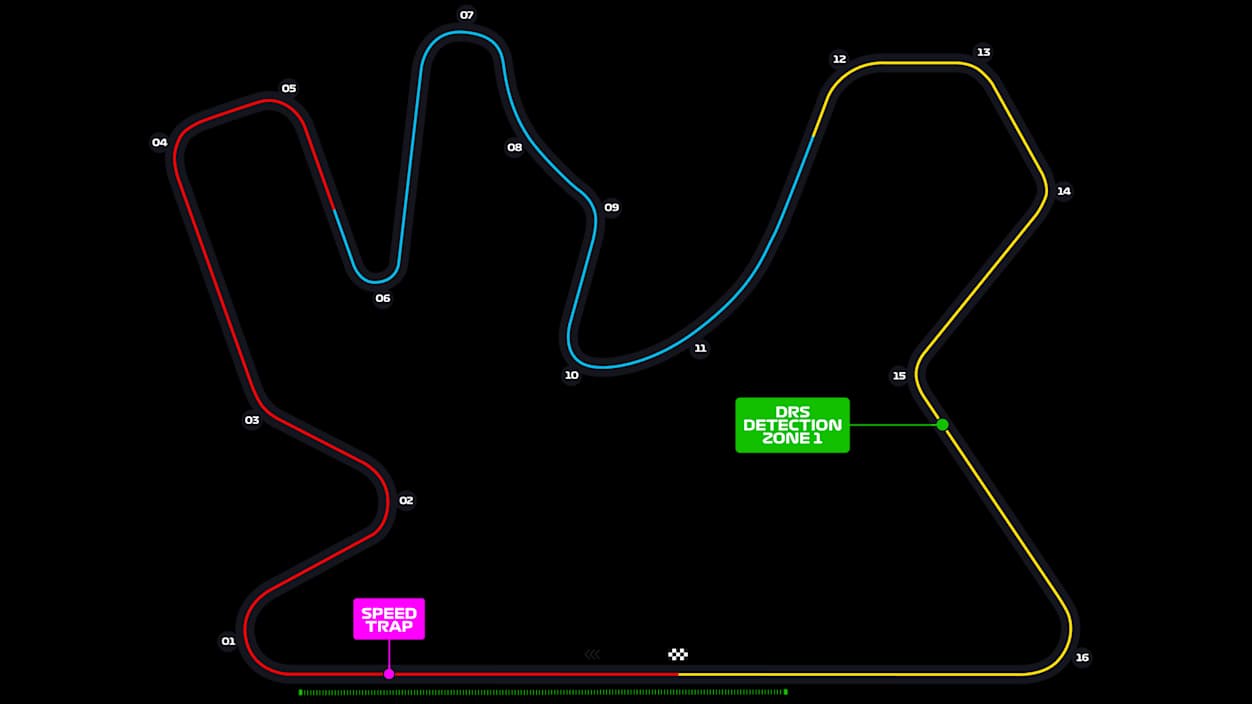
The venue for this high-stakes drama is the Lusail International Circuit, located on the outskirts of Doha. Originally built in 2004 to host MotoGP, the circuit was a late addition to the F1 calendar in 2021 to replace the cancelled Australian Grand Prix, before securing a 10-year contract starting from 2023. It is a track that polarizes opinion but undeniably tests the limits of modern Formula 1 machinery.

The circuit is distinct from the modern "Tilkedromes" (tracks designed by Hermann Tilke) that feature stop-start chicanes and hairpins. Instead, Lusail is a flowing, organic ribbon of asphalt that prioritizes high-speed cornering above all else.
Circuit Length: 5.419 km (3.367 miles).
Race Distance: 57 laps (308.611 km).
Corner Count: 16 turns (10 right-handers, 6 left-handers).
Direction: Clockwise.
DRS Zones: 1 (Main Straight).
Lap Record: 1:22.384, set by Lando Norris in the 2024 race.
Pit Lane Time Loss: Approximately 26.28 seconds (one of the longer losses on the calendar).
The defining characteristic of Lusail is its "continuous flow." From the moment the cars exit Turn 1 until they cross the finish line, they are almost constantly turning.
Lateral Load: The circuit generates some of the highest sustained lateral G-forces of the year. Corners like the triple-apex sequence of Turns 12-13-14 see drivers pulling 4G to 5G for several seconds at a time. This places immense physical strain on the drivers' neck muscles and cardiovascular systems.
Average Speed: The average cornering speed is exceptionally high. Unlike circuits with slow hairpins (e.g., Montreal or Bahrain), Lusail's "slow" corners are still taken at speeds that would be considered "medium" elsewhere.
Aerodynamic Dependency: The track is a pure test of aerodynamic efficiency (lift-to-drag ratio) and downforce generation. The car must be glued to the track in the high-speed sectors (Sector 2 and 3) but slippery enough to defend on the 1.068 km main straight.
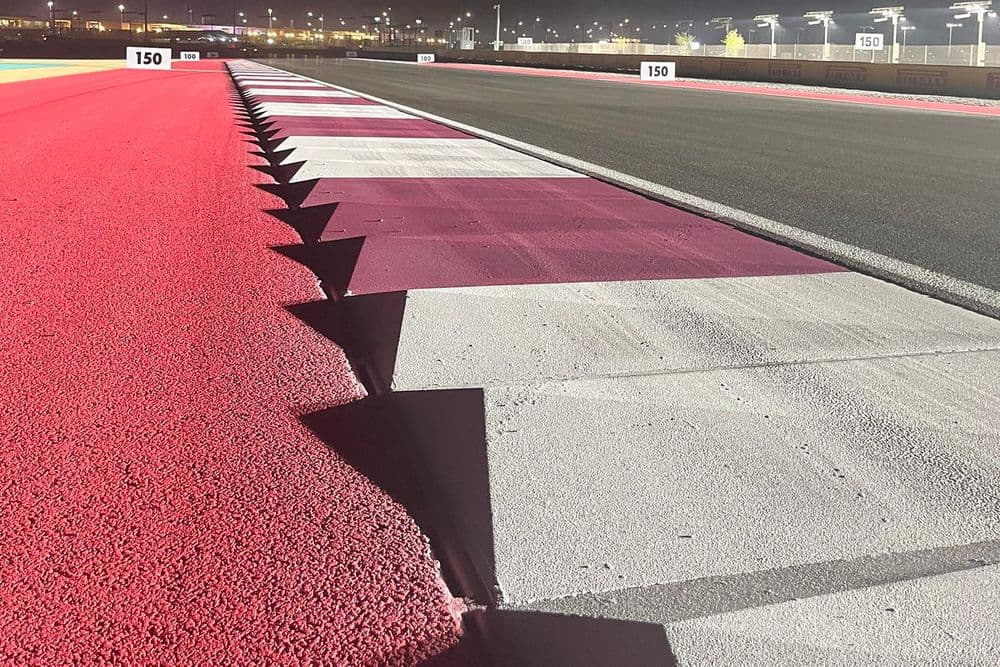
The circuit features "pyramid" style kerbs on the exits of corners. These kerbs are designed to deter track limits abuse by motorcycles, but for F1 cars, they act as serrated blades.
The Mechanism of Failure: When an F1 car runs wide over these kerbs at high speed, the sidewall of the tyre---the weakest part of the construction---is hammered against the pyramid edges. This repeated high-frequency impact creates "micro-lacerations" in the rubber and separates the carcass from the tread.
History: In 2023 and 2024, analysis showed that tyres were failing structurally after roughly 20 laps of abuse. This physical reality is the direct cause of the strict tyre mandates enforced for the 2025 event.
Understanding where the race will be won or lost requires a granular look at the lap. While overtaking is historically difficult due to the "dirty air" wash in high-speed corners, the 2025 aerodynamic regulations and DRS zones do provide windows of opportunity.
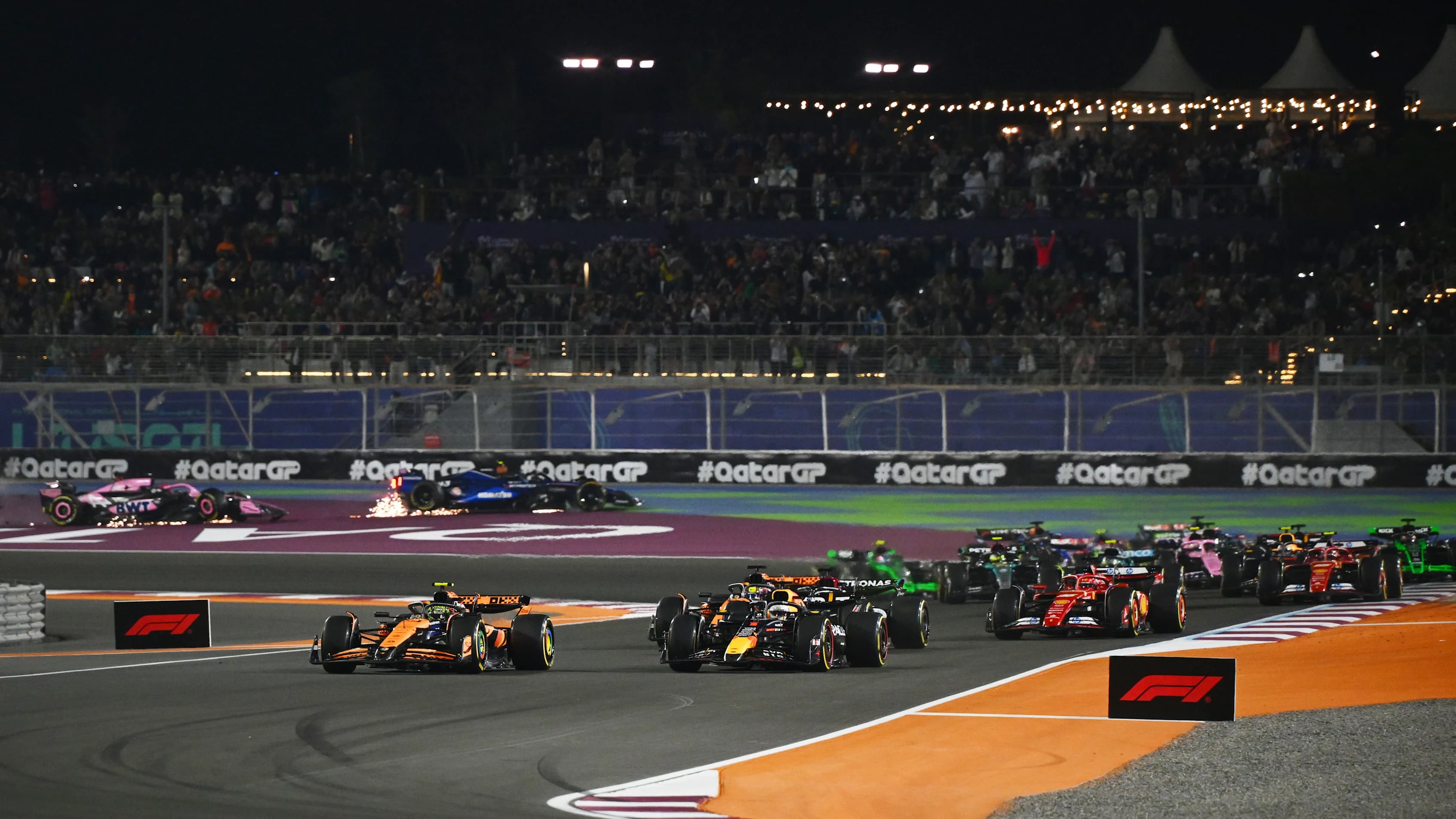
The lap begins on the massive main straight. This is the only DRS zone and the primary overtaking spot.
Turn 1: The cars arrive at over 320 km/h before braking heavily for this medium-speed right-hander. This is the best place to pass. The braking zone is roughly 100 meters long. The key is to brake late but ensure the car is rotated early to get a clean exit.
Turn 2 & 3: A quick left-right switchback. If a driver defends the inside of Turn 1, they are often compromised on the exit, leaving them vulnerable to a "cutback" move into Turn 2.
Turn 4 & 5: Two sweeping right-handers that load the front-left tyre immediately. These are not overtaking spots but are critical for setting up the rhythm for the next sector.
This is where the car's downforce capabilities are exposed.
Turn 6: The slowest corner on the track (approx. 100 km/h). It is a tight left-hander. It is a potential, albeit risky, overtaking spot if a driver gets a poor run out of Turn 5.
Turns 7, 8, 9, 10: A relentless sequence of high-speed sweeps. There is no opportunity to pass here; the goal is simply to survive and maintain minimum apex speed. Following a car closely here shreds the tyres due to sliding in the turbulent wake.

The final sector is a test of endurance and bravery.
Turn 12, 13, 14 (The Triple Right): This sequence mimics the famous Turn 8 in Istanbul Park. It is effectively one long corner with three apexes. The load on the front-left tyre here is immense. Drivers must manage the throttle delicately to avoid understeer pushing them wide onto the abrasive exit kerbs.
Turn 15: A fast right-hander that sets up the finale.
Turn 16: The final corner. It is a medium-speed exit that leads onto the main straight. A mistake here is fatal for lap time; running wide into the gravel or losing traction means being a sitting duck on the straight.
The single most significant variable for the 2025 Qatar Grand Prix is not the drivers or the cars, but a regulatory intervention by Pirelli and the FIA. Due to the destructive nature of the Lusail kerbs, a strict safety mandate has been imposed that fundamentally alters the strategic approach to the race.
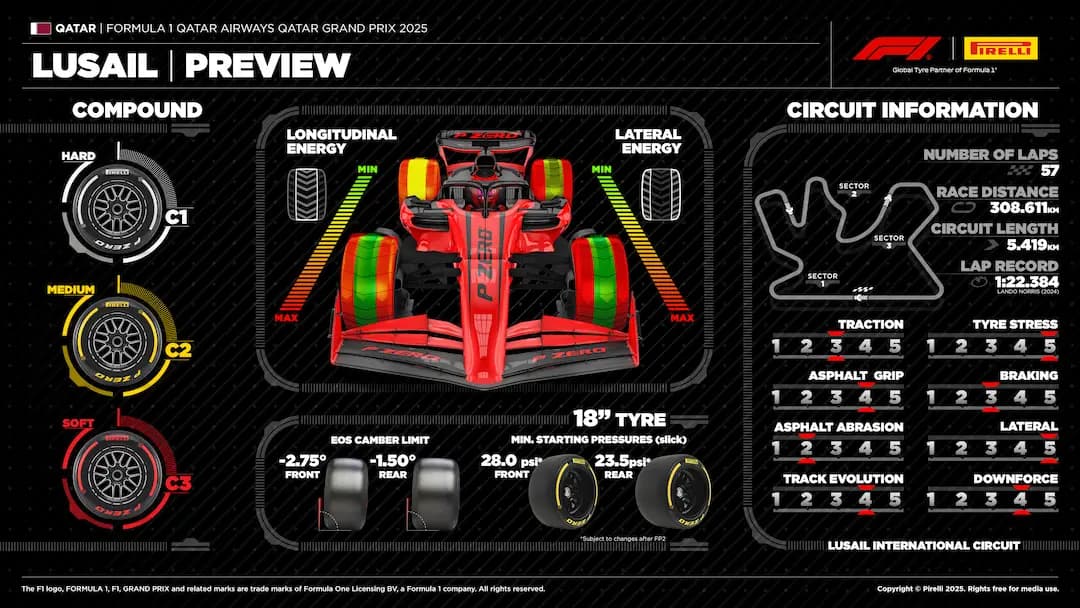
Pirelli has decreed that no set of tyres may be driven for more than 25 laps.
Scope: This rule applies to any set of slick tyres used during the race.
Accounting: The lap count includes laps done in previous sessions (e.g., if a used set from Qualifying is fitted, those laps count towards the 25).
Safety Car: Laps spent behind the Safety Car or Virtual Safety Car (VSC) do count towards the limit.
Exclusions: Formation laps and cool-down laps are excluded.
This is a "hard" limit. Exceeding it results in disqualification (black flag). Teams will have sophisticated software counting the revolutions of every wheel to ensure they do not accidentally run to lap 26.
To combat the abrasion, Pirelli has brought the hardest compounds in their range:
C1 (Hard - White Sidewall): The primary race tyre. Robust, lower degradation, but lower grip.
C2 (Medium - Yellow Sidewall): The versatile option. Offers a balance of grip and durability.
C3 (Soft - Red Sidewall): The qualifying tyre. Likely too fragile for extended race stints, though useful for the Sprint or a short dash at the end of the GP.

In a standard 57-lap race, teams might try a one-stop strategy (e.g., Medium to Hard) to save the 26 seconds lost in the pit lane. The 25-lap limit makes this mathematically impossible.
Math: 25 laps (Stint 1) + 25 laps (Stint 2) = 50 laps. The race is 57 laps.
Result: Every driver must stop at least twice. A three-stop strategy is also a viable, perhaps even preferred, option.
Strategic Scenarios:
The Safe Two-Stop:
Start: Medium (Lap 1-19)
Pit 1: Hard (Lap 20-38)
Pit 2: Hard (Lap 39-57)
Analysis: This balances pit loss with tyre life. However, it requires doing 19 laps on a set, which might be close to the "performance cliff" even if it's safe structurally.
The Aggressive Three-Stop:
Four stints of ~14 laps each.
Analysis: This strategy allows drivers to treat the Grand Prix as four separate sprint races. They can run lower fuel saving, aggressive engine modes, and push the tyres to the limit without worrying about degradation, as they will pit long before the rubber wears out.
Risk: Traffic. Stopping three times drops the driver back into the midfield repeatedly. Overtaking is difficult, so getting stuck behind a Williams or Alpine for two laps could ruin the strategy.
Impact on Teams:
Ferrari: Historically good at tyre preservation. This mandate hurts them because their advantage (extending stints) is illegal here.
Mercedes/McLaren: These cars generate massive downforce and heat. They can now push flat out without fear of overheating the tyres over a long 40-lap stint. This favors them.
While Qatar is a desert nation, the micro-climate of the Lusail coast presents specific challenges for F1 engineers.
Precipitation: 0% Chance. It will be a dry weekend.
Temperature:
Daytime Highs: ~28°C (82°F).
Track Temperature (Night): Dropping to 21°C--24°C (70°F--75°F) once the sun sets.
Context: This is significantly cooler than the brutal 2023 race held in October, where drivers suffered heat exhaustion. The 2025 edition will be physically demanding due to G-forces, but thermal heat stress should be manageable.
The most critical weather variable is the wind. The forecast predicts light-to-moderate winds from the North/North-East.

The mathematics of the title fight are complex due to the presence of the Sprint race and the 1-point fastest lap bonus.
Points available in Qatar:
Sprint Win: 8 points.
Grand Prix Win: 25 points.
Total Max: 33 points.
Points remaining after Qatar (Abu Dhabi):
Lando Norris leads by 24 points. To be crowned world champion on Sunday night in Qatar, he must leave the circuit with a lead of 26 points or more over both Piastri and Verstappen.
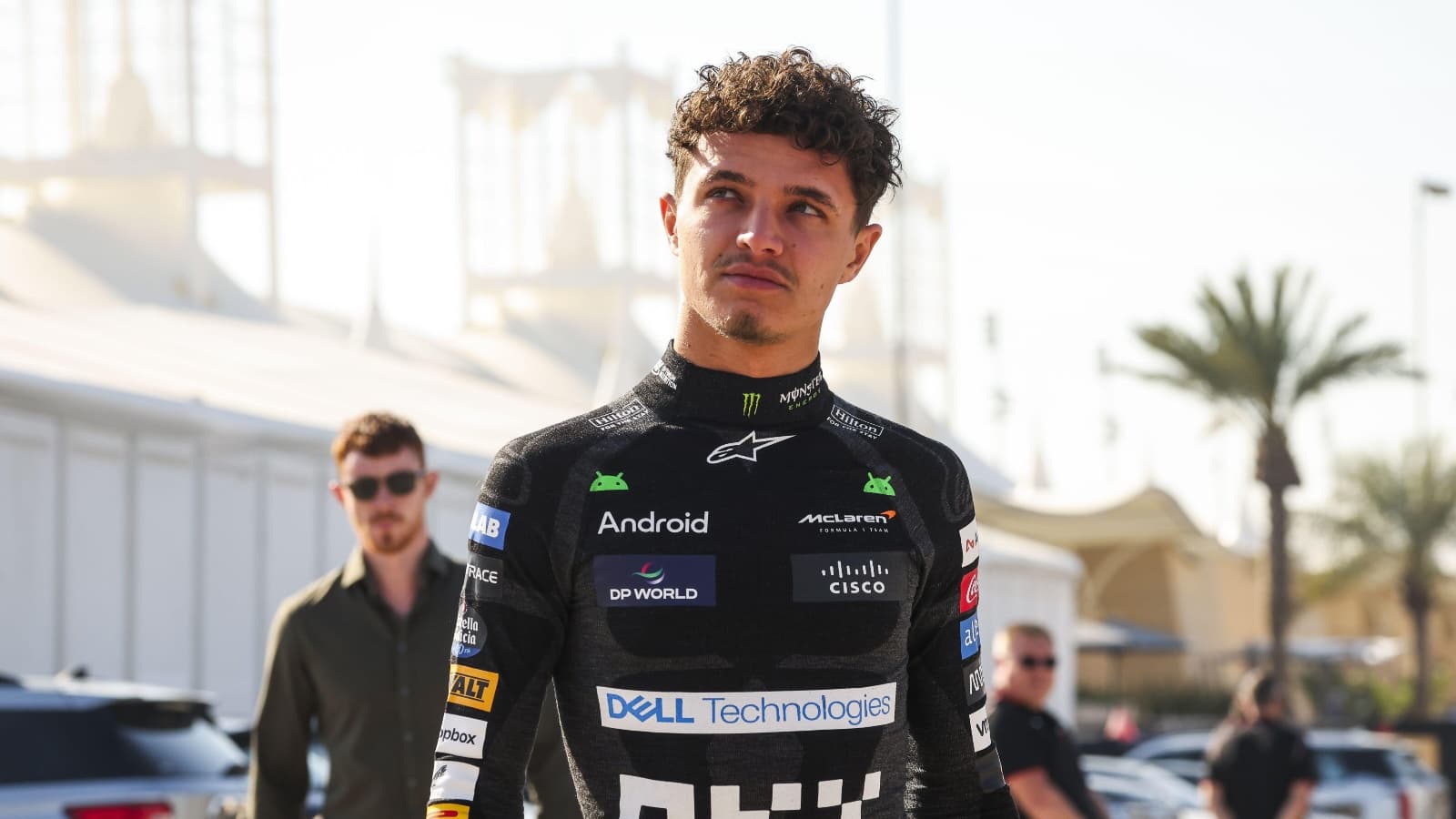
Winning scenarios for Norris:
Scenario A (Dominance): Norris wins the Sprint (8 pts) and the Grand Prix (25 pts) = 33 pts. Even if Verstappen finishes 2nd in both (7 + 18 = 25 pts), Norris gains 8 points, extending his lead to 32. Result: Norris Champion.
Scenario B (Consistency): Norris finishes 2nd in both races, and Verstappen/Piastri finish 3rd or lower.
The tie-breaker danger:
If Norris leaves Qatar with a lead of exactly 25 points, the title is not won. Why? Because if he DNFs in Abu Dhabi and Verstappen wins (25 pts), Verstappen would win the title by 1 point. Even if they tied on points, Verstappen currently has 8 wins to Norris's 7 (projected). Verstappen wins the tie-break. Therefore, Norris needs a 26-point buffer to be safe.
For Verstappen and Piastri (both on 366 points), the goal is simple: do not let Norris gain 2 points.
Verstappen: He needs to beat Norris on track. If he finishes ahead of Norris in either the Sprint or the GP, he effectively pushes the fight to Abu Dhabi.
Piastri: His situation is complicated by team orders. Will McLaren ask him to yield to Norris to secure the Drivers' title? Or, given the DSQ and the fact he is tied with Verstappen, will he be allowed to fight?
Car: MCL39
Strengths: High-speed cornering downforce. The MCL39 is the benchmark in sectors 2 and 3 of Lusail. It generates efficient downforce without excessive drag.
Weaknesses: Ride height sensitivity (as seen in Vegas). The team will be forced to run the car slightly higher to avoid another plank wear disqualification, which costs downforce.
Outlook: They are the favorites for raw pace. However, the psychological blow of the Vegas DSQ cannot be underestimated. The pressure on the pit wall to execute perfect strategy and avoid penalties is crushing.
Car: RB21
Driver Note: Snippets indicate Yuki Tsunoda is listed alongside Verstappen in 2025 standings contexts, implying a promotion or a significant role shift, though other data lists Lawson. Regardless, Verstappen is the sole focus.
Strengths: Verstappen's affinity for this track. He won here in '23 and '24. The RB21 has improved its ride over kerbs recently.
Weaknesses: Balance. The car has had a tendency to disconnect the front and rear axles in long corners this year. If they haven't fixed this, the Triple Right (Turns 12-14) will be a nightmare of understeer.
Outlook: Verstappen is the "disruptor." He doesn't need to have the fastest car to win; he just needs to apply pressure and wait for McLaren to crack.
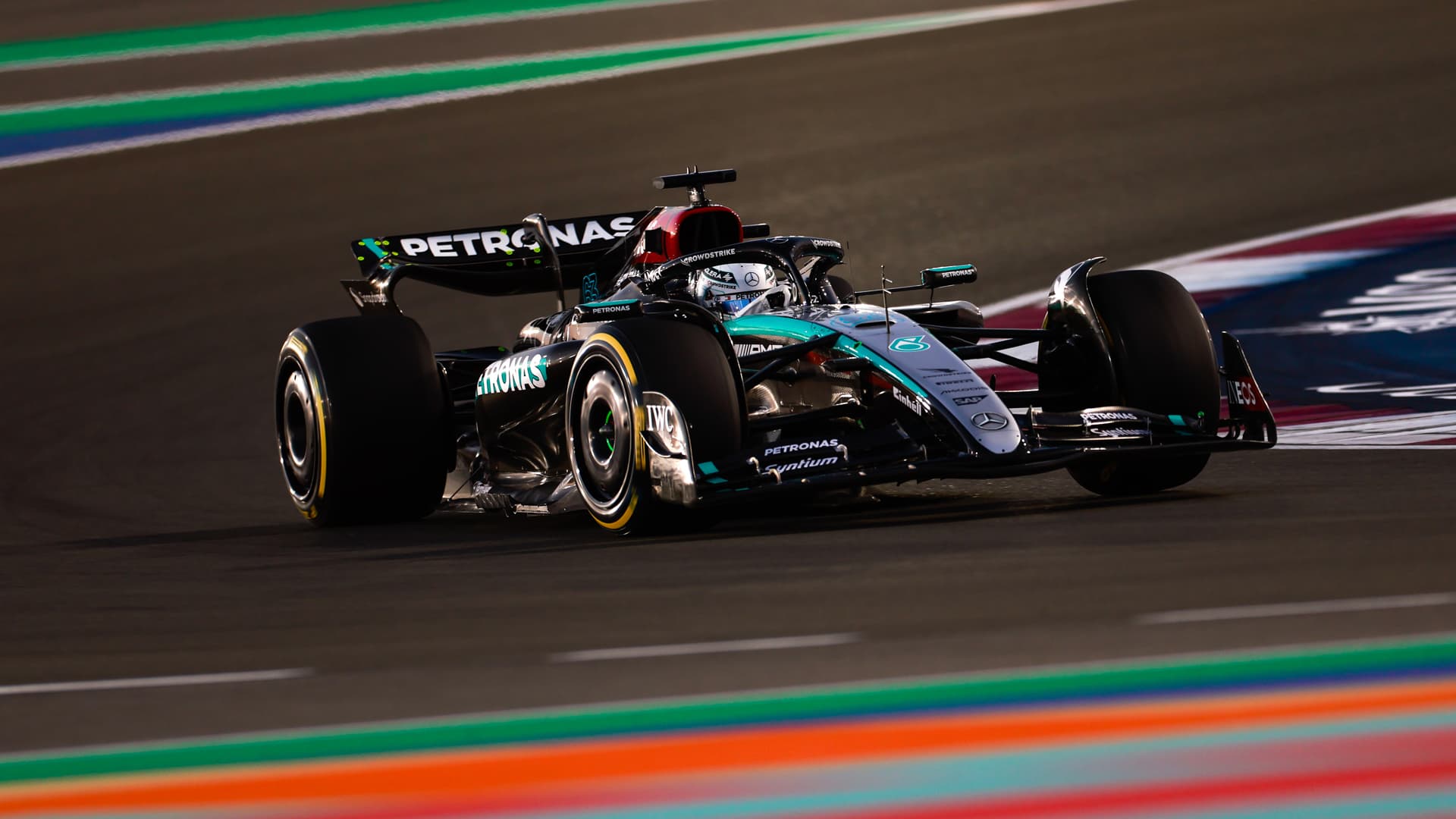
Car: W16
Driver Note: Rookie sensation Kimi Antonelli has replaced Lewis Hamilton (who moved to Ferrari). This is a massive test for the young Italian.
Strengths: Straight-line speed and engine power. The Mercedes power unit is strong, which helps on the main straight.
Weaknesses: Tyre overheating. Usually a problem, but the 25-lap limit might actually help them masked this issue.
Outlook: Russell is fighting for P4 in the championship. Antonelli is fighting to prove he belongs. A podium would be a stellar result.
Car: SF-25
Driver Note: Lewis Hamilton is now in Scarlet, partnering Leclerc. A "Superteam" lineup.
Strengths: Traction and braking.
Weaknesses: High-speed lateral stability. The SF-25 prefers stop-start tracks. Lusail is the opposite.
Strategic Impact: As mentioned, the tyre limit hurts Ferrari the most. Their strategic creativity is stifled.
Outlook: Likely the third or fourth fastest team this weekend. P5-P8 is the realistic target unless they have found a "magic bullet" setup.
Williams (Carlos Sainz / Alex Albon): With Sainz now at Williams, the team has a formidable lineup. The FW47 is slippery (low drag), so they will be fast on the straight. They could be spoilers for the top teams.
Racing Bulls (Liam Lawson / Isack Hadjar): Fighting for P6 in the constructors. They need points.
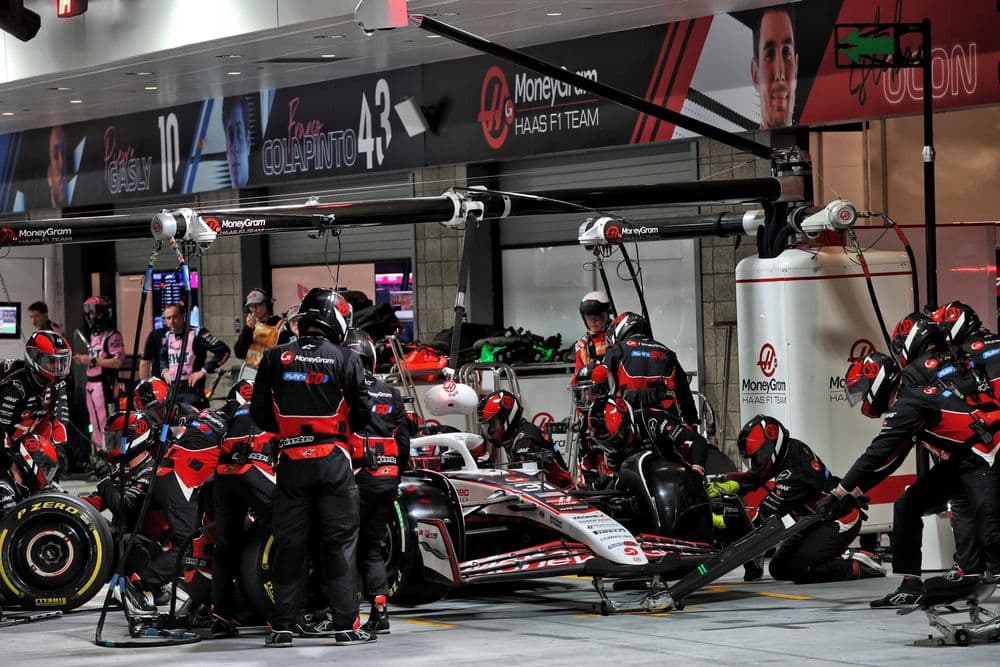
Haas (Esteban Ocon / Oliver Bearman): The Haas eats tyres. The 25-lap limit is a godsend for them. They can push without managing degradation. Dark horses for points.
The 2025 Qatar Grand Prix is poised to be a thriller not because of artificial gimmicks, but because of the raw intensity of the sporting situation. We have a championship leader, Lando Norris, who has just been delivered a staggering blow in Las Vegas. We have a challenger, Max Verstappen, who has been gifted a second life. And we have a regulatory environment---the 25-lap tyre limit---that forces every driver to abandon caution and drive flat-out for 57 laps.
What to Watch For:
Turn 1, Lap 1: With the championship on the line, how aggressive will Verstappen be if he is near Norris? The history of their battles suggests "yield or crash."
The Pit Stops: With 2-3 stops mandatory per car, the pit crews will perform over 40 stops during the race. A single jammed wheel nut could decide the World Championship.
McLaren's Nerve: Can the Woking team recover their composure after the Vegas disqualification? Or will the pressure cause further operational cracks?
The floodlights are on. The desert air is cooling. The stage is set for one of the most significant races in Formula 1 history.

È un ingegnere informatico con una grande passione per la Formula 1 e gli sport motoristici. Ha co-fondato Formula Live Pulse per rendere accessibili, visibili e facili da seguire i dati telemetrici in tempo reale e le informazioni sulle gare.
Commenti (0)
Nessun commento ancora
Sii il primo a condividere i tuoi pensieri!
Caricamento articoli...