


From formation lap despair to Red Bull glory: Isack Hadjar's remarkable rookie turnaround
Isack Hadjar's entry into Formula 1 could hardly have been more dramatic. What promised to be a thrilling debut for the French-Algerian rookie transformed into a nightmare within moments, testing his mental fortitude in ways few drivers experience. Yet his extraordinary recovery—culminating in a podium finish and confirmation as Red Bull's second driver for 2026—stands as a testament to resilience and the razor-thin margin between F1 heartbreak and triumph.
The formation lap nightmare: when dreams collide with reality
The 2025 Australian Grand Prix began with genuine promise for Hadjar. Racing for the Red Bull junior team, Racing Bulls, the 20-year-old had earned an impressive 11th-place grid slot—the highest qualifying position among the race's rookies. His performances across Friday and Saturday practice sessions had drawn praise, with his qualifying effort suggesting genuine competitive pace despite the challenging wet conditions at Albert Park.
However, fortune would not smile on him. Before the first lap was even completed, Hadjar's maiden F1 race came to an abrupt end. As he negotiated the ascending gear changes out of Turn Five in the rain-soaked conditions, the rear of his Racing Bulls machine snapped away with devastating suddenness. The rookie lost control, spun into the outside wall, and triggered the race's first of three Safety Cars. Not only had his debut race ended before it began—he hadn't even completed the formation lap.
The emotional aftermath: a world collapsing
The immediate aftermath proved equally difficult. Hadjar was visibly devastated as he walked through the F1 paddock in tears, requiring consolation from Anthony Hamilton, father of Lewis Hamilton. The emotional weight of the moment drew mixed reactions from the paddock. While some, like Anthony Hamilton, recognized the pressure and acknowledged his solid qualifying performance, others were less sympathetic. Red Bull advisor Helmut Marko notably characterized Hadjar's tears as "a bit embarrassing," highlighting the unforgiving nature of Formula 1's hierarchy.

Yet Hadjar's perspective on this crisis would prove more constructive. Speaking candidly on Red Bull's Talking Bull podcast, he articulated the raw emotion of the moment: "For me, my world collapsed that day. In the car, the emotions were very, very high."
Five days to redemption: the Shanghai opportunity
What could have spiraled into a confidence-crushing start instead became a catalyst for immediate action. With the calendar providing only five days before the second round in Shanghai, Hadjar adopted a resolute mindset. "I'm in a sport where it's not like you have a fight every six months, you get to run it back five days later. And that's when I saw my opportunity," he explained.
Rather than dwelling on the crash, Hadjar channeled his pain into preparation. "I was like, 'OK, I'm going to have a painful five days now thinking of that mistake, but I know I'm going to jump back in the car and show everyone what I can do.'" This psychological resilience paid immediate dividends at the Shanghai International Circuit, where he delivered his best qualifying performance to date.
Building momentum: points, podiums, and promotions
The recovery truly accelerated at Japan's Suzuka Circuit, where Hadjar secured his maiden F1 points with an eighth-place finish. Far from merely collecting championship points, the significance transcended statistics. For a driver who had grown up watching Formula 1 and racing on Suzuka's legendary simulator, the symbolic value proved immeasurable. "You know what, it's not even just the points, it's the fact that it's such a legendary track," Hadjar reflected, adding that the combination of his first points and his deep affection for Japan's culture made Suzuka the perfect venue for this milestone.
Yet the story's arc continued climbing skyward. As the 2025 season progressed, Hadjar's consistency and pace matured markedly. The breakthrough moment arrived at the Dutch Grand Prix, where he claimed his first F1 podium, finishing behind race winner Oscar Piastri and four-time champion Max Verstappen. This podium finish crystallized what team principals and Red Bull's hierarchical apparatus had observed throughout his rookie campaign—that Hadjar possessed elite-level potential worthy of elevation.
From F2 doubt to Red Bull confirmation: the complete picture
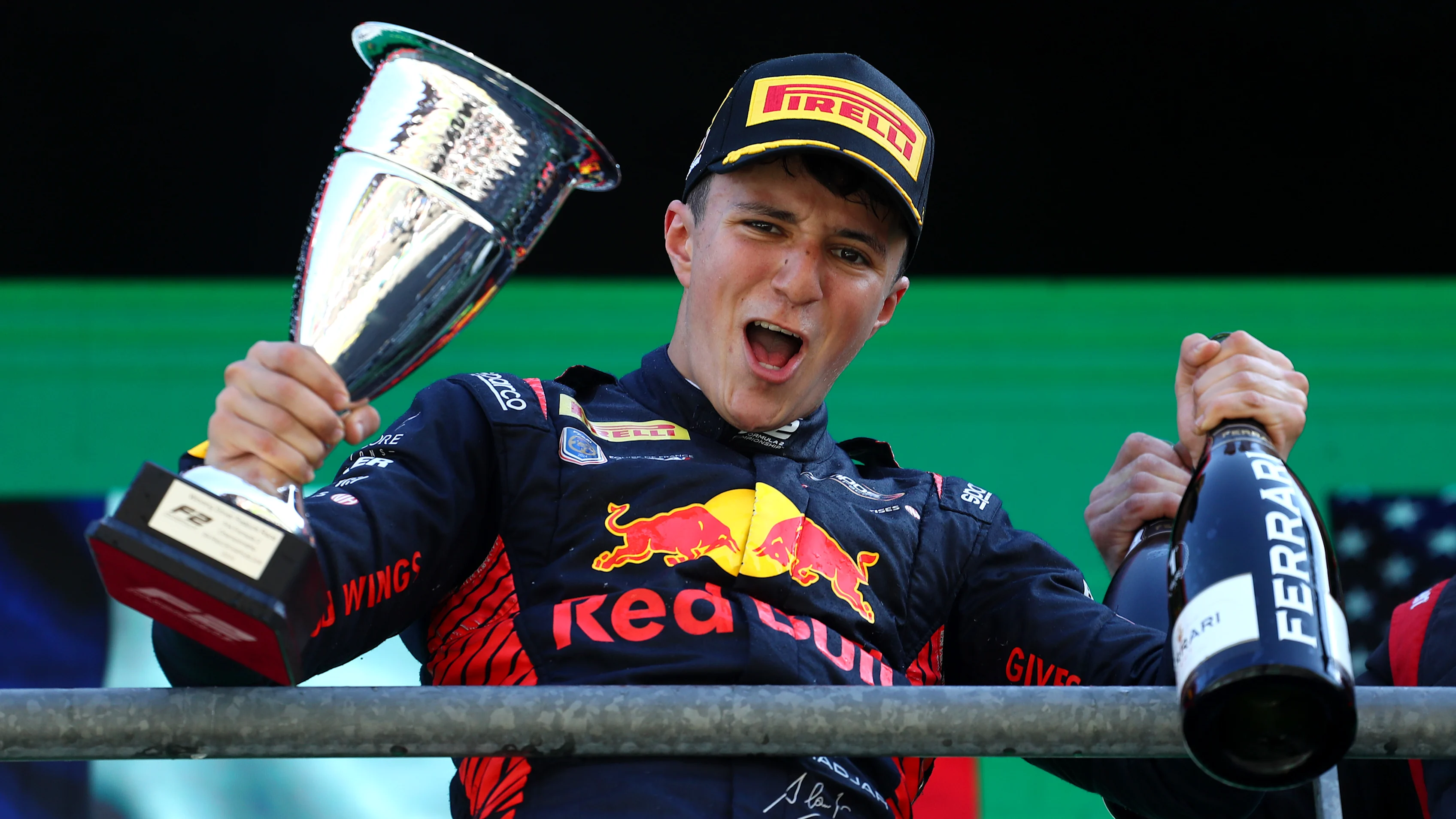
Hadjar's resilience at the top level gains fuller context when examined alongside his recent history in Formula 2. Between 2023 and 2024, the French-Algerian driver faced what he characterizes as "my worst season in racing," a period of profound self-doubt that threatened to extinguish his Grand Prix aspirations entirely. Having impressed in Formula 3, his maiden F2 campaign disappointed, leaving him vulnerable heading into what he considered his final opportunity in the junior category.
"When I came to F2, I was very confident the first year because I had a very good F3 season and in a team I knew didn't go to plan. But I remember going to that last season with a lot of pressure because I was like, 'Yeah, this is it. This is my final chance. If it doesn't work out this year, I need to accept that F1's not a thing anymore.'" This context transforms his Australian GP crash from isolated disaster into the latest chapter in a career defined by navigating adversity.
Ultimately, Hadjar's confirmation as Red Bull's second driver for 2026 represents vindication of both his talent and his character—a young driver capable of processing catastrophic disappointment and channeling it into the performances that elevate careers from promising rookie to senior team driver.