


Beyond Red Bull's 2026 livery reveal: what the studio renders really unveiled?
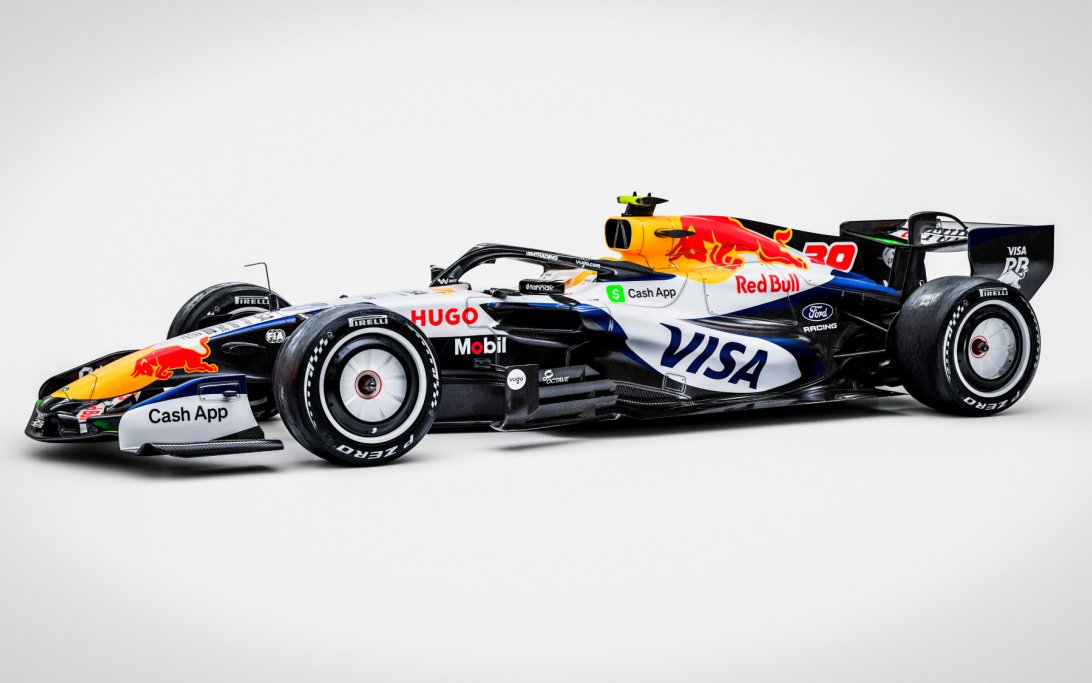
When Oracle Red Bull Racing announced its 2026 Formula 1 season launch at Ford Racing's headquarters in Detroit, the official narrative centered on one primary objective: unveiling the team's new livery alongside Ford's historic return to the pinnacle of motorsport. However, the technical community quickly realized that Red Bull had orchestrated something far more significant than a simple color scheme reveal. While the physical showcar on display in Michigan represented the generic 2026 Formula 1 showcase vehicle built by Momento—the same car used across the paddock for promotional purposes—the studio-rendered images Red Bull released online told a completely different story. These renders represented Red Bull's own interpretation of the 2026 regulations, offering what may be the most realistic and detailed visualization of the technical direction the Austrian outfit intends to pursue with the RB22.
The distinction between what was physically present at the launch event and what was digitally revealed online has proven crucial for technical analysts attempting to decipher Red Bull's strategic approach to the dramatically revised 2026 regulations. This divergence wasn't accidental; rather, it appears to have been a deliberate strategy to communicate Red Bull's engineering philosophy without committing to specific design details that will inevitably evolve during pre-season testing.
What Red Bull actually revealed: breaking down the studio car
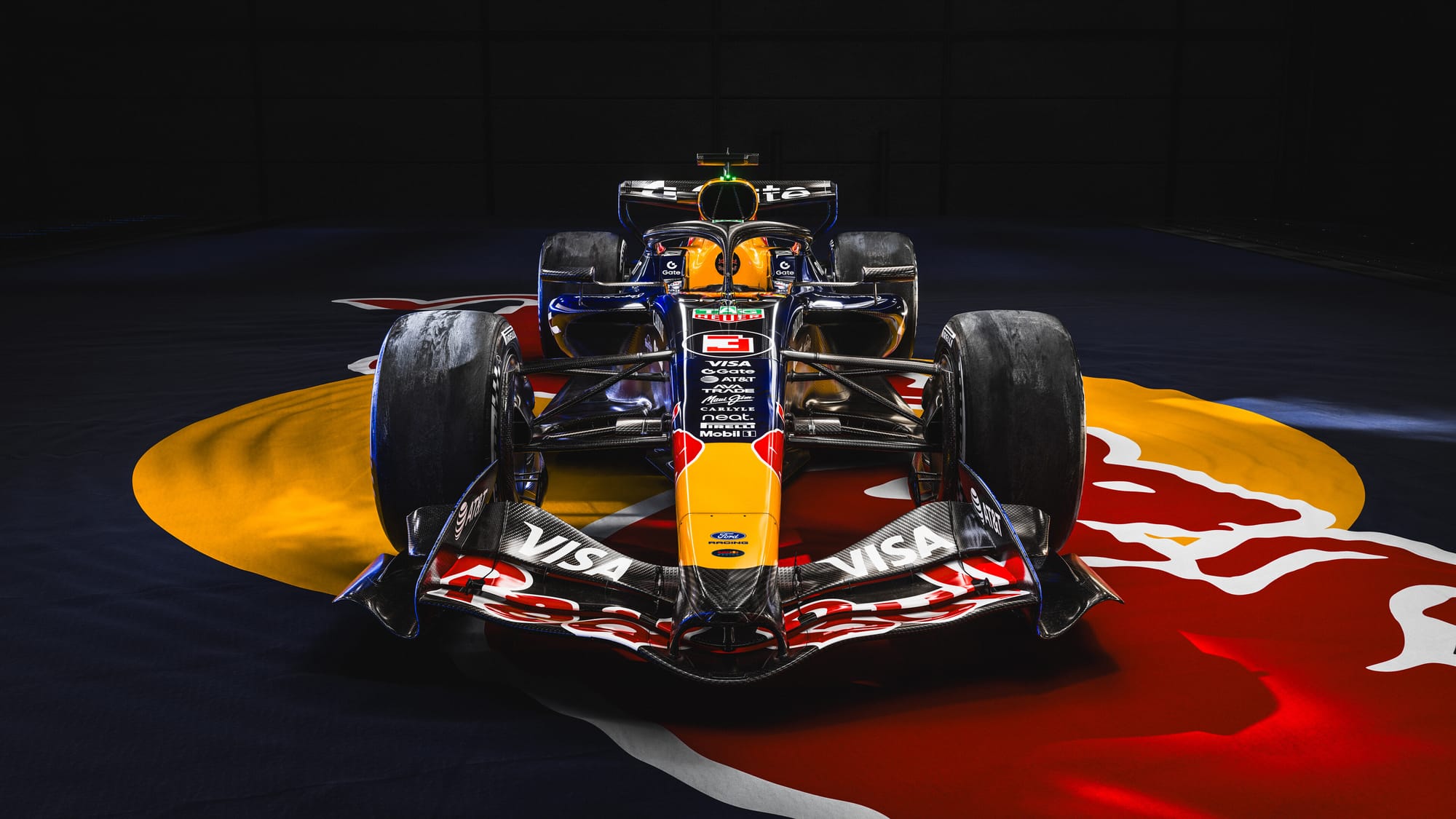
The renders Red Bull unveiled showcase a machine that differs substantially from both the Momento-built showcar and any previous Red Bull challenger in recent memory. The differences are not merely cosmetic adjustments; they represent fundamental engineering choices that will likely shape the RB22's competitive performance in the 2026 season.
The front end revolution
The most visually striking element of Red Bull's studio renders is the dramatically reimagined front end. The nose cone features a narrow, arrow-shaped cross-section at its tip, supported by two small pillars that connect directly to the front wing structure. This design philosophy represents a substantial departure from recent Red Bull aesthetics, prioritizing aerodynamic efficiency within the new regulatory framework. The front wing endplates themselves showcase noteworthy design features, bending toward the inner edge of the front wheels while incorporating external winglets specifically designed to generate outwash—a critical aerodynamic principle in modern Formula 1.
The lower section of the nose has been sculpted to induce substantial airflow into the undercut area beneath the sidepods, a design philosophy that mirrors Ferrari's approach to the SF-26. This architectural choice suggests Red Bull's engineers have identified efficient undercut airflow management as a priority within the 2026 technical regulations.
Suspension architecture: a technical clue
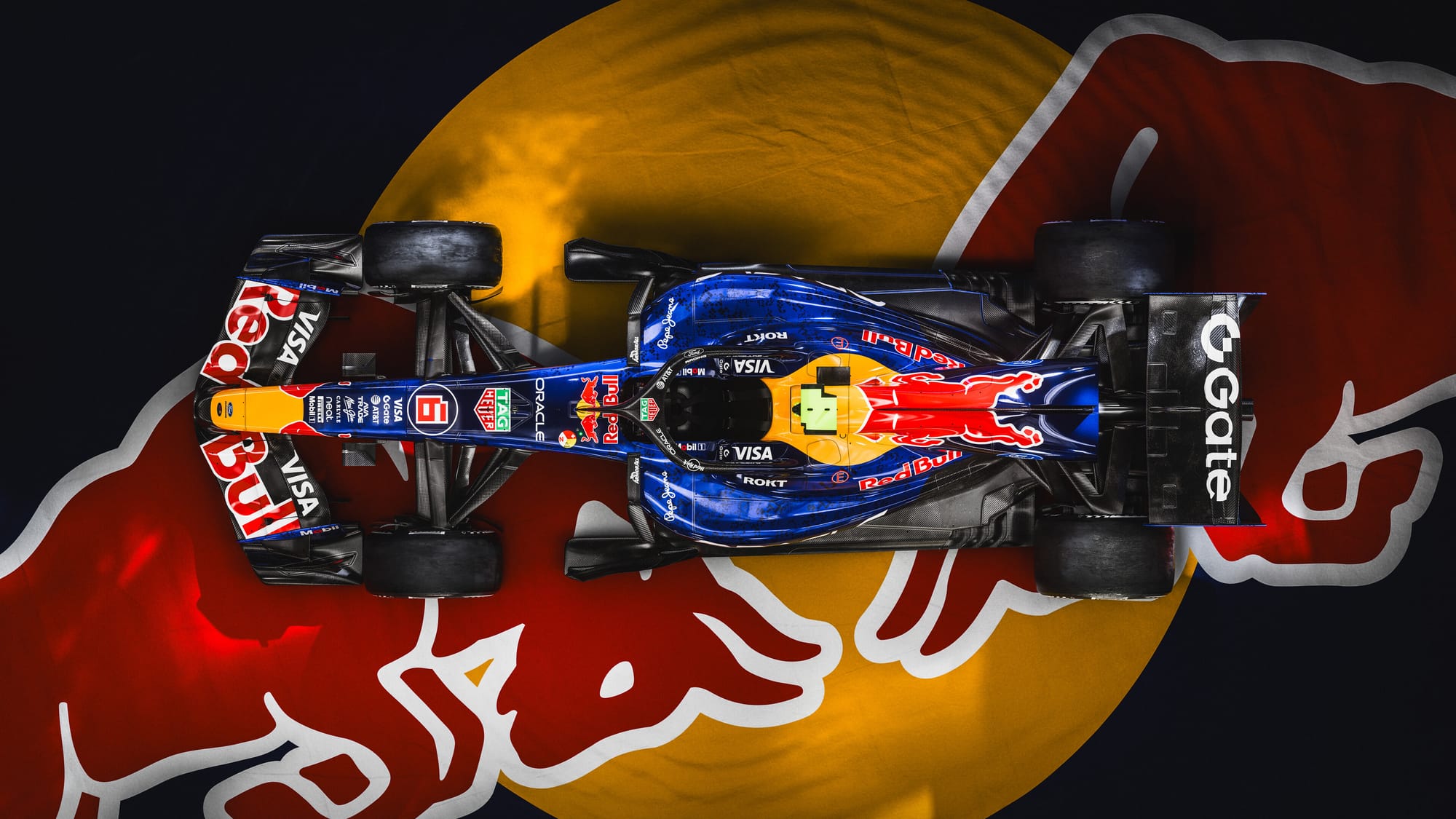
One of the most intriguing elements within Red Bull's renders involves the suspension layout—specifically, the adoption of a push-rod configuration at both the front and rear. This design choice is particularly noteworthy given that the Momento showcar utilizes a traditional pull-rod setup. While technical experts cautioned that renders often contain speculative elements, the deliberate inclusion of push-rod suspension suggests this may represent a genuine design direction for the RB22. The significance of this detail lies in its implications: push-rod versus pull-rod suspension represents a fundamental engineering choice that requires substantial design work and developmental commitment. Red Bull would be unlikely to render this configuration unless the team had seriously considered or committed to this approach.
Furthermore, the cockpit position in Red Bull's renders appears significantly further back than on the standard F1 showcar. This positioning choice aligns with conventional wisdom regarding physics optimization, as moving the cockpit rearward allows engineers to redistribute mass and improve overall chassis balance—a critical consideration in the heavily regulated 2026 environment.
Sidepods and floor: evolution of a philosophy
Compact and contoured design
Red Bull's sidepod design in the studio renders represents a dramatic evolution from the team's recent architectural choices. The sidepods appear to be a miniaturized version of those adopted on the RB21, featuring a particularly steep upper profile inclination and a notably narrow lower undercut section. This configuration practically forms a secondary skin over the power unit's mechanical components, maximizing space efficiency in a technical environment where packaging remains paramount.
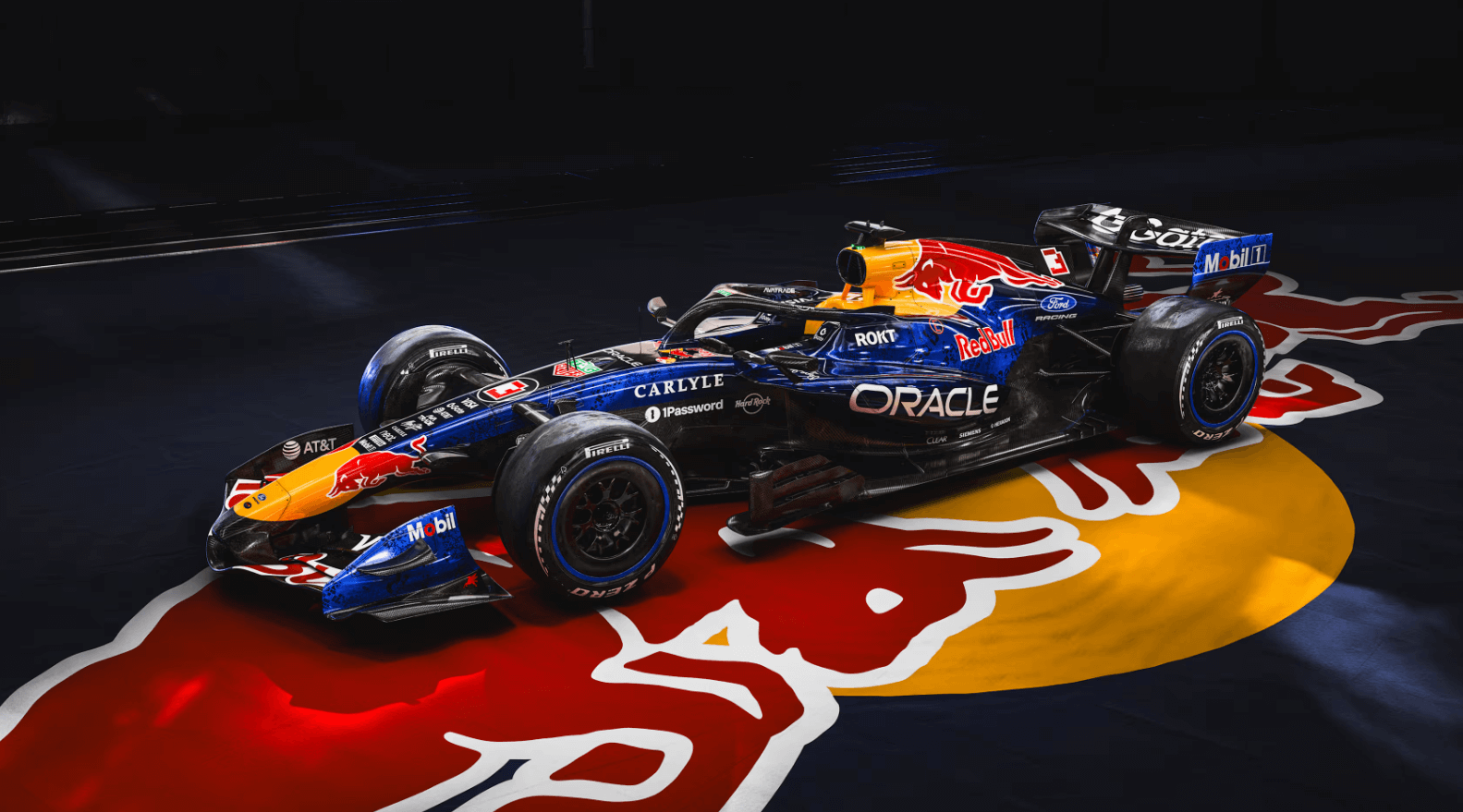
The sidepods retain the letterbox-style radiator inlet cross-section that has characterized Red Bull challengers since 2024, maintaining design continuity while achieving tighter overall packaging. The power unit air intake features an ovoid shape divided into three distinct sections: the central portion dedicated to primary air supply, with the two outer sections managing cooling for electrical components and the Energy Recovery System (ERS) heat exchangers.
Floor design: a regression to principles past
Perhaps the most revelatory aspect of Red Bull's floor design involves a conceptual return to fundamental aerodynamic principles from previous regulatory eras. The floor closely resembles designs from the 2021 cars—the final year before the ground-effect dominated challengers introduced in 2022. The floor features a wide series of slits positioned ahead of the rear wheels, specifically designed to generate an effective pneumatic seal essential for managing diffuser efficiency.
At the front of the floor, Red Bull's renders showcase a forward fence design that represents "a much clearer evolution of an actual design," split into three distinct elements rather than a single unified block. Notably, this configuration bears resemblance to the "super complex bargeboards that used to occupy the space around the front of the sidepod and floor before the 2022 rules eliminated them." The reintroduction of these aerodynamic principles suggests that the 2026 regulations have created opportunities for sophisticated bargeboardlike structures to resurface in some evolved form.
Engine cover and rear architecture
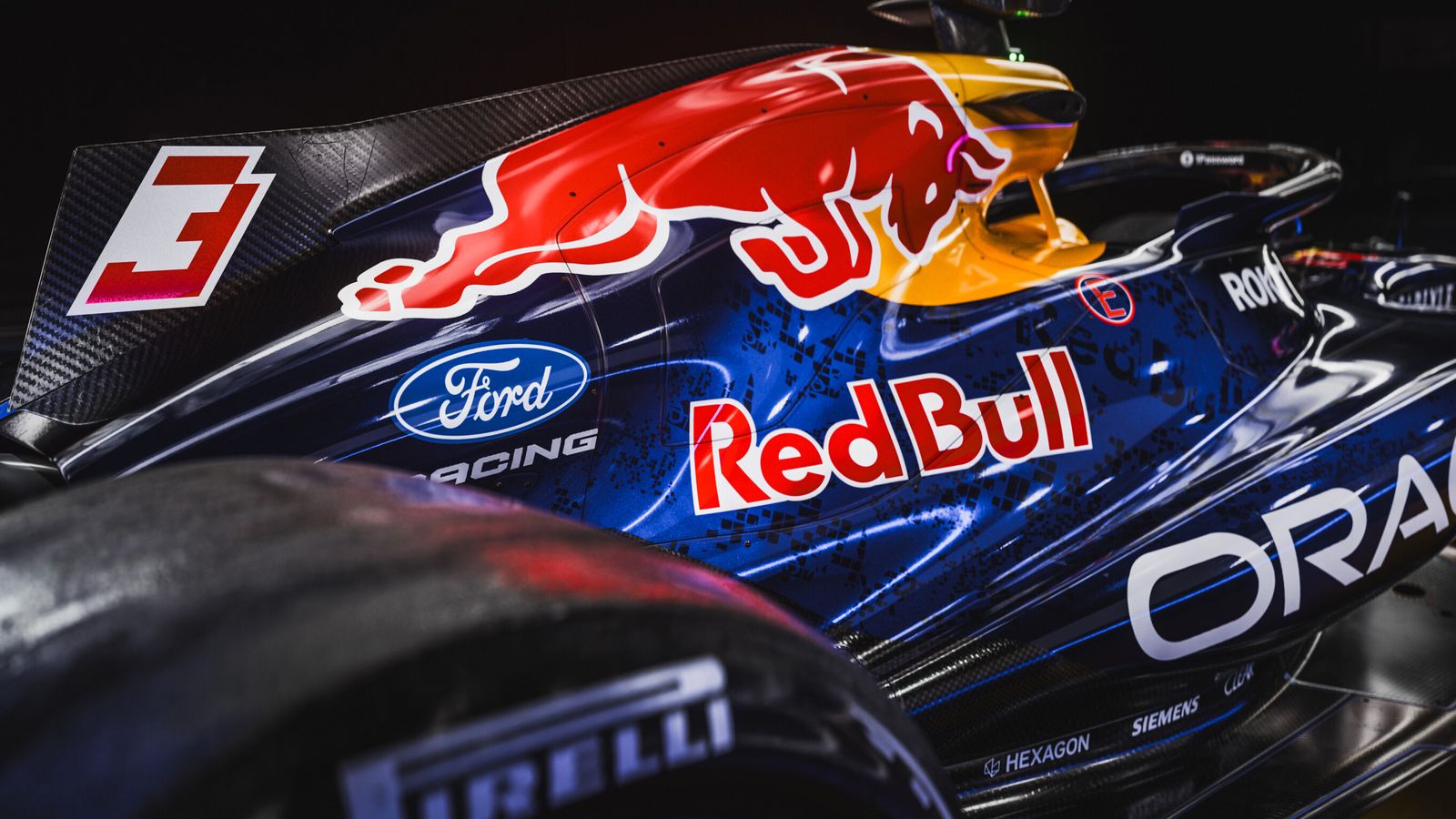
Red Bull's engine cover design in the renders maintains an extremely tight wrapping around the lower mechanical components, extending toward the rear end with a megaphone-shaped section. This design philosophy prioritizes aerodynamic efficiency while managing thermal requirements for the hybrid power unit. A horizontally oriented air vent sits at the base of the double pylon supporting the rear wing, facilitating cooling while maintaining structural integrity.
The rear wing itself, while appearing relatively conventional in the renders, remains incompletely defined—a detail that technical analysts note will almost certainly differ substantially on the car that debuts in Barcelona. The wheel fairings feature a distinctive circular crown shape, making the central portion of the rims visible, representing another design choice that differentiates Red Bull's interpretation from the generic showcar.
The Ford partnership context: more than an engine
Red Bull's 2026 launch carried profound significance extending far beyond technical specifications. Ford's return to Formula 1 after more than a decade of absence represents a major strategic commitment from the American automotive manufacturer, fundamentally altering the competitive dynamics within the sport. The unveiling at Ford Racing's season launch party at Michigan Central Station in Detroit underscored the partnership's importance to both organizations.
The Ford-developed powertrain will operate under the 2026 regulations, which mandate increased electrical power in hybrid systems and the introduction of 100% sustainable fuel. These regulatory changes fundamentally alter traditional power unit development priorities, with electrical output becoming increasingly critical to competitive performance. Ford's engineering commitment to developing a competitive power unit within this framework has received considerable technical interest, as the American manufacturer brings substantial resources and innovation capabilities to Formula 1.
The Racing Bulls connection: shared technology
/SI202601151081.webp)
Red Bull's announcement that both Oracle Red Bull Racing and Visa Cash App Racing Bulls will utilize identical chassis—delivered as part of their 2026 campaigns—represents another significant element of the launch. This arrangement ensures technological parity between the two teams while maintaining Oracle as the senior partnership within the Red Bull ecosystem. The sister team relationship has proven crucial to Red Bull's developmental strategy in recent seasons, and this continuity into 2026 suggests the team expects the partnership structure to contribute meaningfully to competitive performance.
What these renders actually tell us: separating speculation from strategic intent
Technical analysts have exercised appropriate caution regarding the renders, acknowledging that early visualizations of new regulations often contain speculative elements. However, several design choices appear sufficiently deliberate to suggest genuine strategic intent.
The push-rod suspension layout stands out as the most significant technical hint. This represents a fundamental engineering choice requiring substantial development work, manufacturing considerations, and integration across multiple chassis systems. Red Bull would be unlikely to render this configuration prominently unless the team had seriously committed to pursuing this direction.
The cockpit position adjustment similarly suggests intentional design philosophy rather than arbitrary artistic choice. Repositioning the cockpit rearward impacts weight distribution, center-of-gravity placement, and overall chassis dynamics—decisions that require substantial engineering commitment.
The floor design philosophy, drawing from 2021-era principles while incorporating new bargeboardlike structures, indicates Red Bull's engineers have identified specific aerodynamic opportunities within the 2026 regulations that weren't present in recent years.
Looking ahead: Barcelona and beyond
Red Bull has scheduled three pre-season tests before the season's opening round, with the first test commencing at Barcelona later in January. These sessions will prove crucial for validating whether the design elements suggested in the studio renders translate into competitive reality. The renders themselves, while providing valuable insight, remain preliminary interpretations subject to substantial evolution.
Technical refinement will almost certainly continue through testing and into the early races, with particular attention likely focused on the front wing profiles, sidepod contouring, floor efficiency, and suspension geometry. The baseline version presented in the renders appears "very well defined in all its areas," but Red Bull has explicitly acknowledged that the final product may differ as development progresses.
Conclusion: a more transparent technical launch
Red Bull's 2026 launch ultimately provided far more substantive technical information than the official "livery unveiling" framing suggested. By releasing studio renders that clearly diverge from the generic Momento showcar, Red Bull offered the technical community meaningful insight into the team's strategic direction within the dramatically revised regulatory environment.
Whether this represented a deliberate attempt to provide transparency, a strategy to establish a more realistic custom showcar for promotional purposes, or a combination of both remains somewhat ambiguous. What's certain is that the renders revealed a machine that reflects serious engineering thought about 2026 opportunities—from push-rod suspension to reimagined bargeboardlike structures to aggressive sidepod packaging.
As the F1 community awaits the actual RB22's debut at Barcelona, these renders will serve as a useful reference point for evaluating how closely Red Bull's final design adheres to the strategic principles suggested in the studio visualization. For a team accustomed to competitive excellence, the detailed nature of these renders suggests Red Bull approaches 2026 with the same meticulous preparation that has characterized its recent dominance.