


Romain Grosjean's emotional reunion with the helmet that saved his life
Five years have passed since one of Formula 1's most harrowing moments, yet the memory of Romain Grosjean's catastrophic accident at the 2020 Bahrain Grand Prix remains etched in the sport's collective consciousness. On November 29, 2020, the Haas driver experienced a violent opening-lap shunt that would test the limits of modern safety technology and, ultimately, prove that F1's protective engineering could withstand even the most devastating impacts.
The incident unfolded with devastating speed on the opening lap at the Sakhir circuit. After making contact with Daniil Kvyat, Grosjean's car crashed into the barriers at high speed, immediately breaking in half. The front section of the car speared through the crash barrier while the rear section instantly erupted into flames. Yet miraculously, Grosjean emerged from the inferno with his life intact—a testament to the extraordinary advancements in driver safety that have become synonymous with the modern Formula 1 era.
A 28-second ordeal: survival against the odds

The 39-year-old endured an extraordinarily traumatic 28 seconds trapped in the burning wreckage, experiencing a brutal 67G impact as marshals worked frantically to extract him from the mangled chassis. Despite the severity of his injuries—burns to his hands and ankles that later required surgical intervention—Grosjean demonstrated remarkable resolve by walking unaided away from the fiery debris. His determination to show his family watching on television that he was conscious and mobile became an iconic image of human resilience.
The protection afforded to Grosjean was attributed not only to his race helmet but also to the Halo device, the revolutionary cockpit protection system that has become mandatory in Formula 1. Both components played crucial roles in preventing catastrophic injuries during an accident of such extreme severity.
Engineering excellence: the helmet's silent guardian
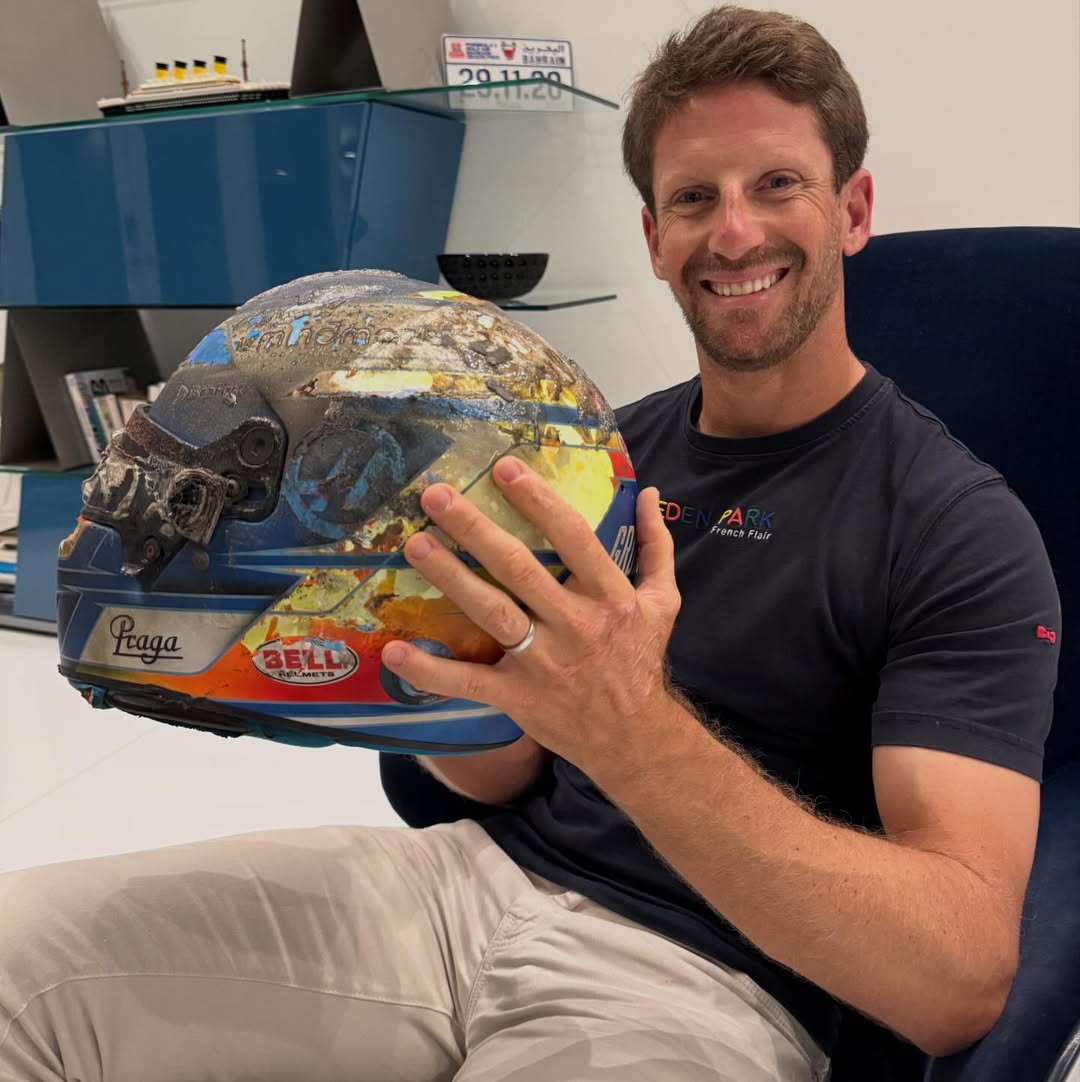
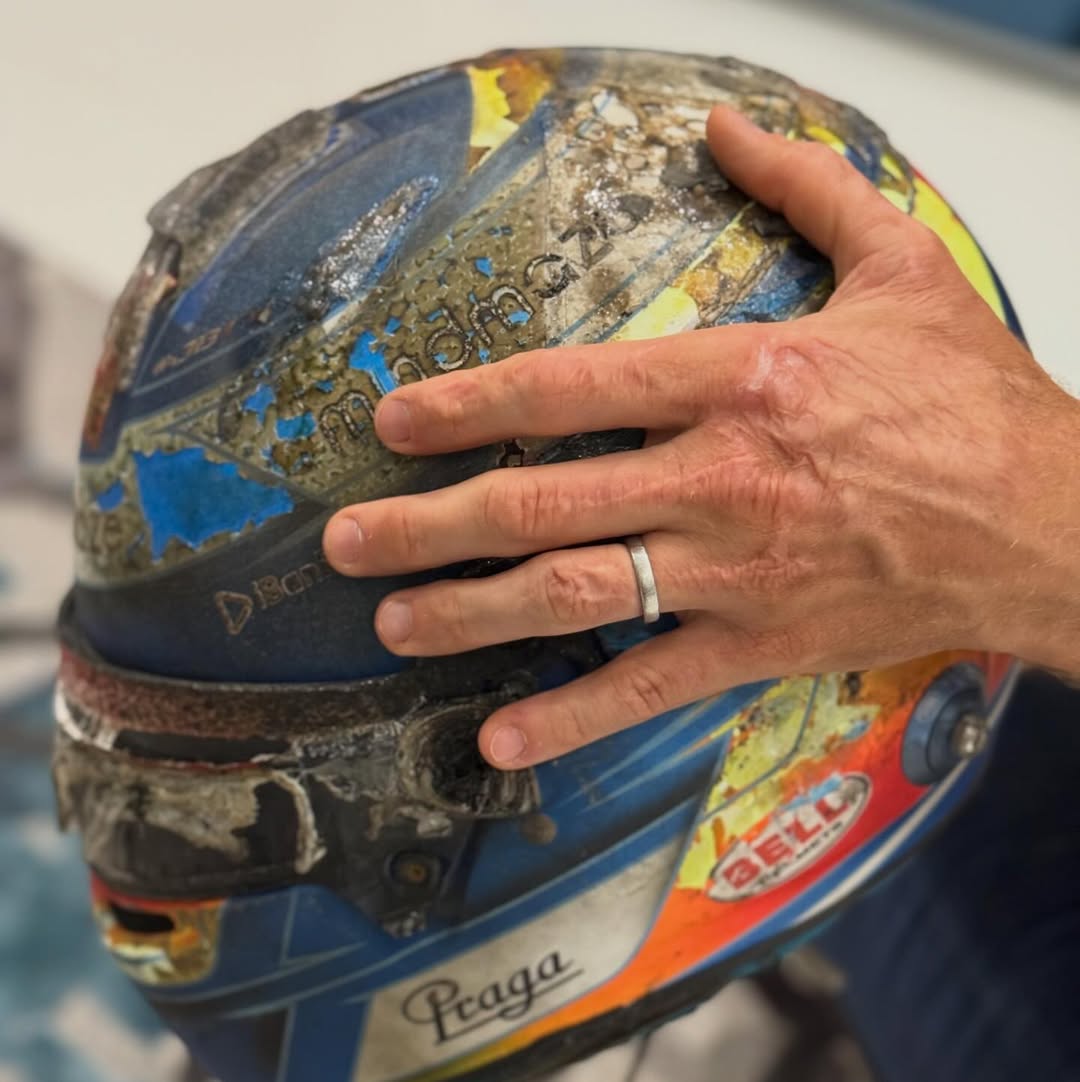
Grosjean recently shared an emotional moment of reconciliation with the very helmet that protected him through the inferno. Five years after the crash, the French-Swiss driver was reunited with his destroyed helmet—a symbolic and deeply personal encounter. Describing the experience on social media, Grosjean revealed the profound emotional weight of confronting the physical evidence of his survival: "I didn't know if I was ready to see it but my kids really wanted to understand how I got so well protected in the fire and what did happen that night"
His gratitude extended to the manufacturers whose innovation quite literally saved his life. "I'll forever be grateful to Bell Racing and Alpinestars for protecting me so well in that moment," Grosjean expressed, acknowledging the critical role that precision engineering and material science played in his survival. The helmet stands as a permanent reminder of how far motorsport safety has advanced—and how personal equipment, when properly designed and manufactured, can withstand conditions that would otherwise prove fatal.
Life after the inferno: a path forward
Following his recovery, Grosjean made the decision to depart Formula 1 and transition to the IndyCar Series in 2021. However, his connection to the sport never fully severed. In September 2025, the veteran driver received an invitation to return to the cockpit of a Formula 1 car for the first time in nearly five years. Haas, his former team, invited him to participate in a test program at the Mugello circuit.
The return held special significance: Grosjean's children had designed the helmet he was meant to wear during his final Grand Prix at Abu Dhabi in 2020—a race he never competed in due to the Bahrain incident. Finally, after half a decade, he would have the opportunity to race an F1 car with that custom design. "To say I'm excited to get back behind the wheel of a Formula 1 car would naturally be an understatement," Grosjean reflected at the time.
Perspective and purpose
The reunion with his helmet carries deeper meaning beyond nostalgia or technical curiosity. For Grosjean, it serves as a powerful reminder of mortality and the importance of seizing life's opportunities. "Life goes and we forget," he reflected, "but that reminds me how much we should make the most of our lives every day"
The 2020 Bahrain crash transcended being merely a motorsport incident—it became a watershed moment for safety advocacy within Formula 1 and demonstrated the tangible benefits of relentless engineering innovation. Grosjean's survival and subsequent reflection embody the evolution of driver protection, transforming tragedy into a testament for the sport's unwavering commitment to preserving human life at the pinnacle of motorsport.