
2025 Abu Dhabi Grand Prix: all you need to know

The 2025 Formula 1 World Championship arrives at its conclusion not with a ceremonial procession, but with a ferocious, three-way deadlock that will be etched into the annals of motorsport history. For the first time since the legendary four-way decider of 2010, the sport descends upon the Yas Marina Circuit with three protagonists---McLaren's Lando Norris, Red Bull Racing's Max Verstappen, and McLaren's Oscar Piastri---separated by margins so slender that a single corner, a solitary pit stop, or a fleeting moment of hesitation could determine the destiny of the Drivers' Championship. The 2025 Abu Dhabi Grand Prix, scheduled for December 5-7, represents the zenith of a season defined by power shifts, internal rivalries, and a technical war that has seen the dominance of Red Bull eroded by the papaya surge of McLaren.
Lando Norris enters the finale atop the standings with 408 points, clutching a fragile 12-point lead over the resurgent Max Verstappen, who sits on 396 points. lurking in the shadows is Oscar Piastri on 392 points, a mere 16 points adrift of his teammate. The narrative arc of 2025 has been nothing short of cinematic: Max Verstappen, the four-time champion, began the year as the favorite, only to find his RB21 out-developed by the MCL38. McLaren, revitalized under Andrea Stella, seemed poised to cruise to the title, only for a strategic capitulation in the penultimate round in Qatar to blow the championship wide open.

The stakes at Yas Marina extend far beyond the drivers' crown. The Constructors' Championship, already assigned to McLaren with 800 points compared to Mercedes' 459 and Red Bull's 426, remains a battleground for pride and prize money, particularly for the runner-up spot between the Silver Arrows and the Milton Keynes outfit. Furthermore, the paddock is rife with the tension of farewells and future shocks. It has been rumored that this race marks the end of Yuki Tsunoda's tenure at Red Bull Racing, with rookie sensation Isack Hadjar set to replace him for 2026, while Max Verstappen has issued existential threats regarding his own future in the sport pending the "fun factor" of the impending 2026 regulations.
The prelude: anatomy of the Qatar Grand Prix
To fully comprehend the magnitude of the pressure facing Lando Norris and McLaren in Abu Dhabi, one must conduct a forensic examination of the events that transpired at the Lusail International Circuit during the previous round. The Qatar Grand Prix was not merely a race; it was a psychological pivot point that halted McLaren's momentum and revitalized Max Verstappen's title defense.

The strategic blunder
The weekend in Qatar began with McLaren asserting absolute dominance. Oscar Piastri secured pole position for the Grand Prix, with Lando Norris locking out the front row in P2, while Max Verstappen languished in P3. The pace of the MCL38 suggested a comfortable one-two finish, which would have likely neutralized Verstappen's championship aspirations. However, the race unravelled on Lap 7.
A collision between Nico Hulkenberg's Sauber and Pierre Gasly's Alpine at Turn 1 triggered a Safety Car deployment. At this critical juncture, the strategic playbook dictated a pit stop. The Lusail circuit, punishing on tyres and subject to a mandatory 25-lap stint limit imposed by Pirelli due to curb-induced structural risks, made track position secondary to fresh rubber. Max Verstappen, sensing the opportunity, dove into the pits immediately.

Inexplicably, the McLaren pit wall froze. Perhaps fearful of "double-stacking" their drivers or miscalculating the Safety Car duration, they left both Piastri and Norris out on track. This decision was fatal. By staying out, both drivers were forced to pit under green flag conditions later in the race, losing approximately 20 seconds relative to those who pitted under the neutralization.
The consequences
When the pit stop cycle eventually aligned, the damage was irreversible. Max Verstappen inherited a net lead that he would never relinquish, cruising to his third consecutive victory in Qatar and his eighth of the season. The "house money" mentality that Verstappen had adopted---believing the title was gone---transformed into a ruthless execution of opportunity.
For McLaren, the result was a disaster of their own making. Oscar Piastri drove a recovery drive of the highest caliber to finish P2, limiting the damage, but Lando Norris found himself mired in traffic. He eventually finished P4, unable to pass the Williams of Carlos Sainz for the podium. The points swing was dramatic: instead of extending his lead, Norris saw his advantage slashed. Verstappen outscored him by 13 points (25 for the win vs. 12 for 4th), tightening the gap to 12.
The psychological fallout
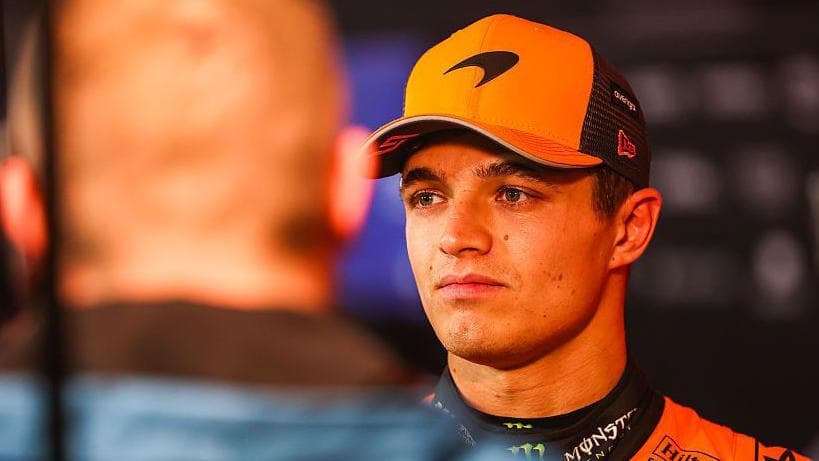
The post-race atmosphere was telling. Lando Norris, usually composed, admitted the team had "missed a trick" and that he had been "had over" by the strategy. Oscar Piastri, despite finishing ahead of his teammate, expressed deep frustration, calling the strategy "painful" after a weekend where he had been the faster driver.
Conversely, Max Verstappen was jubilant. He referred to himself as "Chucky," the horror movie doll that refuses to die, signaling to McLaren that he would haunt them to the very last lap of the season. The psychological momentum has undeniably shifted to the Red Bull garage. They have proven that even with a slower car, their operational sharpness remains championship-caliber, whereas McLaren, for all their speed, showed cracks under the immense pressure of a title-deciding scenario.

The championship permutations: the math of destiny
As the paddock sets up in Abu Dhabi, the calculators are out. The 2025 Drivers' Championship will be decided by a complex matrix of finishing positions. With 25 points available, the scenarios are numerous, but the reality is stark for all three contenders.
Lando Norris (408 Points)
Lando Norris controls his own destiny. He does not need to win the race to win the title; he simply needs to manage the gap.
-
The Podium Guarantee: If Norris finishes 1st, 2nd, or 3rd, he is the 2025 World Champion, regardless of where Verstappen or Piastri finish.
-
Defensive Scenarios:
-
If Norris finishes 4th, 5th, or 6th, he wins the title unless Verstappen wins the race.
-
If Norris finishes 9th or lower, he becomes extremely vulnerable. A 2nd place finish for Verstappen would see the Dutchman overtake him.
-
Max Verstappen (396 Points)
The defending champion finds himself in a position he has not occupied since 2021: the hunter. Trailing by 12 points, Verstappen needs a significant result and help from Norris.
-
Must-Win Territory: Realistically, Verstappen needs to win the Abu Dhabi Grand Prix. If he wins (25 pts -> 421 pts total), he wins the title if Norris finishes 4th or lower.
-
The Second Place Hope: If Verstappen finishes 2nd (18 pts -> 414 pts total), he needs a catastrophe for Norris. Norris would need to finish 9th or lower for Verstappen to snatch the title on countback or points.
-
The Piastri Buffer: Verstappen needs cars between him and Norris. He will be hoping that the likes of Ferrari (Leclerc/Hamilton) or Mercedes (Russell/Antonelli) can displace Norris from the podium positions.

Oscar Piastri (392 Points)
The Australian is the wildcard. Sitting 16 points behind Norris and 4 behind Verstappen, his path to the title is the narrowest, relying on chaos or a double-DNF ahead.
-
The Miracle Scenario: Piastri essentially must win the race (25 pts -> 417 pts total). Even with a win, he needs:
-
Norris to finish 6th or lower.
-
Verstappen to finish 2nd or lower (though if Verstappen is 2nd, he reaches 414, so Piastri would jump him).
-
-
Tie-Breakers: In the event of a points tie, the title is decided by the number of wins. Verstappen enters Abu Dhabi with 8 wins (including Qatar), while Norris and Piastri have 7 each. This gives Verstappen the advantage in almost any tie-break scenario.
The constructor battle
While McLaren has virtually secured the Constructors' Championship with 800 points, the battle for second place is fierce.
- Mercedes (459 points) vs. Red Bull (426 points): Red Bull trails Mercedes by 33 points. To overhaul this gap, Red Bull needs a massive points haul---likely a 1-2 finish---combined with a disastrous weekend for Mercedes. Given that Red Bull is effectively a one-car team in terms of high-scoring consistency (with Tsunoda struggling to match Verstappen's podium frequency), Mercedes is the favorite to secure the runner-up spot.
The battlefield: Yas Marina Circuit technical analysis
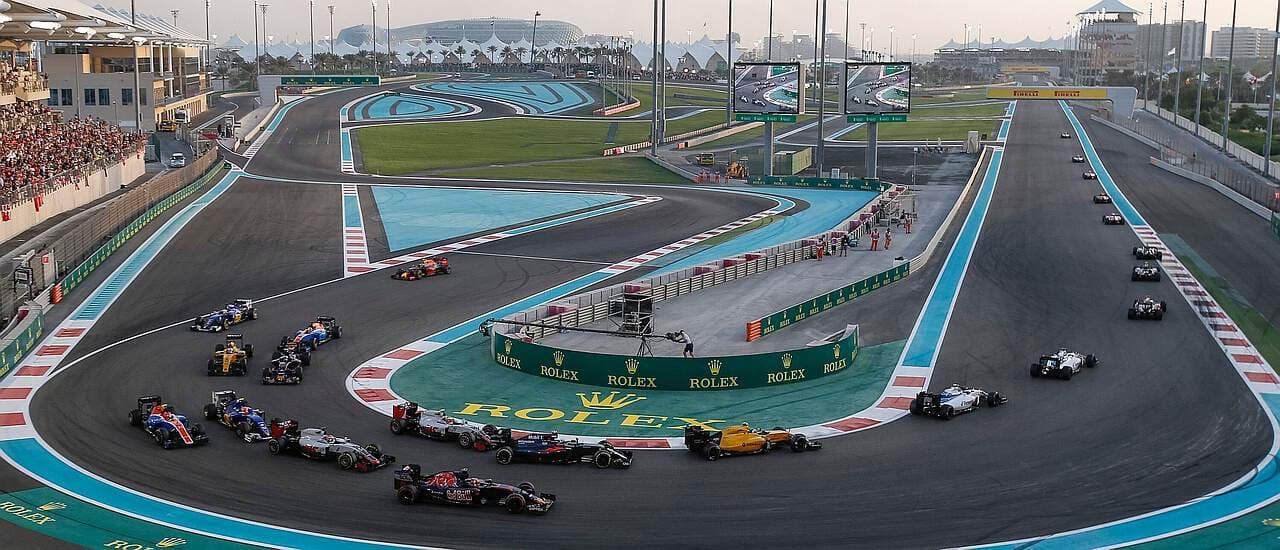
The Yas Marina Circuit, located on the man-made Yas Island, is a venue that balances spectacle with technical challenge. Since its major reconfiguration in 2021, the track has transformed from a procession-heavy layout into a circuit that facilitates high-speed duels.

Track layout evolution
The original Hermann Tilke design was criticized for its "stop-start" nature, particularly the chicane before the hairpin and the clunky 90-degree corners under the hotel. The 2021 modifications shortened the track to 5.281 km and reduced the corner count to 16, significantly increasing the average speed.
-
Sector 1 (High Speed): The removal of the chicane before Turn 5 has created a faster entry into the hairpin. This puts a premium on high-speed stability and efficient drag reduction. The McLaren MCL38, known for its high-speed cornering prowess, should theoretically excel here.
-
Sector 2 (Power): This sector consists of two long straights separated by a heavy braking zone at Turn 6. This is the primary overtaking spot. Cars will reach speeds in excess of 320 km/h before braking down to 80 km/h. Traction on the exit of Turn 5 is critical to launch down the straight.
-
Sector 3 (Technical): The hotel section remains the most challenging sequence. Despite the reprofiling of Turn 9 into a long, banked sweeper (a mini-Parabolica), the final complex (Turns 12-16) requires a soft suspension setup to ride the curbs. This creates a conflict: stiff suspension is needed for the high-speed aerodynamic stability in Sector 1, but mechanical compliance is needed for Sector 3.
Car setup compromises
The setup dilemma at Yas Marina is the "Sector 1 vs. Sector 3" trade-off.
-
Red Bull Philosophy: The RB21 typically runs a slightly higher rake and excels in traction zones (Sector 2) and direction changes. However, it has struggled with curb-riding in 2025. Verstappen will likely sacrifice some Sector 1 speed to ensure his rear tyres survive the twisting Sector 3, which is where lap time is made or lost in qualifying.
-
McLaren Philosophy: The MCL38 generates immense downforce. They can afford to run slightly less wing angle to compete on the straights while relying on their efficient floor to stick the car in the fast corners. This makes them dangerous in qualifying, but potentially vulnerable to top-speed overtakes in the race.
Overtaking zones
-
Turn 6: The primary opportunity. Aided by DRS on the long back straight, drivers can slipstream and dive down the inside. The run-off area is generous, encouraging bold moves.
-
Turn 9: The new banked corner. While less of a braking zone, the camber allows drivers to take different lines. A driver with better tyre grip can hang it around the outside to claim the inside line for the following complex.
-
Turn 5: The hairpin. The widening of the entry allows for late braking, but the exit is crucial. A "switchback" move---letting the attacker overshoot and cutting underneath for a better exit---is a common defensive tactic here.

Strategic imperatives: tyres, pit stops, and twilight
The Abu Dhabi Grand Prix is unique in that it starts in the day (17:00 local) and ends at night. This "twilight transition" causes track temperatures to drop by as much as 10-15°C over the course of the race, fundamentally altering tyre behavior.
Tyre selection: the softest range
Pirelli has brought the softest compounds in their range for this finale:
-
C3 (Hard - White): The race tyre. Robust, low degradation, capable of doing 35+ laps.
-
C4 (Medium - Yellow): The start tyre. Offers better grip off the line but suffers from thermal degradation in the opening laps when the track is hottest.
-
C5 (Soft - Red): The qualifying tyre. It is extremely fast over one lap but grains heavily in race trim. It is unlikely to be used in the Grand Prix unless a late Safety Car creates a sprint to the finish.

The strategy matrix
Unlike Qatar's mandated two-stop race, Abu Dhabi is traditionally a one-stop (Medium -> Hard) or a two-stop (Medium -> Hard -> Medium) race.
-
The Undercut: The pit lane exit at Yas Marina feeds into a tunnel that releases cars at Turn 2. The time loss is roughly 20-22 seconds. The undercut is powerful here; pitting one lap early to get onto fresh Hards can gain a driver 2 seconds. However, pitting too early risks traffic, which is fatal at Yas Marina due to the dirty air in Sector 3.
-
The Overcut: With the C3 Hard tyre being very durable, a driver who can extend their first stint might have a significant tyre delta at the end of the race. This was Verstappen's winning strategy in 2020 and 2023.
-
Covering the Rival: For Norris, the strategy will be reactive. McLaren will likely mirror Verstappen's strategy to mark him. If Verstappen pits, Norris must pit the next lap to prevent the undercut. The danger lies if Red Bull splits strategies with Tsunoda (if he is in contention) or uses a "dummy" pit stop call to force McLaren's hand.

Weather impact
The forecast for the weekend is stable, with highs of 30°C (86°F) dropping to 21°C (70°F) after sunset.
-
Wind: Gusts of up to 18 mph are predicted. The wind direction is critical; a tailwind into Turn 6 makes braking difficult and increases the risk of locking up, while a headwind aids downforce.
-
Cooling Track: As the track cools, rear-limited cars (like the Ferrari) tend to come alive. Red Bull, which often battles front-end limitation, might find the car becoming "pointier" and faster as the race progresses into the night.
Team-by-team analysis: the grid in focus
McLaren: the hunter becomes the hunted
-
Season Summary: From mid-field runners in Bahrain to the dominant force by mid-season, McLaren's turnaround has been historic. They have scored 800 points, nearly double their 2024 tally.
-
Abu Dhabi Outlook: The pressure is on the pit wall. Andrea Stella's leadership has been calm, but the Qatar error showed cracks. They need a flawless operational weekend. Norris's form in qualifying is electric (record pole positions for McLaren), but his race starts and first-lap aggression have been questioned.
Red Bull Racing: the last stand
-
Season Summary: A tale of two halves. Dominant until Miami, then struggled as the development ceiling of the RB21 was hit. Verstappen has carried the team single-handedly, with the second seat being a revolving door of mediocrity between Perez (fired in 2024), Lawson (demoted in 2025), and Tsunoda.
-
Abu Dhabi Outlook: Verstappen is dangerous when cornered. The team has nothing to lose in the Constructors', liberating them to take extreme risks with strategy for the Drivers' title. Tsunoda, in his final race for the senior team, will be desperate to prove Red Bull wrong for dropping him.
Ferrari: the prancing horse's stumble
-
Drivers: Charles Leclerc & Lewis Hamilton.
-
Season Summary: A mixed bag. Lewis Hamilton's debut season in Red has been underwhelming compared to the hype, with the Briton struggling to match Leclerc in qualifying consistency. They sit 4th in the standings, a disappointment for the Scuderia.
-
Abu Dhabi Outlook: Ferrari has nothing to lose. Leclerc is a master of Yas Marina (often securing pole or podiums here). They could play the role of spoiler, taking points away from Norris or Verstappen.
Mercedes: the end of an era
-
Drivers: George Russell & Kimi Antonelli.
-
Season Summary: A transitional year. The promotion of rookie Kimi Antonelli was bold. He has shown raw speed (P5 in Qatar qualifying) but lacks racecraft consistency. George Russell has matured into the team leader, sitting a lonely 4th in the standings.
-
Abu Dhabi Outlook: Fighting for P2 in the Constructors' is their sole motivation. A strong result here would validate their post-Hamilton direction.

The midfield: Aston Martin, Williams, Alpine
-
Williams: Carlos Sainz has been a revelation, scoring podiums in a car that belongs in the midfield. His P3 in Qatar was a masterclass. He will look to cap off a stellar season.
-
Aston Martin: Fernando Alonso continues to defy age, dragging the AMR25 into points finishes. With Adrian Newey joining for 2026, the team is in a holding pattern, treating this race as a test session.
-
Alpine: Pierre Gasly and Franco Colapinto (who replaced Doohan mid-season) are fighting for lower points. Colapinto's retention for 2026 is on the line, making this a career-defining weekend for the Argentine.
The driver market: seismic shifts and farewells
The 2025 Abu Dhabi Grand Prix serves as the backdrop for significant driver market movements that will reshape the grid for the 2026 regulation era.
The Red Bull revolving door
The most significant news emerging from the paddock is the restructuring of the Red Bull driver lineup.
-
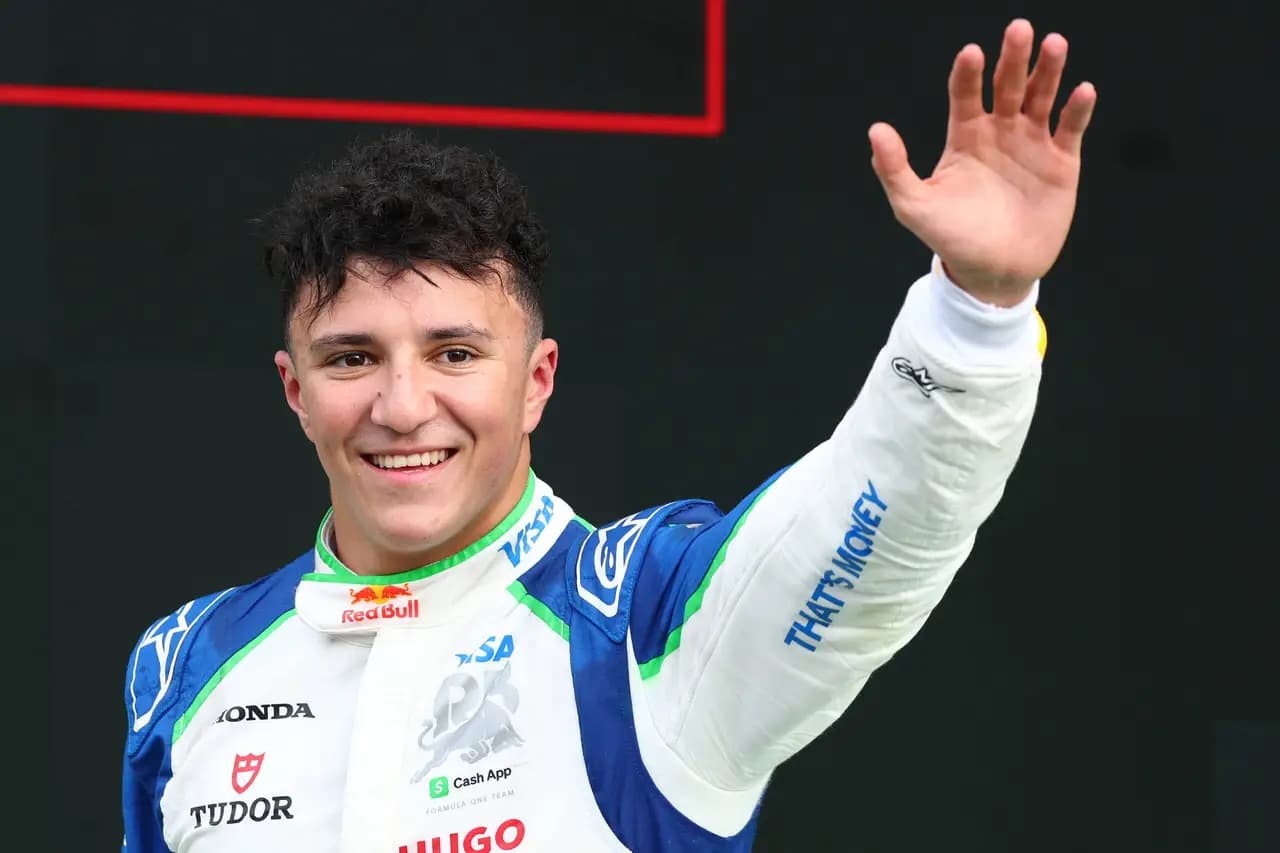
Yuki Tsunoda Exits: It has been rumored that Yuki Tsunoda will leave Red Bull Racing after this race. Despite being promoted from the junior team earlier in the season to replace Liam Lawson, Tsunoda has failed to consistently back up Verstappen. He will be replaced by Isack Hadjar for 2026.
-
Isack Hadjar Promoted: The French-Algerian driver, currently racing for Racing Bulls (RB), has impressed sufficiently to earn the seat alongside Verstappen. His promotion is a gamble on youth by Christian Horner and Helmut Marko.
-
Arvid Lindblad's Fast Track: In a stunning move, Red Bull has announced that 18-year-old junior Arvid Lindblad will drive the Red Bull Racing car in FP1 in Abu Dhabi, replacing Tsunoda for the session. This is widely interpreted as a "live audition" for a future seat and a sign of Tsunoda's fallen stock. Lindblad is also expected to race for Racing Bulls in 2026.
Max Verstappen's retirement threat
Perhaps the most alarming narrative is Max Verstappen's public contemplation of retirement. In Qatar, he stated that his continuation in F1 beyond 2025 depends entirely on whether the new 2026 regulations are "fun." Despite a contract until 2028, he explicitly said, "I can leave the sport easily tomorrow," casting a shadow over his long-term future. This adds a layer of poignancy to his title fight; could this be his final championship battle?
Historical context: the legacy of Yas Marina deciders
The Yas Marina Circuit has a unique place in F1 history as the "Decider Venue." No other track in modern F1 has hosted as many championship-concluding dramas.
2010: the four-way miracle
Sebastian Vettel arrived in Abu Dhabi third in the standings, behind Fernando Alonso and Mark Webber. Through a combination of a dominant drive and Ferrari's strategic error (covering Webber instead of Vettel), Vettel snatched the title, becoming the youngest ever World Champion.
2016: the duel in the desert
Lewis Hamilton won the race but controversially slowed the pace to back his teammate Nico Rosberg into the chasing pack of Vettel and Verstappen. Rosberg held his nerve to finish second and win the title by 5 points, retiring days later.

2021: the controversy
The race that needs no introduction. Max Verstappen and Lewis Hamilton arrived level on points. A late Safety Car, a controversial decision by Race Director Michael Masi to unlap only certain cars, and a final lap shootout on fresh Softs vs. old Hards gave Verstappen his first title. The shadows of 2021 still loom large over the paddock, adding tension to any Safety Car decisions that might arise in 2025.
2025: the three-way fight
This year joins 2010 as a rare multi-driver showdown. Unlike 2021, which was a binary duel, the three-way dynamic introduces "spoiler" mechanics. Piastri can take points from Verstappen to help Norris, or win the race to help himself. The strategic complexity is exponentially higher.
Support categories: the stars of tomorrow
While the F1 title fight dominates the headlines, the junior categories provide the opening act.
FIA Formula 2 finale
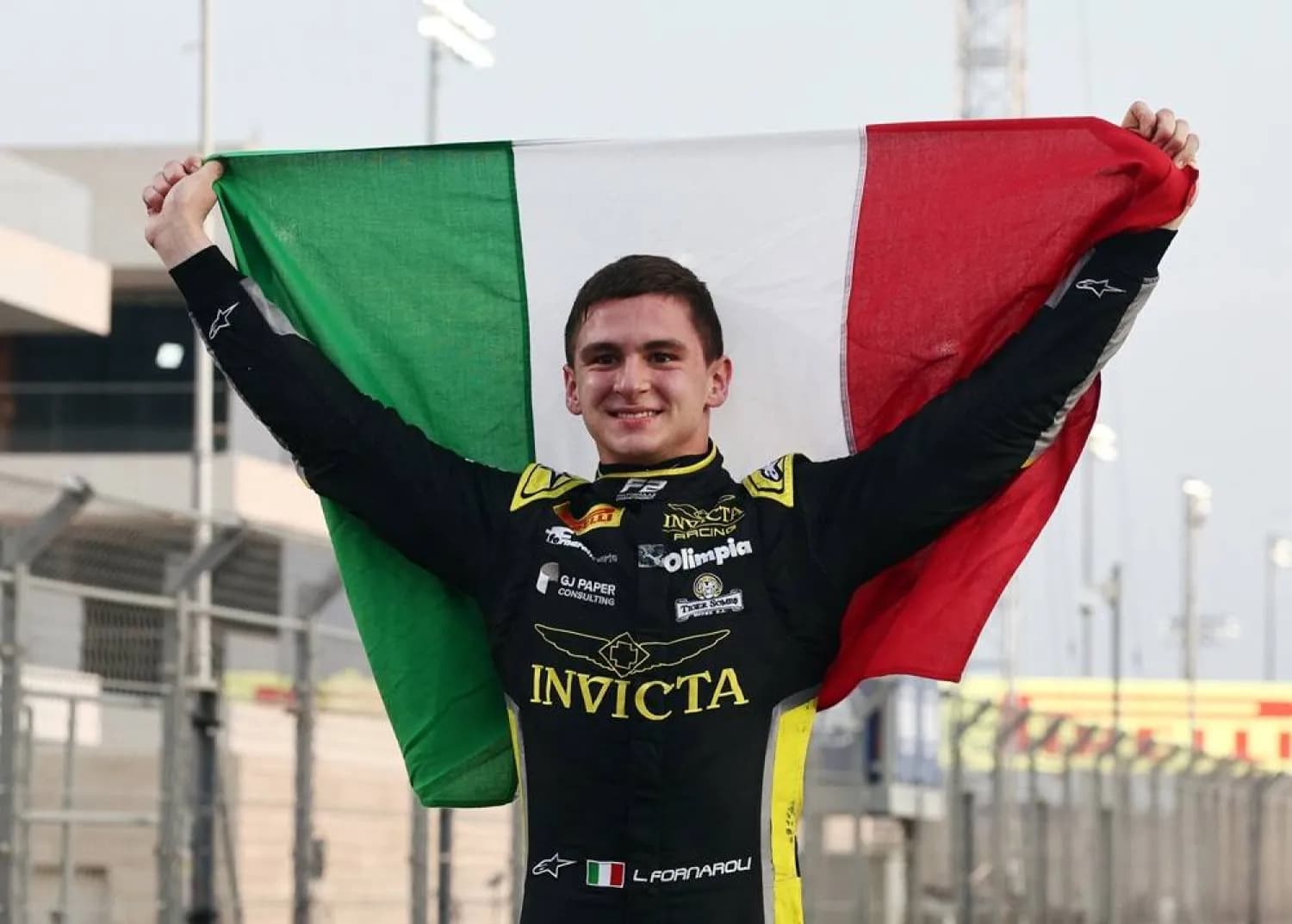
The Formula 2 season concludes this weekend. Invicta Racing has already secured the Teams' Championship, and their driver Leonardo Fornaroli clinched the Drivers' Title in Qatar. However, the races remain critical for drivers auditioning for F1 reserve roles.
-
Feature Race: Sunday, 13:15 local time (33 laps).
-
Drivers to Watch: Arvid Lindblad (finishing his F2 campaign before his F1 FP1 debut) and Isack Hadjar (his final F2 weekend before becoming a Red Bull F1 driver).
Conclusion: the final lap
The 2025 Abu Dhabi Grand Prix is poised to be the most viewed sporting event of the year. It features a script that no screenwriter would dare pitch: a four-time champion defending his throne against a young challenger looking for his first crown, with a ruthless teammate waiting in the wings to spoil the party for both.
For Lando Norris, Sunday is a test of character. He must banish the ghosts of Qatar and deliver a performance of clinical precision. For Max Verstappen, it is a test of resilience; can he drag a car that is no longer the fastest to a fifth title through sheer will and racecraft? And for Oscar Piastri, it is a free hit at immortality.
As the sun sets over the Arabian Gulf on December 7th, 2025, the engines will roar one last time. Strategy will be paramount, nerves will be shredded, and history will be written. Whether it ends in a papaya celebration or a Red Bull rampage, the 2025 finale is a race that simply cannot be missed.

Simone Scanu
He’s a software engineer with a deep passion for Formula 1 and motorsport. He co-founded Formula Live Pulse to make live telemetry and race insights accessible, visual, and easy to follow.