
Here's why drivers fear 2026 F1 qualifying could be reshaped by the new energy management

Formula 1's most thrilling moment—the desperate rush for pole position—stands on the precipice of fundamental transformation in 2026, and not necessarily for the better. What has traditionally represented motorsport's purest test of speed and precision now risks becoming a clinical exercise in battery management and energy harvesting, fundamentally altering the spectacle fans have cherished for decades.
The catalyst for this concern emerged from pre-season testing in Barcelona, where Haas driver Esteban Ocon revealed a startling reality: drivers will need to employ lift-and-coast techniques during qualifying laps themselves. This revelation has sparked considerable anxiety about how the sport's most electrifying moments will unfold across the 2026 season.
"We have to use lift-and-coast techniques on qualifying runs," Ocon reported. "It felt strange at first. But we had already practiced it beforehand in the simulator." This statement encapsulates the paradigm shift confronting Formula 1—qualifying, historically a showcase for unbridled aggression and maximum performance, will now demand calculated restraint.

The 50/50 Power Unit revolution
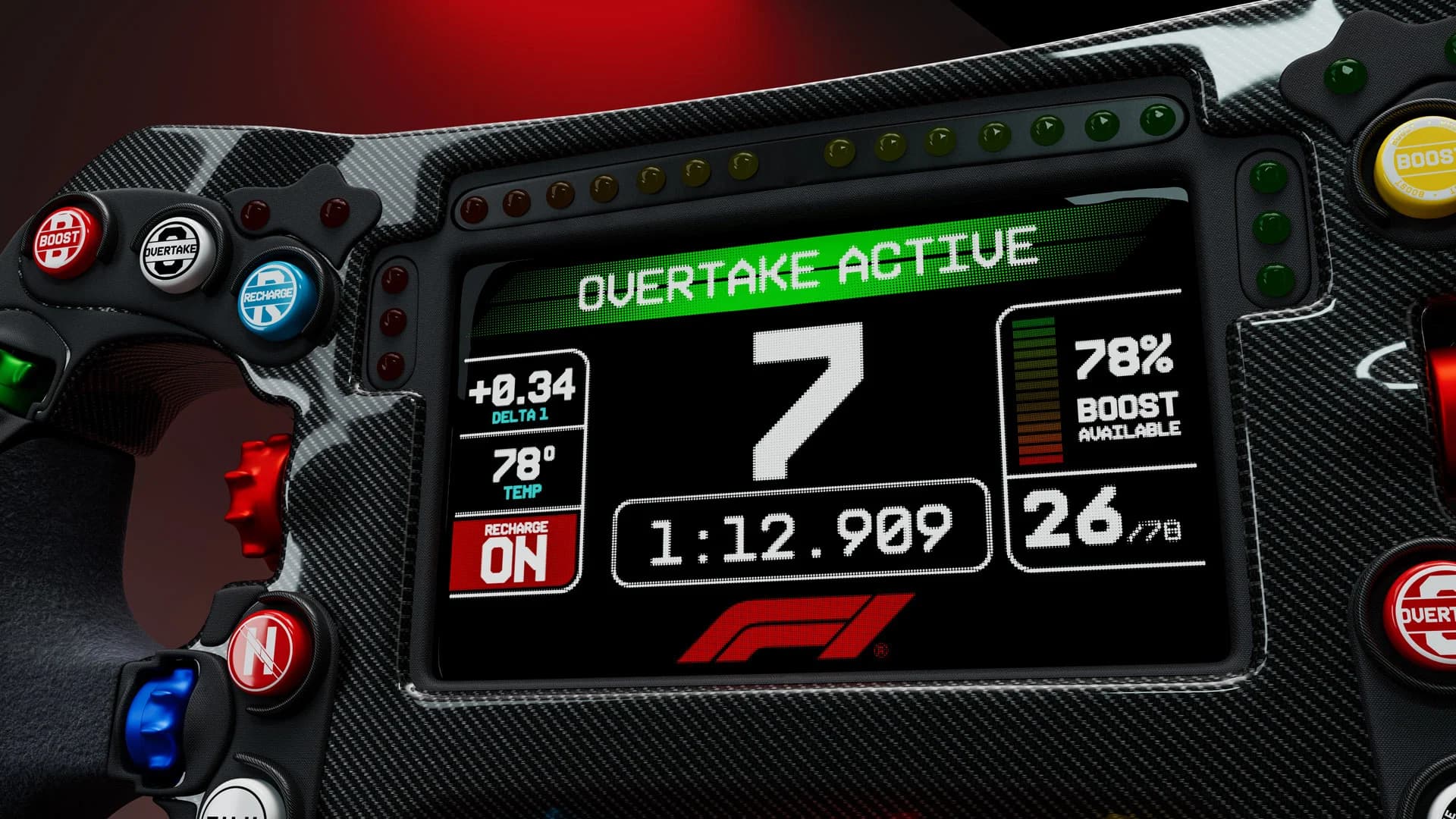
At the heart of this qualifying conundrum lies the wholesale reformation of F1's power unit regulations. The balance between internal combustion engine and electrical power shifts from the current 80/20 split to an even 50/50 distribution. Simultaneously, energy recovery systems will recover twice as much energy per lap compared to 2025, while the MGU-H—a staple since 2014—exits the sport entirely.
This architectural shift elevates electrical energy from a supplementary tool to co-equal partner with the traditional petrol engine. The consequence is profound: drivers now carry far greater responsibility for battery management throughout every lap, including the pursuit of pole position.
A delicate balance on the qualifying lap
The qualifying lap dilemma represents perhaps the most insidious threat to fan engagement. Drivers must navigate contradictory demands: harvest sufficient battery energy through lift-and-coast to reach maximum deployment capacity, yet maintain sufficient momentum to post competitive lap times. The margin for error is razor-thin.
Haas team boss Ayao Komatsu has outlined the precarious nature of qualifying preparation. "If something goes wrong, I think it will be pretty obvious," he explained. A miscalculation—particularly during the critical outlap preparation—could cost a driver approximately half a second per lap, potentially eliminating entire qualifying strategies before the timed lap even begins.
"It's very, very important how you go through those last couple of corners," Komatsu warned. "If you don't carry enough speed out of, let's say, Turn 14 in Barcelona, by the time you come to the start/finish line, you don't have enough speed. So your qualifying lap is already ruined."

The Qualifying format adjustment
Beyond energy concerns, the 2026 season introduces structural changes to qualifying itself. With Cadillac's arrival expanding the grid to 22 cars, the FIA has adjusted elimination thresholds while preserving the competitive Q3 shootout. Six drivers—rather than the previous five—will be eliminated in both Q1 and Q2, funneling the field to a familiar 10-car Q3 battle.
Session timings remain constant: 18 minutes for Q1, 15 for Q2, and 12 for Q3. However, the increased elimination rate intensifies midfield pressure, as mistakes become catastrophically consequential with a larger field competing for fewer progression spots.

Unpredictable variables amplify concerns
Compounding these challenges is track-dependent variability. Melbourne's Albert Park, which hosts the season-opening Australian Grand Prix, presents particular battery-harvesting difficulties that contrast sharply with Bahrain's characteristics. "Even if you get to the stage where you are very confident in Bahrain with consistency, then you go to Melbourne and it is a completely different condition," Komatsu noted. "That's going to be a huge challenge."
Similarly, circuits featuring distinct sections—such as Baku's city streets transitioning to long straights—demand conflicting energy deployment strategies that will test drivers' adaptability and potentially expose inconsistency dramatically.
The fan experience conundrum
The fundamental concern underlying these technical challenges centers on spectator engagement. Qualifying's reduction to controlled, energy-managed laps risks diminishing the visual excitement that distinguishes Saturday's shootout from race-day competition. When drivers must consciously lift off throttle during qualifying attempts—a technique viewers associate with fuel-saving races—the psychological perception of an all-out qualifying effort becomes compromised.
The 2026 season will ultimately determine whether these regulatory changes represent a necessary evolution toward sustainability or a misstep that sacrifices motorsport's core dramatic currency. For now, Ocon's Barcelona revelations serve as an early warning that F1's most celebrated moment faces unprecedented challenges.

Simone Scanu
He’s a software engineer with a deep passion for Formula 1 and motorsport. He co-founded Formula Live Pulse to make live telemetry and race insights accessible, visual, and easy to follow.