
Cadillac's Silverstone shakedown: what the new F1 team's early debut reveals about Its ambitions

Cadillac made history on January 16 by becoming the first Formula 1 team to meaningfully unveil its real 2026 car through on-track imagery and video. When Sergio Perez took the controls at Silverstone for the team's maiden shakedown, Cadillac departed from the industry's typical playbook of carefully controlled information flow. Unlike Audi's heavily disguised Barcelona debut a week prior or Red Bull's mock-up livery reveals, the American manufacturer's decision to openly document its first laps reflects not recklessness, but strategic confidence.
This transparency stands out in an era defined by obfuscation and misdirection. While other established teams meticulously guard their technical secrets, Cadillac's willingness to expose its chassis to public scrutiny suggests the newcomer has embraced a philosophy of measured pragmatism over theatrical mystery. The team co-owned by General Motors recognized this moment as historically significant—internally encouraging staff at its Silverstone facility to witness a watershed moment for the organization.
Conservative engineering for reliable foundations
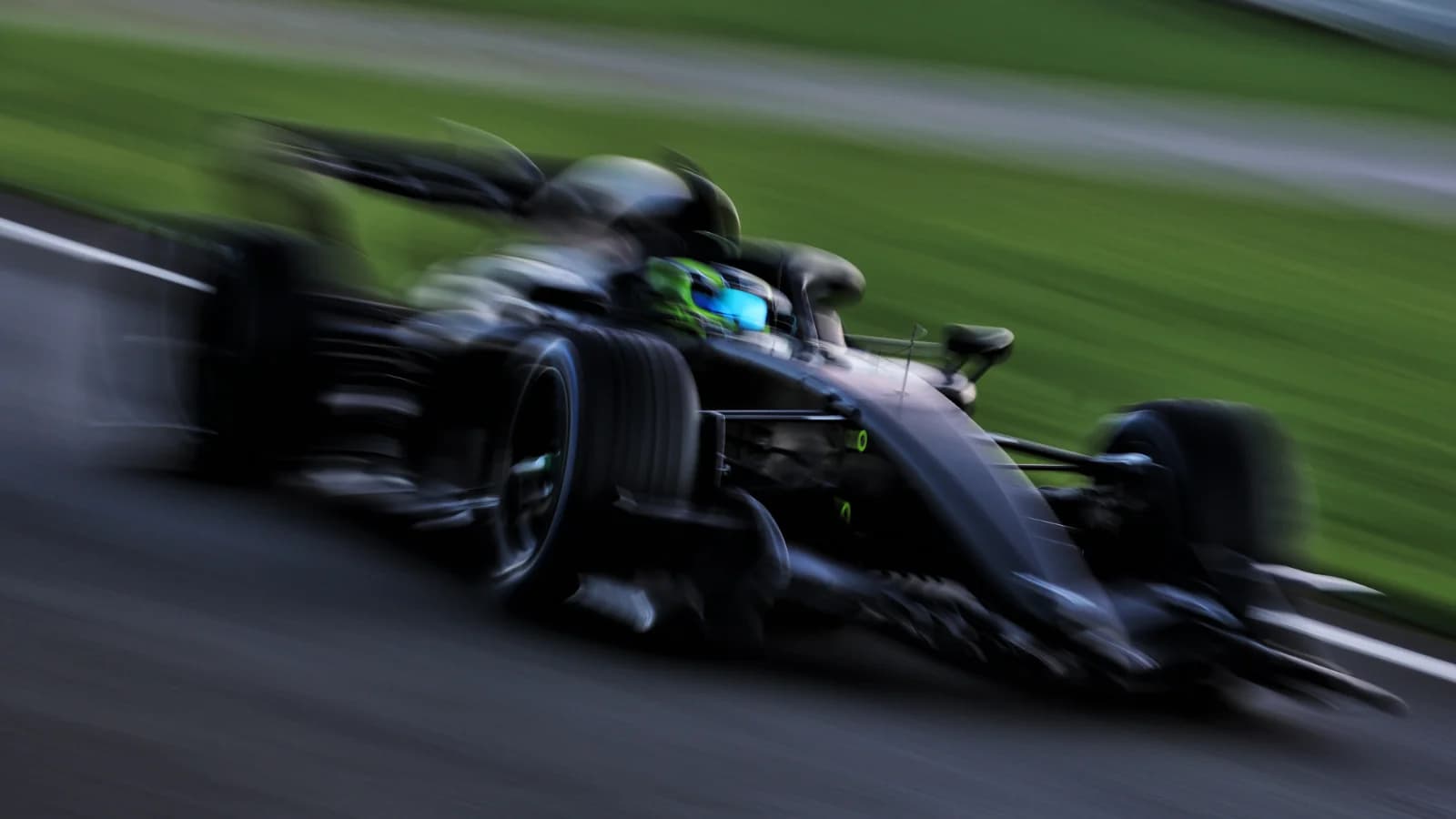
Examining the technical architecture revealed during the shakedown unveils Cadillac's foundational strategy: build predictability first, performance second. The car running at Silverstone represents an early iteration signed off in November, deliberately designed to establish a reliable baseline rather than pursue aggressive innovation immediately.
Cadillac's suspension geometry reflects this philosophy. The team opted for a pullrod front suspension—a configuration that lowers the center of gravity of inboard components and reduces aerodynamic blockage compared to pushrod alternatives. At the rear, the team implemented a pushrod-operated inboard mechanism with anti-lift characteristics, utilizing Ferrari gearbox internals (though manufacturing its own casing). This technical conservatism prioritizes mechanical stability and thermal management over cutting-edge complexity.
The car's aerodynamic package similarly emphasizes fundamentals. The front wing appears deliberately simplified compared to rival interpretations, with a horizontal wing element on the endplate outer edges—a new regulatory interpretation area that will likely see diverse development approaches across the grid. The large sidepod undercut and steeply falling upper surface reflect 2026's reduced ground effect emphasis, allowing Cadillac to minimize the edge-sealing demands that dominated previous technical regulations.
Reliability over risk: Ferrari's role and cooling architecture
Cadillac's partnership with Ferrari extends beyond engine supply—it influences the entire vehicle architecture. By manufacturing its own gearbox casing despite using Ferrari internals, Cadillac preserved suspension geometry flexibility while maintaining cost efficiency. This decision exemplifies the team's theme: independence where it matters strategically, pragmatism where it preserves resources.
Thermal management became paramount for a brand-new power unit integration. The car features strategically positioned hot air exits, including placement on the upper chassis shoulders, demonstrating meticulous attention to balancing cooling requirements against aerodynamic losses. This engineering discipline reflects team principal Graeme Lowdon's acknowledgment that knowledge gaps in trackside operations represent the squad's most significant challenge.
Setting realistic expectations
General Motors paid a $450 million expansion fee to enter Formula 1—more than double the original asking price. Yet despite this substantial investment, Cadillac positioned itself as a realistic debutant, not a dark horse contender. The team's initial target remains simply survival: reliable grid presence in Australia, progressive mileage accumulation, and incremental improvement through the season.
The Silverstone shakedown proved only one modest step. The car's early aerodynamic package suggests significant development potential, particularly in traditional innovation areas like the front wing, sidepods, and floor. Cadillac deliberately conserved performance development to prioritize reliability confirmation and architectural validation—a calculated trade-off reflecting honest self-assessment.
What the shakedown ultimately reveals is meticulous planning executed flawlessly under pressure. While other competitive teams remain further from track running, Cadillac's early mileage advantage stems from conservative deadlines and sacrificed near-term performance for assured essentials. A successful shakedown positions the team more confidently for the Barcelona test on January 26-30, the Bahrain official tests in February, and the championship season ahead.
Cadillac's transparency at Silverstone communicated something far more valuable than marketing narrative: a professional outfit respecting the magnitude of its challenge while demonstrating the technical and organizational discipline to meet it.

Simone Scanu
He’s a software engineer with a deep passion for Formula 1 and motorsport. He co-founded Formula Live Pulse to make live telemetry and race insights accessible, visual, and easy to follow.