
Fernando Alonso and the battle for Barcelona: a champion’s mission to save a historic F1 icon

The landscape of Spanish motorsport underwent a seismic shift in 2025, a year defined by both the celebration of heritage and the looming shadow of radical change. At the heart of this narrative stood Fernando Alonso, a figure whose influence on Formula 1 extends far beyond the cockpit of his Aston Martin. In May 2025, the announcement that Alonso had been named the official ambassador for the Circuit de Barcelona-Catalunya was not merely a PR exercise; it was a strategic alliance aimed at preserving the soul of Spanish racing as the sport’s commercial gravity began to pull toward the capital.
As we look back from the closing weeks of 2025, the significance of this appointment has only grown. With the Madrid street circuit poised to take over the "Spanish Grand Prix" moniker in 2026, Alonso’s role as the face of the Montmeló circuit has become a masterclass in sports diplomacy, technical advocacy, and the defense of traditional racing values.

A legacy forged in asphalt
For Fernando Alonso, the Circuit de Barcelona-Catalunya is not just another stop on a grueling 24-race calendar. It is the site of his genesis as a professional driver. Long before the two world championships and the record-breaking number of race starts, a young Alonso arrived at this track to test a single-seater for the very first time.
"It is an honour and a privilege," Alonso remarked during the official ceremony in May. "This circuit is special to me and to all Spanish fans. It has given us so much joy, and it is closely linked to my career. It was the first place I felt the power of a formula car."
This personal connection provided the emotional bedrock for his ambassadorship. Throughout 2025, Alonso has frequently referenced his 2013 victory at the venue—his most recent win in Formula 1—as a symbol of what the track represents: a technical challenge that rewards precision and a venue where the passion of the 'Alonsistas' creates an atmosphere unmatched by modern street circuits. By positioning himself as the guardian of this legacy, Alonso has forced the global F1 community to reckon with what might be lost if Barcelona were to disappear from the schedule.
The "level ten" transformation
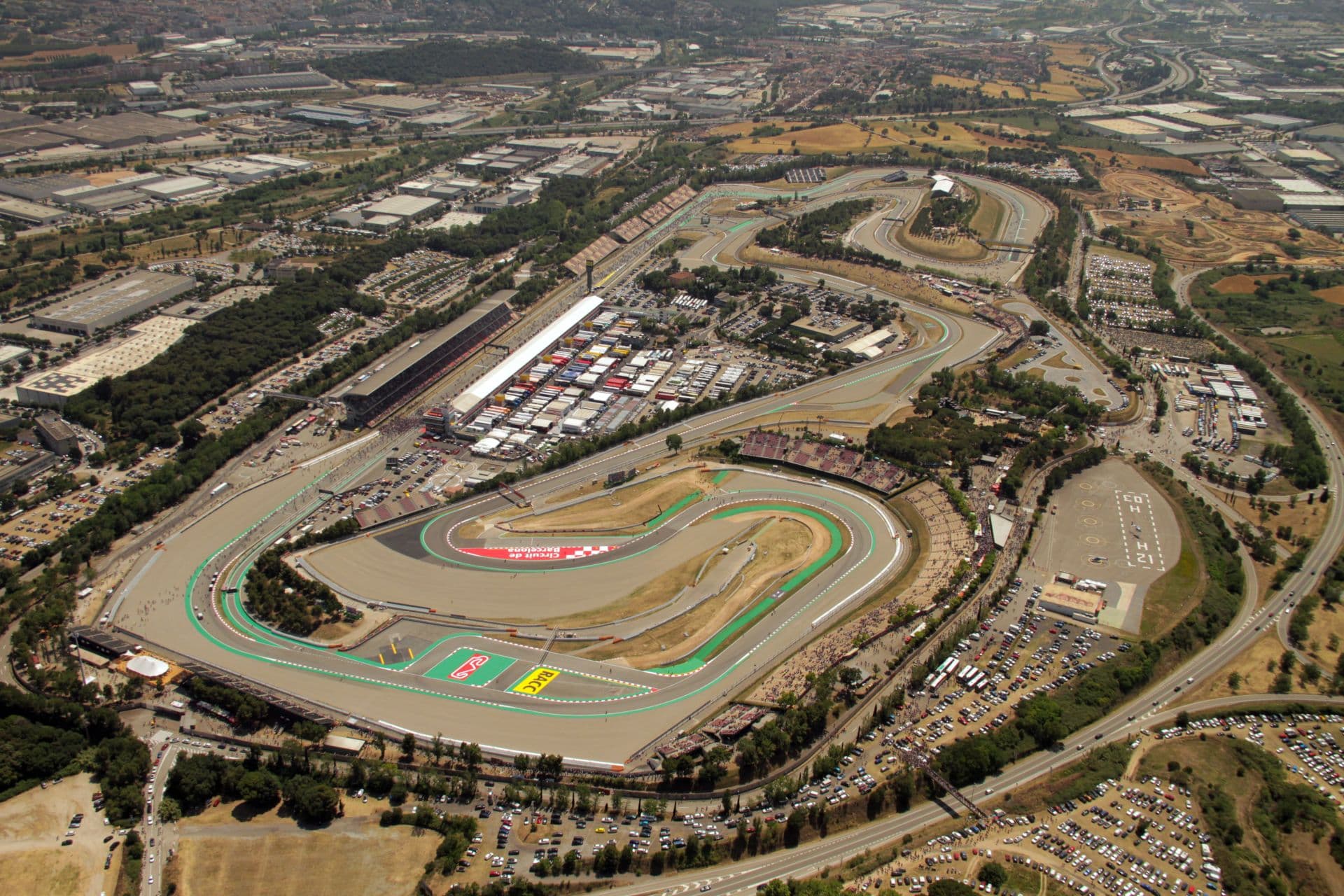
One of the primary pillars of Alonso’s ambassadorship has been his vocal support for the circuit’s massive infrastructure overhaul. Recognizing that history alone is insufficient to satisfy the modern demands of Liberty Media and the FIA, the Circuit de Barcelona-Catalunya embarked on an ambitious modernization program that reached its zenith in early 2025.
The renovations were comprehensive. From the state-of-the-art hospitality suites and the revamped paddock area to the technical upgrades in the pit lane, the facility sought to shed its image as a "classic" (read: aging) venue and re-emerge as a futuristic hub for motorsport. Alonso was instrumental in validating these changes.
"It was necessary for the Circuit to take this step," Alonso noted during a tour of the new facilities. "To have a solid future and adapt to the current demands and standards of F1, you cannot stand still. These upgrades have brought the circuit up to 'level ten.' It now stands as one of the most modern facilities in the world, capable of offering a 360-degree experience for teams, sponsors, and fans alike."
As an expert journalist covering these developments, it is clear that Alonso’s endorsement served as a crucial "seal of approval" for the FIA. His technical feedback on the track’s evolution—including the removal of the final chicane in previous years to restore the high-speed flow of the final sector—has helped maintain the circuit’s reputation as the ultimate testing ground for aerodynamic efficiency.
The Madrid factor: a diplomatic tightrope
The most complex aspect of Alonso’s 2025 ambassadorship has been navigating the political tension between Barcelona and Madrid. With the Madrid street circuit confirmed to host the Spanish Grand Prix from 2026 onwards, the Circuit de Barcelona-Catalunya faced a potential identity crisis.

Alonso, ever the strategist, refused to frame the situation as a zero-sum game. While he accepted the role in Barcelona, he remained diplomatic regarding the capital’s entry into the sport. "I am happy to have two races in Spain if that is possible," he stated during the 2025 Spanish GP weekend. "Madrid will bring a different energy, a city-center vibe that F1 loves right now. But Barcelona is the heart of racing tradition in this country. We must weigh all options, but these historic circuits must be kept. Safety and the pure racing experience found here cannot be underestimated."
His ambassadorship has essentially been a campaign for "co-existence." By highlighting Barcelona’s unique attributes—its permanent nature, its role as a training ground, and its established fan base—Alonso has argued that Spain is large enough and passionate enough to support two distinct F1 events, much like the United States or Italy.
Mentoring the next generation
Beyond the high-stakes politics of the F1 calendar, Alonso’s role has focused heavily on the future of Spanish talent. The Circuit de Barcelona-Catalunya has long been a hub for junior categories, from Formula 4 to Formula 2, and Alonso has leveraged his position to enhance the circuit’s driver development programs.
"The idea is to help future generations with my experience," Alonso explained. "Combined with the Circuit’s 35 years of expertise in hosting major events, we can offer young drivers something they can’t get anywhere else. It’s about the 360-degree experience—learning the technical side, the physical preparation, and the mental discipline required at the highest level."
Throughout the 2025 season, Alonso was frequently seen engaging with young drivers at the track, offering insights that only a veteran of 400+ Grands Prix could provide. This aspect of his ambassadorship ensures that even if the F1 circus eventually moves on, the circuit remains the spiritual and practical home of Spanish motorsport.
Sustainability: planting the seeds of the future
In a move that surprised many but perfectly aligned with F1’s "Net Zero 2030" goals, Alonso’s ambassadorship also took on an environmental dimension. In a widely publicized event, Alonso was seen trading his steering wheel for a shovel, participating in a massive reforestation project on the circuit grounds.
Over 200 trees were planted as part of a broader initiative to make the Circuit de Barcelona-Catalunya one of the most sustainable permanent racing facilities in Europe. "Sustainability is not just a buzzword; it’s a requirement for the future of our sport," Alonso said during the event. "By making the circuit greener and more energy-efficient, we are ensuring it remains relevant for the next 35 years."
This hands-on approach to sustainability helped soften the circuit’s image, presenting it as a forward-thinking institution that respects its natural surroundings while hosting high-octane events.
The 35th anniversary milestone
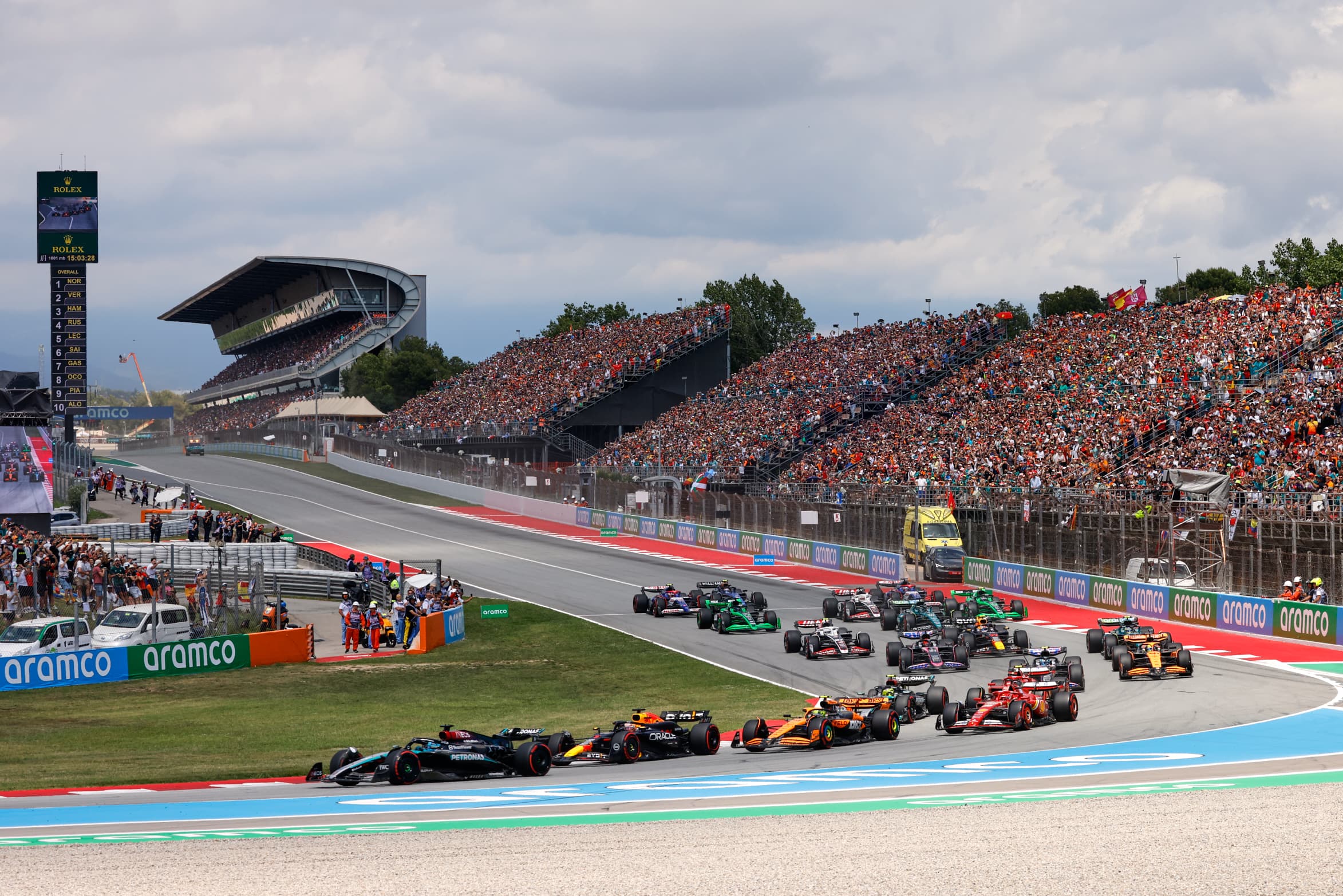
The 2025 Spanish Grand Prix marked a historic milestone: 35 consecutive editions of the race held at the Circuit de Barcelona-Catalunya. Coinciding with the 75th anniversary of Formula 1, the event was a celebration of everything the venue has contributed to the sport.
As ambassador, Alonso was the master of ceremonies for these celebrations. He led parades of historic cars, met with fans who had attended the very first race in 1991, and served as a bridge between the sport’s storied past and its uncertain future. The atmosphere in the grandstands was electric, a sea of blue and green (representing both his Asturian roots and his Aston Martin colors) that served as a powerful visual argument for the circuit’s retention.
Conclusion: a champion’s lasting impact
As we look toward the 2026 season and the debut of the Madrid circuit, the impact of Fernando Alonso’s ambassadorship is undeniable. He has transformed the conversation around the Circuit de Barcelona-Catalunya from one of "inevitable decline" to one of "essential evolution."
By lending his name, his time, and his passion to the venue, Alonso has ensured that Barcelona remains a vital part of the F1 conversation. He has shown that a circuit can be both a museum of racing history and a cutting-edge laboratory for the future. Whether the track secures a long-term extension beyond 2026 remains to be seen, but thanks to Alonso, it has never been in a stronger position to fight for its place on the grid.
In the world of Formula 1, drivers come and go, but the cathedrals of the sport—the Spas, the Monzas, and the Barcelonas—are what give the championship its soul. Fernando Alonso knows this better than anyone. His work as an ambassador in 2025 wasn't just about promoting a track; it was about protecting the very essence of the sport that made him a legend.

Simone Scanu
He’s a software engineer with a deep passion for Formula 1 and motorsport. He co-founded Formula Live Pulse to make live telemetry and race insights accessible, visual, and easy to follow.