
FIA revises F1 Qualifying format for historic 22-car grid in 2026: what changes and why

The arrival of Cadillac as the 11th team on the Formula 1 grid marks a significant milestone for the sport, expanding the field to 22 cars for the first time in recent years. While this expansion represents a major achievement in terms of manufacturer interest and global competition, it has necessitated strategic adjustments to the sport's qualifying procedures. The FIA, in response to this unprecedented grid size, has carefully recalibrated the knockout structure to ensure that the pinnacle of motorsport's most critical session—the quest for pole position—remains competitive and compelling.
The expansion required the FIA to address a fundamental challenge: how to maintain the integrity and excitement of qualifying while accommodating two additional competitors. The solution reflects the governing body's commitment to preserving the familiar three-stage knockout format while making targeted adjustments to ensure that Q3 remains a ten-car shootout for pole position.
Understanding the 2026 Qualifying structure
The 2026 qualifying format retains the familiar three-part knockout structure that fans have come to expect. However, the scaling adjustments necessary for the 22-car grid introduce specific changes to the elimination thresholds at each stage.
Session duration and timing
The timing of each qualifying session remains consistent with current regulations:
- Q1: 18 minutes, followed by a 7-minute break
- Q2: 15 minutes, followed by a 7-minute break
- Q3: 12 minutes, followed by an 8-minute break
These unchanged durations mean teams will have the same amount of track time to extract maximum performance from their machinery during each stage.
The elimination changes: where Cadillac's arrival makes a difference
%2FFormula%25201%2520header%2520templates%2520-%25202025-03-07T160702.198.webp&w=3840&q=75)
The critical adjustment introduced for the 22-car grid concerns the elimination thresholds in Q1 and Q2. Under the FIA's 2026 sporting regulations, the format now specifies that "if twenty-two (22) Cars are eligible six (6) will be eliminated after Q1 and Q2".
This represents an increase from the traditional format used with smaller grids. The progression now works as follows:
Q1 (18 minutes): All 22 cars participate in the opening session. The six slowest drivers are eliminated, leaving 16 cars to advance to Q2. These eliminated drivers secure grid positions P17–P22, with their final positions determined by their fastest Q1 times.
Q2 (15 minutes): The 16 advancing drivers compete for progression to the final shootout. Again, the six slowest cars are eliminated, reducing the field to 10 drivers. The eliminated drivers from Q2 secure positions P11–P16, ranked by their fastest times in this session.
Q3 (12 minutes): The final ten drivers compete without elimination, with their Q3 lap times determining the grid positions P1–P10 in order of performance.
Crucially, the sporting regulations confirm that lap times achieved during Q1 and Q2 are deleted at the end of each session, preventing drivers from "banking" times from previous stages. This maintains the strategic element where teams must make critical tire and setup decisions throughout qualifying.
Sprint Qualifying undergoes similar adjustments
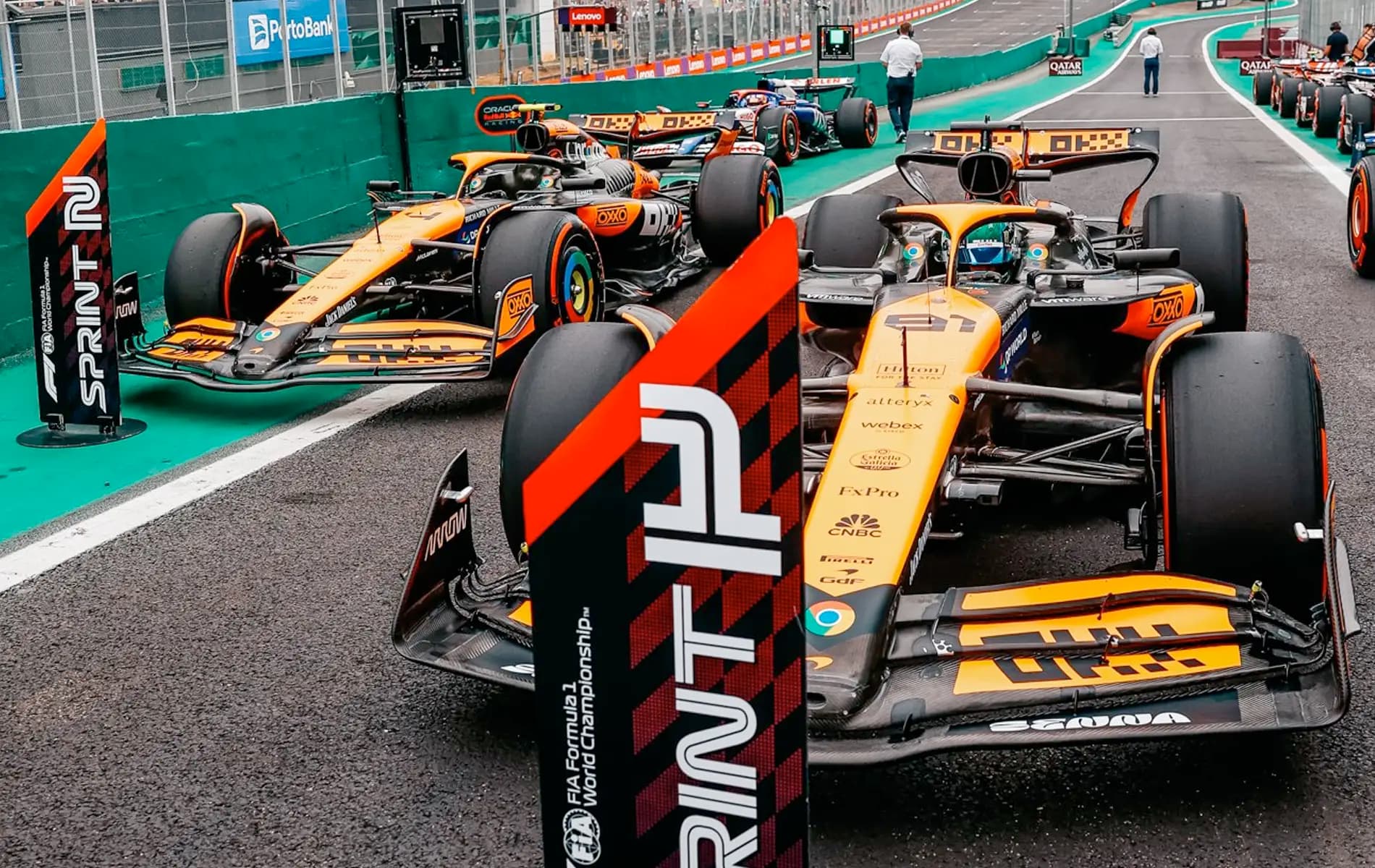
The changes are not limited to the main qualifying format. Sprint qualifying experiences parallel adjustments to accommodate the larger grid. The sprint qualifying sessions operate on compressed timescales but follow the same elimination structure:
SQ1 (12 minutes): All 22 cars participate on new Medium compound tires. Six drivers are eliminated, with the remaining 16 advancing.
SQ2 (10 minutes): The 16 advancing drivers continue on new Medium tires, with six more eliminations reducing the field to 10.
SQ3 (8 minutes): The final ten drivers compete for sprint pole position on Soft compound tires.
This consistency between the main qualifying format and sprint qualifying ensures that teams face a unified structure throughout the weekend, simplifying strategic planning and tire allocation.
Why these changes were necessary
The expansion to 22 cars fundamentally altered the mathematics of qualifying. Previous qualifying formats with 20-car grids eliminated specific numbers of drivers at each stage to funnel the field down to ten finalists for pole position. With Cadillac's addition of two extra competitors, the FIA faced a choice: either adjust the elimination thresholds or change the fundamental structure of qualifying.
The FIA's decision to increase eliminations from five to six drivers at both Q1 and Q2 represents the most elegant solution. This approach preserves the three-stage knockout format that fans understand and appreciate while ensuring that the top 10 positions remain reserved for the ultimate battle in Q3. The result is that qualifying maintains its strategic intensity without becoming unnecessarily protracted.
Preserving the pole position shootout
One critical aspect of the FIA's approach is the preservation of Q3 as a ten-car shootout. This decision reflects the sport's commitment to maintaining the drama and significance of pole position pursuit. With exactly ten cars competing in the final stage, every position carries maximum importance, and the pressure on drivers and engineers reaches its peak. The elimination of lap time banking in Q1 and Q2 further amplifies this pressure—drivers cannot afford to take calculated risks early in qualifying, knowing that a strong morning performance provides no safety net.
The broader implications
The successful adaptation of qualifying for the 22-car grid demonstrates the FIA's ability to balance competitive integrity with practical necessity. While some might have anticipated more dramatic structural changes, the measured approach taken here ensures continuity while addressing the mathematical realities of an expanded field.
For teams, the implications are significant. Qualifying strategy must account for increased competition in Q1 and Q2, where the margin for error has shrunk with more drivers eliminated at each stage. Teams will need to maximize their performance throughout all three sessions to ensure their drivers secure Q3 berths, with no guarantee that strong early-session pace will be sufficient.
Conclusion
The FIA's revision of the qualifying format for 2026 represents a pragmatic solution to the challenge posed by Formula 1's expanded 22-car grid. By increasing eliminations in Q1 and Q2 to six drivers each while maintaining Q3 as a ten-car final shootout, the governing body has preserved the essence of qualifying while accommodating Cadillac's historic entry into the sport. The result is a structure that remains familiar to fans while reflecting the new competitive landscape that will define Formula 1's next era.

Simone Scanu
He’s a software engineer with a deep passion for Formula 1 and motorsport. He co-founded Formula Live Pulse to make live telemetry and race insights accessible, visual, and easy to follow.