
The Australian Grand Prix will feature five Straight Mode zones

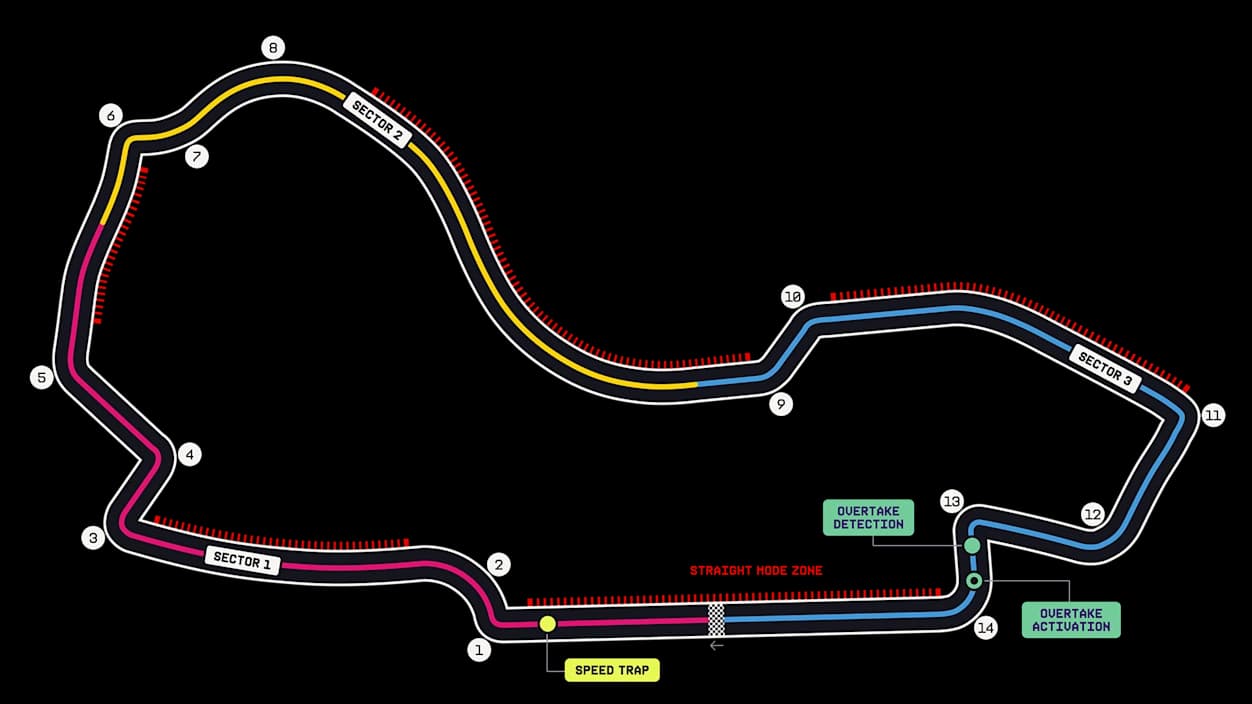
Formula 1 enters uncharted territory this March as the sport transitions into its most technically ambitious regulation cycle in decades. The Australian Grand Prix, scheduled for March 6-8, will serve as the curtain-raiser for this revolutionary era, with Albert Park's track layout fundamentally redesigned to accommodate five Straight Mode zones and a singular Overtake Mode activation point. This marks the official retirement of Drag Reduction System (DRS), a technology that has defined overtaking strategy since its introduction in 2011.
The FIA has methodically mapped out these zones across Albert Park's 5.303-kilometer circuit. Beyond the pit straight, where drivers will also access Overtake Mode between Turns 13 and 14, additional Straight Mode zones have been strategically positioned on the shorter straights between Turns 2 and 3, and between the right-handers of Turns 5 and 6. The renowned Lakeside Drive between Turns 8 and 9, coupled with another activation point on the approach to Turn 11, completes the quintet of aerodynamic flexibility opportunities.
Overtake Mode: power, precision, and protocol
The replacement system, Overtake Mode (OM), operates on familiar principles while delivering unprecedented performance capabilities. Drivers within one second of the car ahead can activate OM, a mechanism mirroring DRS eligibility criteria. However, the technical execution diverges dramatically. While standard electrical output diminishes beyond 290 km/h, Overtake Mode permits drivers to maintain their full 350-kilowatt electrical complement up to 340 km/h, providing a tangible top-speed advantage for attacking competitors.
This represents more than a cosmetic rebranding of the previous system. The integration of active aerodynamics—wherein front and rear wings dynamically adjust their flex characteristics—introduces layers of strategic complexity absent from DRS-era racing.
Uncertainty clouds the competitive landscape
Driver feedback reveals considerable apprehension regarding 2026's overtaking dynamics. Ferrari's Charles Leclerc articulated widespread concerns, telling journalists: "I find it at the moment extremely difficult to get any overtakes, but it might improve with time in how we manage these kind of situations. But always comes with a price whenever you've got to overtake, and the price is a lot more costly than it was in the past."
The reduction from four DRS zones to a single Overtake Mode point at Albert Park has intensified speculation that Melbourne may prove restrictive for passing maneuvers. Energy management—a perpetual consideration in hybrid-power F1—now intersects with aerodynamic deployment, fundamentally altering tactical calculations.
As teams finalize preparations in pre-season testing, the true competitive implications of these regulatory upheavals remain shrouded in ambiguity. The 2026 Australian Grand Prix will provide the first definitive answers.

Simone Scanu
He’s a software engineer with a deep passion for Formula 1 and motorsport. He co-founded Formula Live Pulse to make live telemetry and race insights accessible, visual, and easy to follow.