
From swamp to speed: Madrid silences the haters with major construction milestone

For the better part of November, the narrative surrounding the 2026 Madrid Grand Prix was darker than a wet Friday practice at Spa. If you believed the whispers circulating in the paddock---and specifically those shouting from the Italian press---the "Madring" was dead on arrival. It was a "swamp." It was a financial black hole. It was a ghost track waiting to be replaced by a desperate Imola.
Today, those rumors hit a wall of reinforced concrete.
The organizers at IFEMA have just released a December 19 update that serves as a definitive "proof of life" for the project. The images of vertical construction on the pit building and fresh asphalt on the street sections don't just show progress; they are a calculated rebuttal to the "doom-mongering" that has threatened to derail the event's reputation before a single wheel has turned.
But does this update truly clear the track for September 2026, or is it just a well-timed PR safety car? Let's look at the evidence.
The "swamp" allegations vs. the concrete reality
To understand the significance of today's update, you have to rewind to November. The gloom originated from a scathing report by Italian outlet RMC Motori. Their journalists claimed to have visited the Valdebebas site, describing it as a "deserted" lot where "excavators and bulldozers were idling." They painted a picture of a project in paralysis, labeling the future paddock area a "swampy lot" with zero chance of meeting FIA homologation deadlines.
That report went viral for a reason: it confirmed the biases of traditionalist fans who hate street circuits, and it gave hope to the Tifosi that Imola might get a reprieve.
Today's update dismantles that narrative with forensic precision.
-
The Claim: "No visible signs of progress."
-
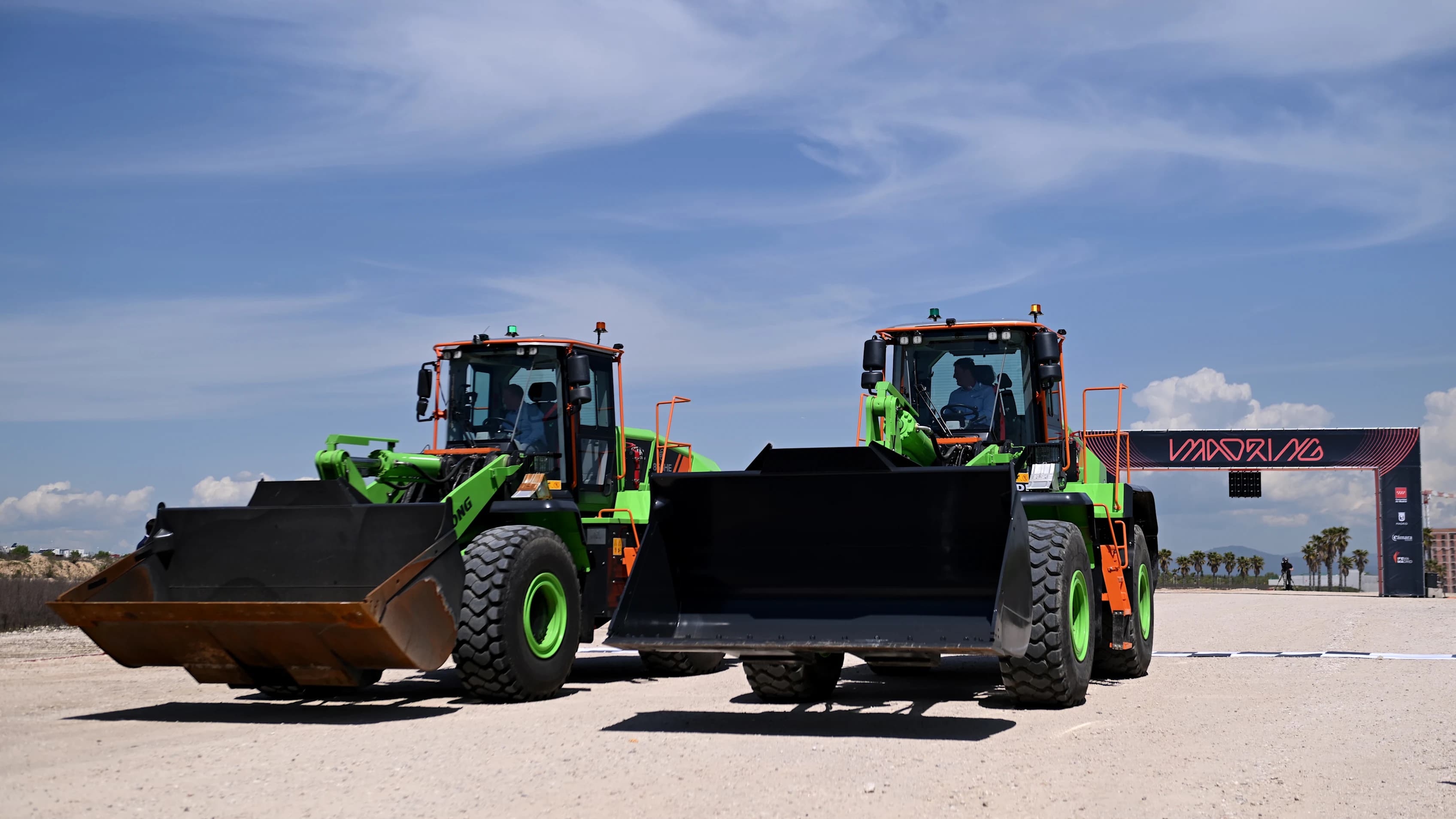
The Evidence: Construction has officially commenced on the permanent pit complex. This is not just earthworks; this is structural execution. This building is the heart of the Grade 1 license---housing the garages, the FIA technical bays, and the lucrative Paddock Club.
-
The Claim: "A swampy field."
-
The Evidence: The first layer of asphalt is being laid. You do not lay asphalt on a swamp. The transition from earth-moving to surfacing is the single most critical milestone in circuit construction. It signals that the foundational engineering---drainage, grading, and settling---is complete.
Mayor José Luis Martínez-Almeida had previously dismissed the cancellation rumors as "fake news," but politicians are paid to be optimistic. The presence of asphalt and steel is a far more reliable witness.
The Italian conspiracy: why Imola won't let go
It is impossible to analyze these rumors without looking at the geopolitical map of Formula 1. The Madrid GP is not just a new race; it is the race that effectively pushed Imola off the 2026 calendar.
The intensity of the negative coverage coming out of Italy is not coincidental. When the "swamp" rumors peaked, so did the reports that Liberty Media had activated a contingency plan to keep Imola on standby. The theory was seductive: Madrid would fail its deadline, and the Autodromo Enzo e Dino Ferrari would swoop in to save the day, keeping two races in Italy (alongside Monza).
This created a feedback loop where every minor delay in Madrid was amplified into a fatal error by transalpine media. Today's update is a direct message to Stefano Domenicali and the FIA: Put the backup plan away. We are ready.

The domestic battle: trees, noise, and "stop F1"
However, while the organizers may have silenced the international critics, the domestic battle is far from won. The construction photos might prove the track is being built, but they do nothing to quell the fury of the "Stop F1 Madrid" movement.
This is where the forensic view gets complicated. The opposition isn't just a few angry neighbors; it is a coordinated political and social movement. Their grievances are specific and verifiable:
-
The Ecological Cost: The removal of approximately 700 trees (including olive trees) has been a PR nightmare. While organizers promise replanting ratios, the visual of mature trees being uprooted sits poorly with F1's "Net Zero 2030" messaging.
-
The Noise: Residents in the upscale Valdebebas neighborhood are citing projected noise levels of 95dB, far exceeding the WHO residential recommendation of 55dB.
-
The "Valencia Trauma": This is the ghost that truly haunts Madrid. The failed Valencia Street Circuit left a crater in public finances. Despite Mayor Almeida's insistence that this project is privately funded, the skepticism remains high. If the private promoters falter, will the city pick up the bill?
Today's construction update confirms the track is happening, but it doesn't resolve the friction with the city it inhabits. We can expect protests to intensify as the physical reality of the circuit imposes itself on the neighborhood.
The circuit itself: more than a car park?
Amidst the politics, we must not forget the sport. Is the "Madring" actually going to be any good?
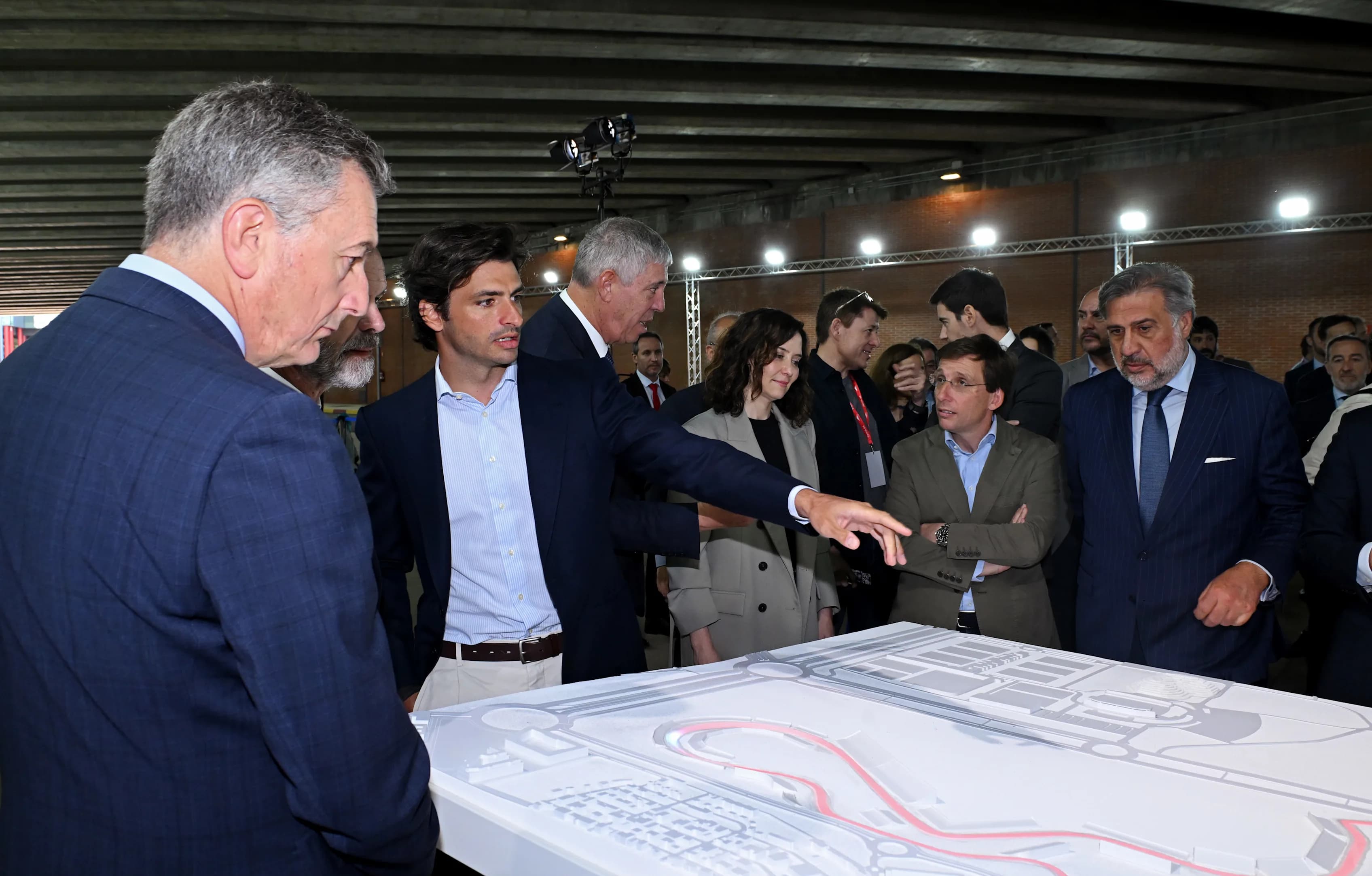
Carlos Sainz, confirmed today as the official ambassador, calls the layout a "dream come true." While he is contractually obligated to be enthusiastic, the technical details offer some hope that this won't be another sterile "car park" circuit like the Caesars Palace GP of old.
The 5.4km layout is a hybrid. It uses the exhibition center streets (like Sochi or Miami) but transitions into a permanent section that features a banked turn (Turn 10) and a steep downhill complex (Turns 7-9). The organizers are clearly trying to avoid the 90-degree monotony that plagues many modern street tracks. If Sainz is right, and the demo runs are anything to go by, this track might actually possess the one thing money can't buy: character.
The verdict: alive and kicking
The December 19 update is a significant tactical victory for the Madrid GP organizers. They have successfully shifted the conversation from "Will it happen?" to "How good will it be?"
The "swamp" theory is dead. The pit building is rising. The asphalt is cooling. The Italian media may still dream of an Imola reprieve, and the neighbors in Valdebebas may still be painting protest signs, but the physical reality is now undeniable.
The Madrid Grand Prix is no longer a rumor. It is a construction site. And in Formula 1, that is the only difference that matters.

Simone Scanu
Il est ingénieur logiciel et passionné de Formule 1 et de sport automobile. Il a cofondé Formula Live Pulse afin de rendre les données télémétriques en direct et les informations sur les courses accessibles, visuelles et faciles à suivre.