
Haas F1 Team faces daunting 2026 challenge as Komatsu admits "we are up against it"

Haas team principal Ayao Komatsu has delivered a candid assessment of the monumental task facing the American outfit in 2026. As the sport prepares for its most comprehensive regulation change in years, the message from the pit wall is clear: Haas is entering a critical, "make-or-break" juncture.
The reality check: why 2026 is critical
The 2026 season introduces entirely new aerodynamic specifications alongside a radical power unit architecture that prioritizes electrical energy and sustainable fuels. For the smallest team on the grid, these changes represent both an opportunity and a significant threat.

Since taking over from Guenther Steiner, Komatsu has focused on internal restructuring and improved communication. However, he remains acutely aware of the structural disadvantages Haas faces.
"I don’t like to keep hoping because if you just keep hoping, you don’t achieve anything," Komatsu stated. "You’ve got to be able to do something substantial."

Energy management: the new frontier
The most significant technical hurdle for 2026 is energy management. While power unit hardware will be largely locked in before the season begins, the differentiator will be how teams deploy electrical energy throughout a race stint.
Technical Director Andrea De Zordo believes this will dominate the early development agenda:
- Initial phase: focus on maximizing energy recovery and deployment.
- Secondary phase: aerodynamic gains will become the primary differentiator as energy strategies converge.
"After a certain time, when drivers, teams and also power unit suppliers learn more about this new way of racing, then gradually the performance on the energy side will converge between competitors," — Andrea De Zordo
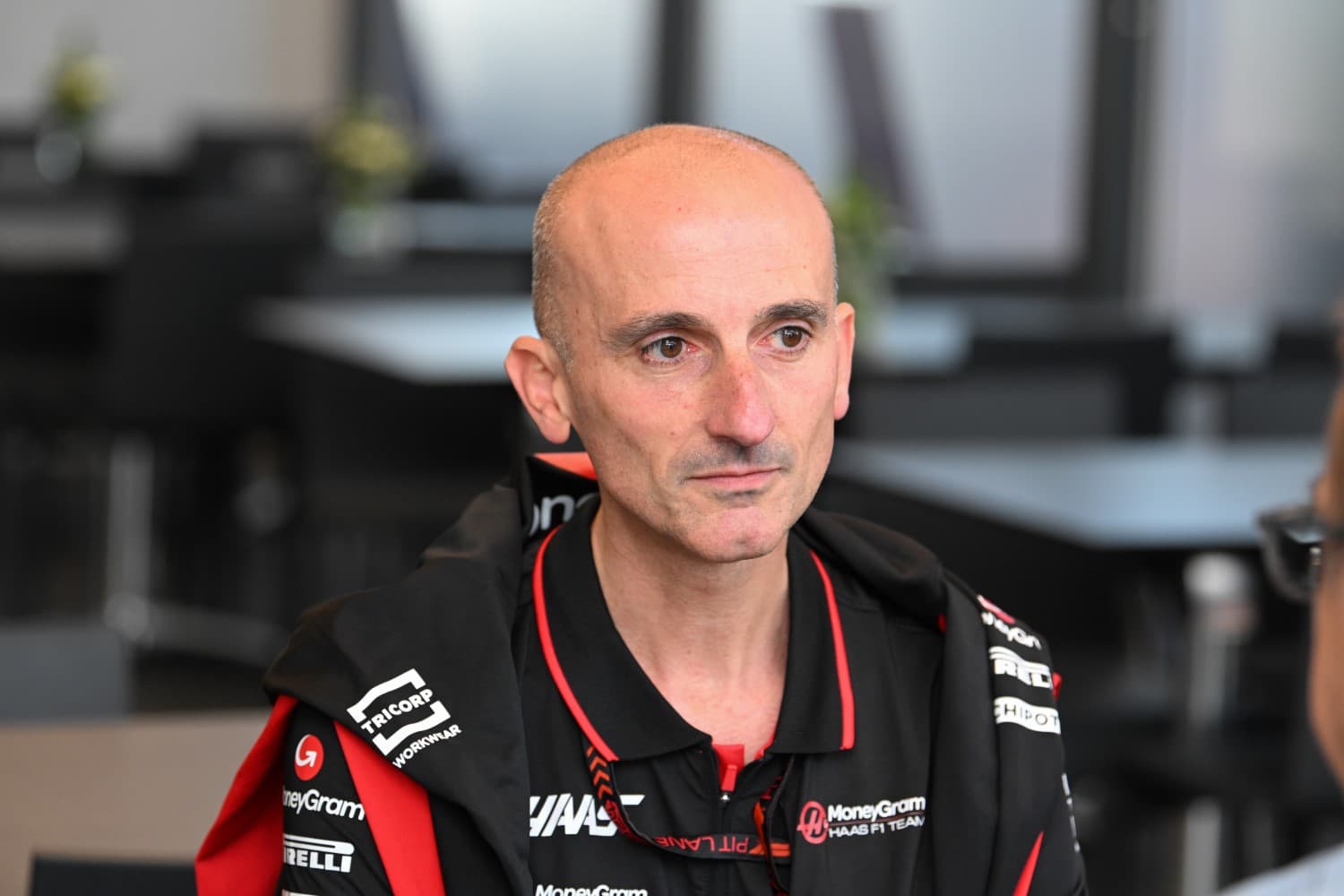
Komatsu admitted the full scope of this challenge remains a mystery: "I don’t know if we all understand the full extent of the challenge because we don’t know what we don’t know."
Resource constraints: the David vs. Goliath battle
Despite a bolstered technical partnership with Toyota—including a new driver-in-loop simulator—Haas remains a lean operation compared to the giants of the sport.
Komatsu specifically compared Haas to Williams, which finished fifth in 2025: "Williams is actually a very big team. They’ve got like 1,000 people," Komatsu noted. He emphasized that Haas cannot simply copy the Williams blueprint because their operational contexts are fundamentally different.
The VF-26: a rapid evolution
Komatsu revealed that the VF-26 will undergo a "volatile" development cycle. The car that fans see at the Barcelona shakedown (January 26–30) will likely look very different from the one that arrives at the season opener in Australia.
- Intensive wind tunnel use: development will continue through February.
- Learning curve: every team will be learning simultaneously, leading to a potentially unstable pecking order in the first few rounds.
- The quote: "The car everyone will see in Barcelona won't be the car that races in Australia."
The path forward
For Haas to survive and thrive in the new era, their strategy hinges on three pillars:
- Mastery of energy: prioritizing software and deployment strategies before pure aero.
- Swift adaptation: having the organizational agility to change design concepts if early testing fails.
- Internal cohesion: leveraging the "lean" nature of the team to move faster than larger, more bureaucratic rivals.
The verdict: while Haas faces an uphill battle against better-funded competitors, Komatsu is betting on efficiency and culture to bridge the gap. In 2026, being small might be a disadvantage, but being agile will be a necessity.

Simone Scanu
He’s a software engineer with a deep passion for Formula 1 and motorsport. He co-founded Formula Live Pulse to make live telemetry and race insights accessible, visual, and easy to follow.