

Loading

Honda believes it has taken steps forward in addressing the vibration issues affecting its Formula 1 power unit, but has cautioned that both it and Aston Martin could face a demanding weekend at Suzuka.
Ahead of the season opener in Australia, Aston Martin team principal Adrian Newey revealed that vibrations from the Honda engine risked causing nerve damage to the fingers of drivers Fernando Alonso and Lance Stroll. The severity of the issue became clear in China, where Alonso retired from the race amid excessive vibrations and was repeatedly seen removing his hands from the steering wheel to shake out his fingers.

While there has been measurable progress, Honda concedes the underlying problem has not yet been fully understood — and performance concerns remain.
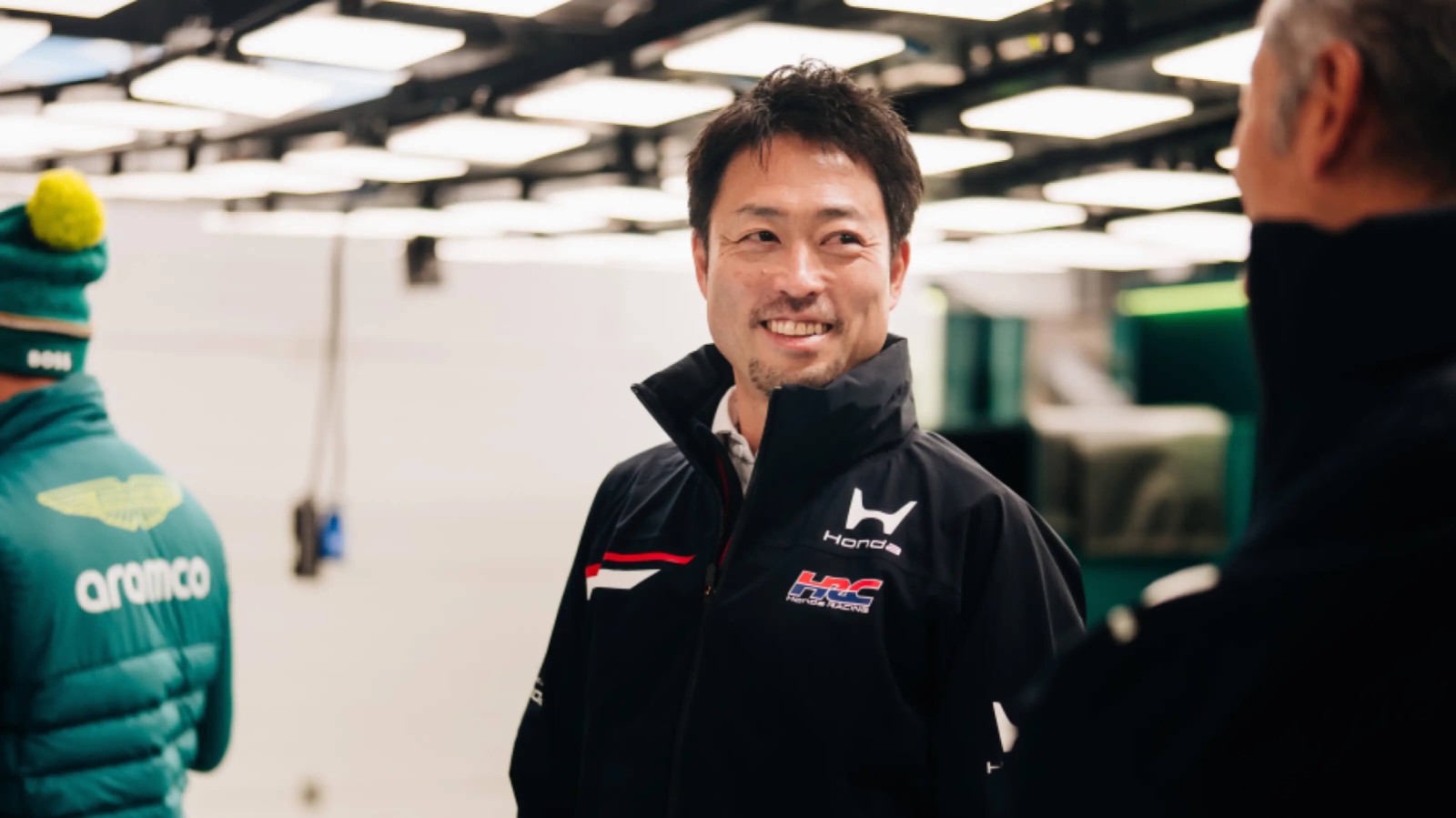
Honda’s trackside general manager and chief engineer, Shintaro Orihara, confirmed that improvements were made in China, particularly regarding battery reliability.

"In China, we made some progress in terms of battery reliability thanks to a reduction in the vibration affecting the systems, but we must find more solutions to establish the cause of the vibrations affecting the drivers," Orihara explained.
The development work has continued in the build-up to Japan, with a focus on reliability and overall system refinement. However, Honda admits that its performance level — especially in energy management — is still below expectations.
"We have also focused our efforts in the gap between China and Japan to continue to improve our reliability, but still our performance is not where we want it to be, especially regarding energy management," he added.
The timing of these challenges is far from ideal. Suzuka is described by Honda as a "tough track" for its current package, and the power unit is already understood to be down on power — a concern at a circuit that places significant demands on performance and energy deployment.
Honda has used lessons from Australia and China to better prepare for its home race, but expectations are being managed carefully.
"Suzuka Circuit is a tough track for this, so we have been using the learnings from Australia and China to prepare better for the Japanese Grand Prix," Orihara said. "We are not at the level where we wanted to be going into this weekend, but we will keep working hard to maximise our package."
The Japanese Grand Prix carries additional emotional weight as Honda marks its home event following its full-time return to Formula 1. Orihara spoke candidly about the personal significance of the occasion.
"Before I joined the Honda Formula 1 project, I was a big fan of Honda and motorsport. I have been attending Suzuka for decades; I was always excited to watch the sessions and cheer for Honda, so I know how passionate the fans are."
"Now I am proud to work in front of them, and we will keep pushing hard to show them what we can do. We know we can count on their support even if we would like to show better results on track."
Honda may have taken steps to reduce the worst effects of its vibration issues, but with performance still short of its targets and Suzuka likely to expose remaining weaknesses, its homecoming weekend promises to be a significant test of both resilience and progress.

He’s a software engineer with a deep passion for Formula 1 and motorsport. He co-founded Formula Live Pulse to make live telemetry and race insights accessible, visual, and easy to follow.
Want to add a comment? Download our app to join the conversation!
Comments
No comments yet
Be the first to share your thoughts!