
How Lewis Hamilton shaped Hans Zimmer's F1 movie score

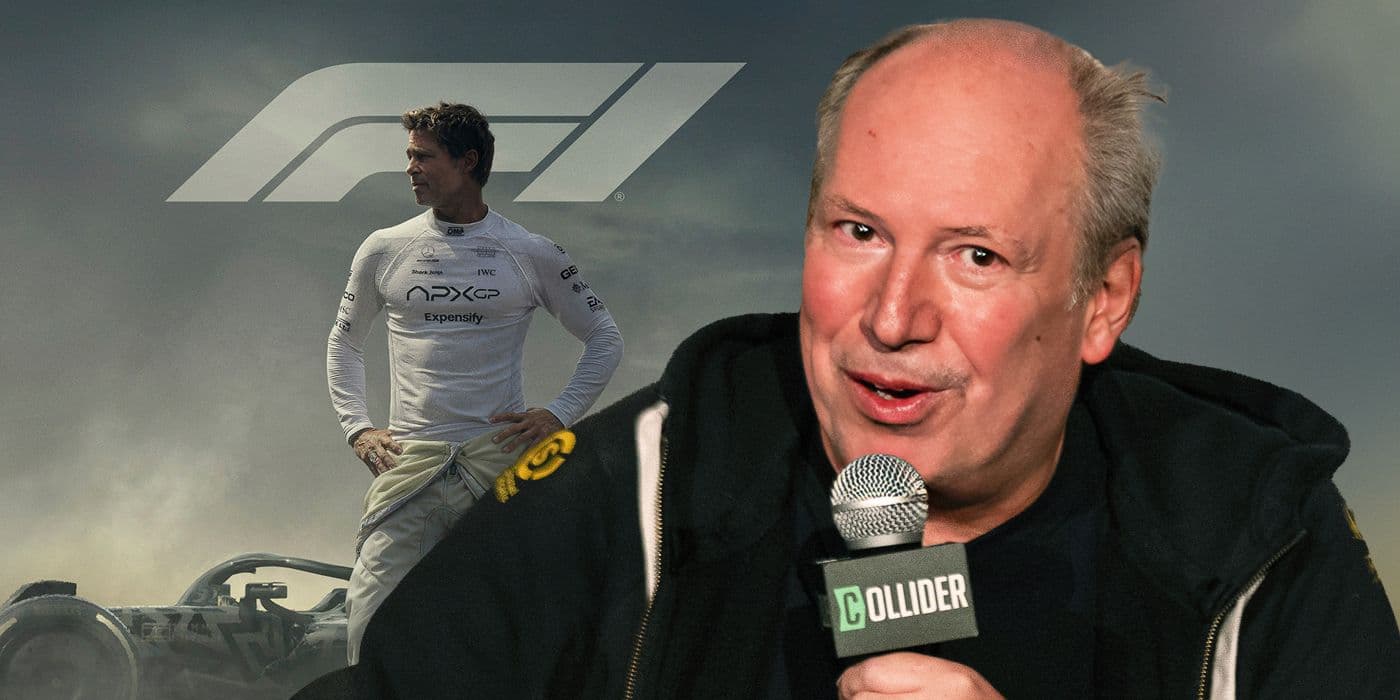
The Formula 1 film represents a landmark moment for motorsport cinema, bringing the pinnacle of racing to the big screen with unprecedented access and authenticity. Yet beyond the on-track drama and star-studded cast lies an equally compelling creative achievement: Hans Zimmer's Oscar-nominated film score, which has already garnered recognition from the Academy and the Golden Globes. Central to this musical triumph is an unlikely collaboration that bridges the gap between the real world of elite racing and the fictional narrative of the film—the conversations between the legendary composer and seven-time Formula 1 World Champion Lewis Hamilton.
These discussions fundamentally shaped how Zimmer approached one of his most ambitious projects, influencing everything from orchestral arrangements to the conceptual framework of the entire soundtrack. For a composer tasked with translating the raw emotion, precision, and technological sophistication of Formula 1 into a musical language, Hamilton's perspective proved invaluable.

The Genesis of Zimmer's F1 Score
When director Joseph Kosinski brought Hans Zimmer aboard to compose the score for F1: The Movie, he wasn't working with an untested collaboration. Zimmer and Kosinski had already established a creative partnership through Top Gun: Maverick, proving their ability to craft music that enhances high-octane action sequences while maintaining emotional depth. For Zimmer, the F1 film represented a return to motorsport scoring after composing the acclaimed soundtrack for Ron Howard's Rush (2013), giving him a sophisticated understanding of how music can enhance racing narratives.
However, this project presented unique challenges. Unlike Rush, which focused on the historical rivalry between Niki Lauda and James Hunt, the F1 film exists in a contemporary context where Formula 1 itself is experiencing unprecedented global growth and scrutiny. The sport's technical sophistication, the pressure cooker environment of modern racing, and the intersection of human instinct with cutting-edge technology required a fresh compositional approach.
This is where Hamilton's involvement became crucial. Not merely in his capacity as a producer and consultant, but as someone who lives and breathes the world that Zimmer needed to authentically represent musically.
Lewis Hamilton's Input: Bridging Realism and Artistry
Hamilton's conversations with Zimmer fundamentally influenced the composer's understanding of what it means to be inside a Formula 1 car, shaping how the orchestra would sound and how the musical themes would be written. Rather than approaching the score as an outsider fascinated by the mechanics of racing, Zimmer could now draw from Hamilton's intimate knowledge of the sensory, emotional, and physical experience of competing at the highest level.
"Having spent a lot of time talking to Lewis about what it's like to actually be inside the machine, that really influenced how I wanted the orchestra to sound, how the tunes were written, and the grace and the beauty and the power of those incredible cars," Zimmer explained. This insight proved transformative. For Zimmer, the conversation transcended technical specifications or lap time data—it was about capturing the feeling of being a Formula 1 driver.
Hamilton's perspective helped Zimmer conceptualize the relationship between the human and machine that would become the philosophical foundation of the entire score. The champion emphasized not just the mechanical precision required to extract maximum performance from a modern F1 car, but also the intuitive, almost artistic elements that separate champions from merely competent drivers. This duality—the marriage of calculated technical excellence with human instinct and creativity—became the core metaphor driving Zimmer's compositional choices.
The Hybrid Score Architecture
Perhaps Zimmer's most significant creative decision was the development of a "hybrid" score combining orchestral and electronic elements. This wasn't merely a stylistic choice; it was a direct translation of Hamilton's input into musical language.
"One of the things that I felt very strongly about was creating a sort of hybrid score between electronics and orchestra," Zimmer explained. The conceptualization was elegant in its simplicity: "For me, the orchestra was always the human that sits inside that machine, and the electronics is the machine." In other words, the sweeping strings and brass represent the driver—their instincts, emotions, and consciousness—while the synthesizers and electronic elements embody the technological sophistication of the modern F1 vehicle itself.
This artistic framework meant that conversations with Hamilton directly informed technical compositional decisions. The champion's descriptions of how drivers blend their instincts with machine feedback, how they read the car's behavior and respond intuitively, helped Zimmer understand how to balance the orchestral and electronic components so they didn't compete but rather complemented one another.
Co-composer Steve Mazzaro worked alongside Zimmer to execute this vision, and together they incorporated guitarist Tim Henson, drummer Marco Minnemann, and members of Zimmer's touring band into the ensemble. This represented Zimmer's 13th collaboration with producer Jerry Bruckheimer, a relationship stretching back to Days of Thunder (1990), adding another layer of motorsport authenticity to the project.
Capturing Unpredictability and Emotion
Hamilton's influence extended to how Zimmer approached the unpredictable nature of racing itself. The champion understood intuitively that despite Formula 1's emphasis on precision and strategy, races contain irreducible elements of surprise and drama. This understanding shaped how Zimmer used synthesizers and electronic elements in the score.
"With synthesizers, it's the same as in the race – you don't quite know who's going to do what next," Zimmer noted. "There's always the element of surprise built in, and I think that's very important in a film like this: you score for surprise." This principle meant that the electronic elements of the score incorporated variability and spontaneity, deliberately resisting predictability in ways that mirrored the tactical complexity of actual Formula 1 racing.
Furthermore, Hamilton's insights into the emotional intensity of racing shaped Zimmer's commitment to honoring the profound psychological and physical demands placed on drivers. The film's climactic final race sequence at the Yas Marina circuit in Abu Dhabi—Formula 1's most iconic finale location—required music that could convey both the technical precision and the emotional devastation inherent in championship-deciding moments. Mazzaro articulated this challenge: "These races are very emotional for these drivers. It's their life, you know? We wanted to honor that and bring it forward with the music as best we could."
The Sonic Identity: Gunslinger Motif and Racing Theme
At the center of Zimmer's compositional architecture lies a recurring "gunslinger motif" for Brad Pitt's character, Sonny Hayes—a theme Zimmer described as "slightly cheeky, slightly robust, and very recognizable." This character-driven musical identity provides the emotional anchor for the narrative, giving audiences a melodic focal point around which to process the protagonist's journey.
Beyond this primary theme exists a secondary, less defined but equally crucial theme representing the concept of racing itself. This racing theme appears predominantly in sequences depicting actual race action and reaches its apex in the climactic final race sequence. The distinction between these two thematic elements—one tied to character and emotional arc, the other to the sport itself—allowed Zimmer to create musical variety while maintaining cohesion.
The final sequence, particularly the cue "Three Laps Is a Lifetime," represents some of Zimmer's most powerful recent symphonic work, featuring a sweeping explosion of the main theme at its climax, complete with heroic brass countermelody. This musical crescendo encapsulates everything Hamilton helped Zimmer understand: the grace, beauty, and power of Formula 1 at its most essential.
Technical Precision and Synchronization
One of the most underappreciated aspects of scoring a film like this involves the mathematical relationship between musical tempo and visual editing. Zimmer and Mazzaro had to navigate a profound challenge: ensuring that the musical tempo enhanced rather than conflicted with the perceived speed of the cinematography.
"We spent forever figuring out the tempo of the music against the picture. If the music went too fast, the picture looked slow. If the music went too slow, it was out of sync," Zimmer explained. The solution involved establishing an overall tempo that amplified the film's sense of velocity. Remarkably, even dialogue sequences maintain a subtle rhythmic pulse, keeping the audience in a state of kinetic anticipation throughout.
This technical mastery reflects the influence of Hamilton's understanding of racing tempo and rhythm. A driver doesn't experience a race as discrete moments; rather, it's a continuous flow where braking points, acceleration zones, and apex markers create a fluid temporal structure. Zimmer translated this flowing temporal experience into music that never permits the listener to disengage, mirroring the sustained intensity of competitive racing.
Critical Recognition and Industry Impact
The film's score has already achieved recognition that validates Zimmer's approach and, by extension, the collaborative influence of Hamilton's insights. The film earned a Golden Globe nomination, and the score itself received an Oscar shortlist spot for Best Original Score, remarkable achievements for a sports film score in an era when such recognition remains rare.
Producer Jerry Bruckheimer articulated how Zimmer captured the essence of what Hamilton had communicated: "Hans captured it with his score. He captured how you blend and hear the music, yet also hear the roar of the car and the crowd. It's such an impossible task to hit the right tones, the right frequencies to cut through, and yet let the cars be as dynamic as they are. Hans made the cars romantic – the melody overwhelms you and sweeps you away."
This assessment reveals that Hamilton's influence ultimately transcended technical input; it fundamentally shaped how Zimmer approached the emotional core of the entire project, making the machinery of Formula 1 not merely impressive but genuinely moving.
Conclusion
The F1 movie score represents a masterclass in how expert consultation can elevate artistic work from competent to exceptional. Hans Zimmer's willingness to engage deeply with Lewis Hamilton's perspective—drawing from a seven-time champion's lived experience of elite racing—transformed abstract compositional concepts into a musical narrative that authentically captures Formula 1's essence. The hybrid orchestral-electronic architecture, the carefully calibrated tempos, the emotional resonance of character and racing themes—all bear Hamilton's fingerprints.
As audiences experience the film and the score achieves its inevitable wider recognition during awards season, they're hearing not just Zimmer's genius for orchestration, but also Hamilton's contribution to helping one of cinema's greatest composers understand and translate the profound intersection of human achievement and technological prowess that defines Formula 1.

Simone Scanu
He’s a software engineer with a deep passion for Formula 1 and motorsport. He co-founded Formula Live Pulse to make live telemetry and race insights accessible, visual, and easy to follow.