
Leclerc’s honest assessment: why advice can’t bridge Hamilton’s Ferrari adaptation gap

Charles Leclerc's candid admission that he cannot offer meaningful advice to Lewis Hamilton encapsulates one of Formula 1's most compelling realities: the adaptation process to a new team is profoundly individual. While Leclerc's comment may seem dismissive on the surface, it actually reflects a sophisticated understanding of why Hamilton's first season at Ferrari became one of the most difficult campaigns of the seven-time world champion's career.
The 2025 Formula 1 season has provided an uncomfortable narrative for Hamilton enthusiasts and Ferrari strategists alike. After spending two decades at Mercedes—first as a developmental prospect under Ron Dennis, then as the team's centerpiece for twelve seasons—Hamilton's transition to the Scuderia revealed that championship pedigree and raw talent cannot always overcome the fundamental challenges of adapting to a radically different machine and methodology.

The fundamental divide in driving style
The core issue Leclerc was implicitly addressing relates to the substantial differences in how each driver extracts performance from the Ferrari. Hamilton's established technique, refined across two decades of Mercedes dominance, relies on specific inputs that don't translate seamlessly to the SF-25's characteristics. His driving style has historically consisted of maintaining extreme braking stability while hitting the pedal very late, combined with maintaining a car on the edge of under-rotation on corner entry. Hamilton also generates significant energy through the front tyres via numerous micro-adjustments as he progresses through corners, a philosophy that tolerates considerable rear-end movement in exchange for superior cornering speed.
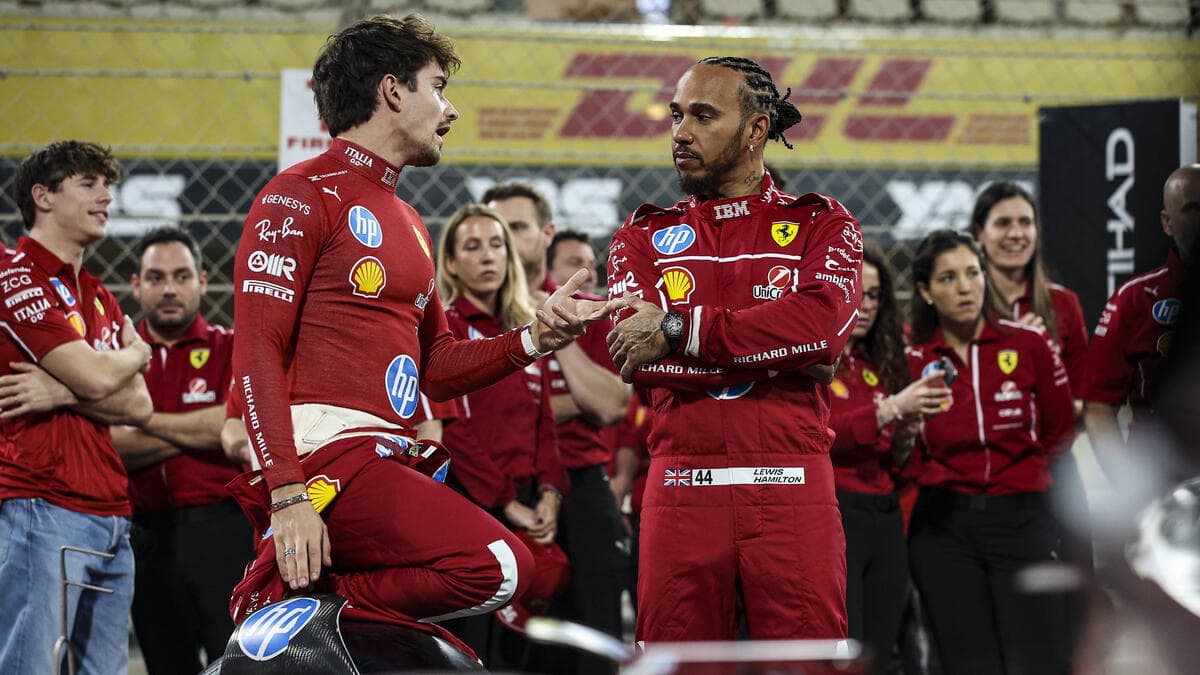
Leclerc operates from an entirely different methodological framework. His approach utilizes what technical analysts describe as a "little turn, big turn" methodology, particularly effective in medium- and lower-speed corners, which directly combats understeer tendencies. This smoother, more progressive steering input style has allowed Leclerc to build an instinctive rapport with the Ferrari package that Hamilton simply hasn't achieved. The philosophical difference between Hamilton's aggressive, energy-intensive approach and Leclerc's measured, progressive inputs cannot be resolved through conversation or instruction—they represent fundamentally incompatible relationships with the same machinery.
When Leclerc states he cannot offer advice, he's acknowledging a truth that transcends motorsport: you cannot teach someone to think differently about a machine they've spent years understanding through a completely opposite lens. Hamilton would need to unlearn twenty years of muscle memory and intuitive decision-making developed at Mercedes, a process that cannot be accelerated through teammate counsel.
The cruel mathematics of a difficult season
Hamilton's 2025 season tells a story of progressive deterioration rather than gradual adaptation. The qualifying battle between the teammates decisively favored Leclerc with a 23-7 advantage, demonstrating a consistent gap of 0.254 seconds on average. When removing the disastrous wet-weather qualifying session in Las Vegas—where the disparity became grotesquely exaggerated—the average gap narrows to a more respectable 0.179 seconds, yet this remains substantially worse than his predecessor's performances.

Carlos Sainz Jr., who joined Ferrari in 2021 during similarly challenging circumstances, finished just 0.109 seconds behind Leclerc across four seasons, or 0.189 seconds when accounting for Ferrari's difficult 2023 campaign. By this standard, Hamilton's performances represent a significant step backward, a reality that becomes even more acute when examining his championship point deficit: Hamilton accumulated merely 156 points against Leclerc's 242—a 86-point margin.
More troubling than the raw statistics is the directional trajectory. Hamilton demonstrated incremental improvement through the season's opening phases, finishing fourth in Austria and maintaining competitive positioning through the summer break, trailing Leclerc by just 16 points in the championship standings. However, the second half of the season witnessed a catastrophic collapse. The newly introduced rear suspension at Spa, intended to address aerodynamic inefficiencies, appeared to favor Leclerc's driving characteristics so thoroughly that Ferrari's development focus naturally gravitated toward his feedback. Hamilton failed to advance beyond Q1 in the final three races and managed only one top-five finish after the summer break, a statistical reality that would be difficult to reconcile with his championship-winning pedigree.
The technical adaptation complexity
Hamilton's struggles were exacerbated by Ferrari's unexpected technical crisis midway through the season. The team was forced to operate the SF-25 at such a low ride height to extract necessary aerodynamic performance that the plank wear exceeded FIA regulations. Hamilton's disqualification from the Shanghai Grand Prix after his sprint race victory epitomized this fundamental problem: Ferrari faced an impossible binary choice between running the car legally but aerodynamically handicapped, or running it competitively but at legal risk.
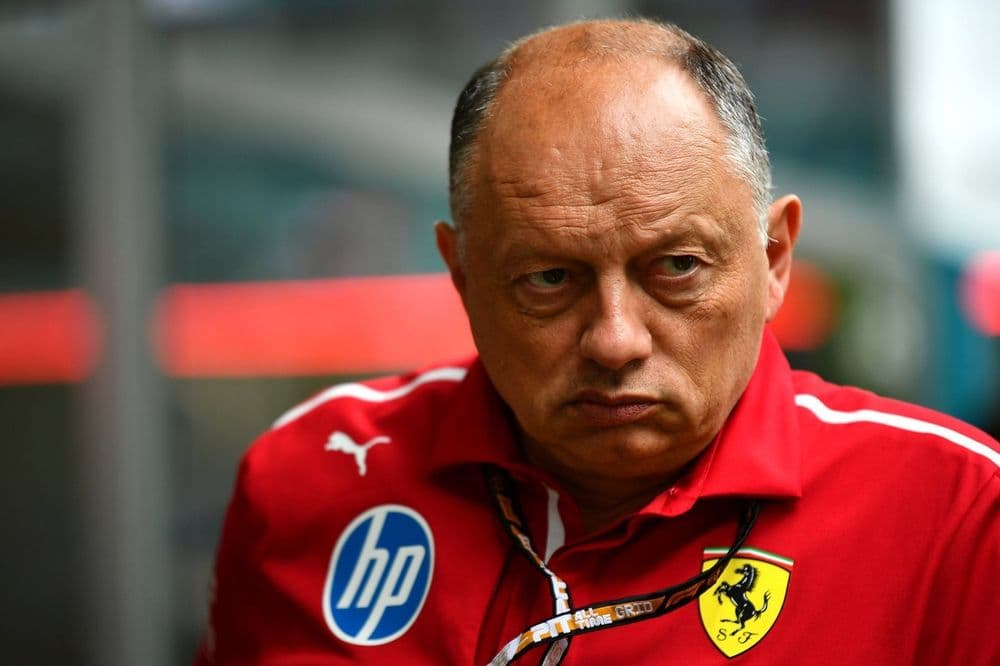
According to team principal Frédéric Vasseur, Ferrari "had to pay the bill for one third of the season" while addressing this unexpected development crisis. Early-season development resources that should have focused on closing the gap to McLaren were instead diverted toward recovering the unforeseen performance loss. For Hamilton, already struggling with adaptation, this meant any modifications he required would necessarily be deferred to the 2026 car, leaving him perpetually chasing solutions on outdated specifications.
Vasseur's own reflection on Hamilton's struggles reveals a candid acknowledgment: "I think it was difficult for Lewis, and it's too small a word probably... After 20 years—I say 20 years because for me McLaren was McLaren-Mercedes and then Mercedes—he spent 20 years with Mercedes, it was a huge change. I personally underestimated the step. It's not that we are doing worse or better, it's that we are just doing differently."
The reality of personal adaptation
Leclerc's inability to offer meaningful advice actually demonstrates considerable emotional intelligence and self-awareness. The Ferrari driver understands that watching someone struggle with machinery you've mastered instinctively creates an impossible situation. Any advice he might offer would be rooted in his own methodology, which is precisely what Hamilton cannot effectively replicate given their fundamental stylistic incompatibilities.
The adaptation process at Ferrari proved uniquely challenging for Hamilton because unlike younger drivers joining new teams early in their careers, he was attempting to reverse-engineer twenty years of ingrained muscle memory and instinctive decision-making. The human brain develops automatic responses to stimuli based on extensive repetition; at age 39, Hamilton's neurological patterns were essentially incompatible with the Ferrari's characteristics in ways that no amount of coaching could efficiently overcome.
Leclerc's pragmatism in acknowledging this reality reflects a maturity that transcends the competitive rivalry between teammates. He recognizes that Hamilton's struggle is not a failure of commitment or intelligence, but rather an inevitable consequence of asking a driver to fundamentally transform his relationship with a racing machine after two decades of development in an entirely different environment.
Implications for Ferrari's future
As Ferrari enters its 2026 campaign with the new technical regulations, Hamilton will finally have the opportunity to develop his adaptation from the ground floor. The fundamental question facing the team is whether the extra season of experience with Ferrari's methodology, aerodynamic philosophy, and engineering culture will be sufficient to restore Hamilton to competitive equilibrium with Leclerc, or whether the adaptation disadvantage has become too substantial to overcome.
Leclerc's honest assessment that he cannot offer meaningful advice serves as a reminder that Formula 1 competition operates on deeply personal levels, where two elite drivers operating identical machinery can produce dramatically different results based on nothing more than fundamental differences in how they approach the mechanical problem of extracting lap time from a racing car.

Simone Scanu
He’s a software engineer with a deep passion for Formula 1 and motorsport. He co-founded Formula Live Pulse to make live telemetry and race insights accessible, visual, and easy to follow.