
The Ferrari nightmare: can Lewis Hamilton salvage his legacy in 2026?

The 2025 Formula 1 season was supposed to be the crowning achievement of the greatest career in the sport's history. When Lewis Hamilton announced his shock move from Mercedes to Ferrari, the narrative was written in the stars: the most successful driver of all time joining the most iconic team to chase an unprecedented eighth world title. Instead, as the dust settles on the Abu Dhabi Grand Prix, the reality is a sobering, painful, and statistically disastrous campaign that has left the F1 world questioning if the "Hamilton Magic" has finally run out.
As of late December 2025, the post-mortem of Hamilton’s first year in Maranello makes for grim reading. Finishing a distant sixth in the Drivers' Championship, failing to secure a single podium, and being soundly beaten by his teammate Charles Leclerc, Hamilton has described this year as "the worst season ever." With the 2026 season looming as perhaps his final chance at redemption, we analyze what went wrong in 2025 and whether the seven-time champion can ever find his footing in the scarlet car.
A statistical disaster: the numbers behind the slump
To understand the depth of Hamilton’s struggle, one only needs to look at the championship standings. Hamilton ended the 2025 season in sixth place, a position that feels alien to a driver who spent a decade fighting for wins every weekend. More damningly, he finished the year a staggering 73 points behind his teammate Charles Leclerc.
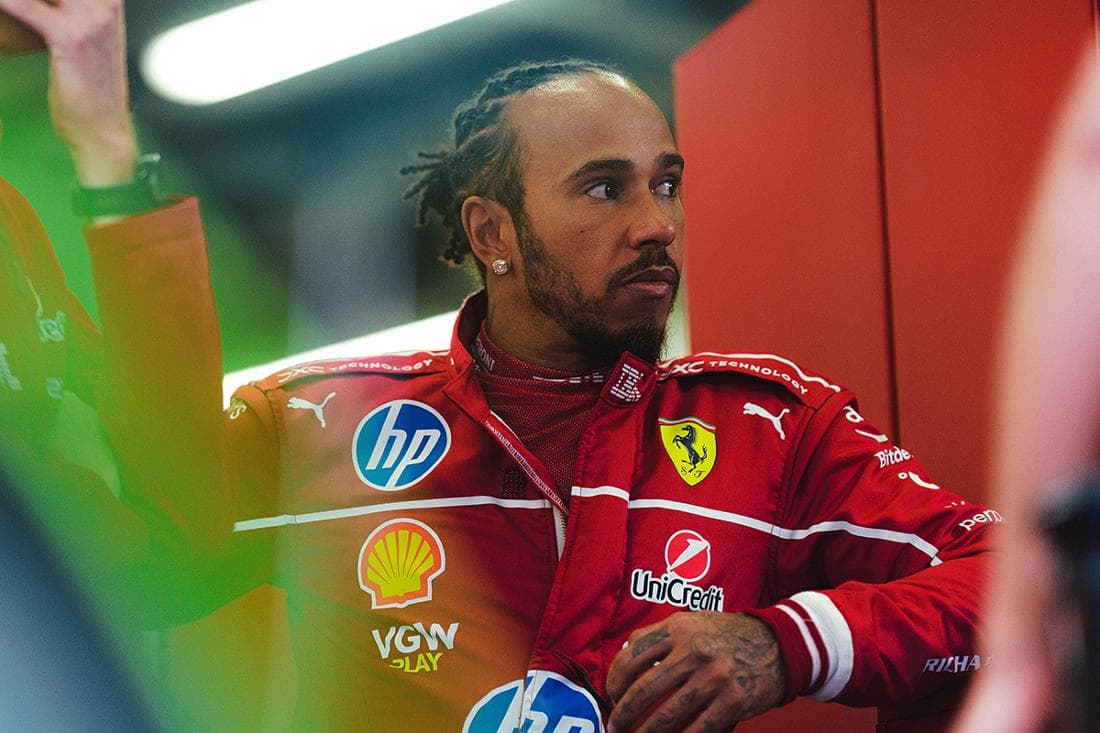
In Formula 1, your teammate is your only true benchmark. While Leclerc managed to extract performance from the SF-25, taking multiple podiums, Hamilton looked like a driver lost in the wilderness. The lack of a podium finish is perhaps the most shocking statistic of all. For the first time in his nearly two-decade career, Lewis Hamilton completed a full season without standing on one of the top three steps of the rostrum.
The gap to the front was not just a matter of points; it was a matter of pace. Throughout the 2025 season, Hamilton’s average qualifying position was his lowest on record. The SF-25, while a capable car in Leclerc’s hands, seemed to possess a "knife-edge" characteristic that Hamilton simply could not master.
The breaking point: Las Vegas and the "22 bad weekends"
If there was a moment that encapsulated the misery of Hamilton’s 2025, it was the Las Vegas Grand Prix. In a city built on glitz and glamour, Hamilton’s performance was anything but. After a disastrous qualifying session where he was knocked out in Q1—finishing 20th after failing to set a final lap in the rain—Hamilton’s race was a slog to a meaningless 10th place.
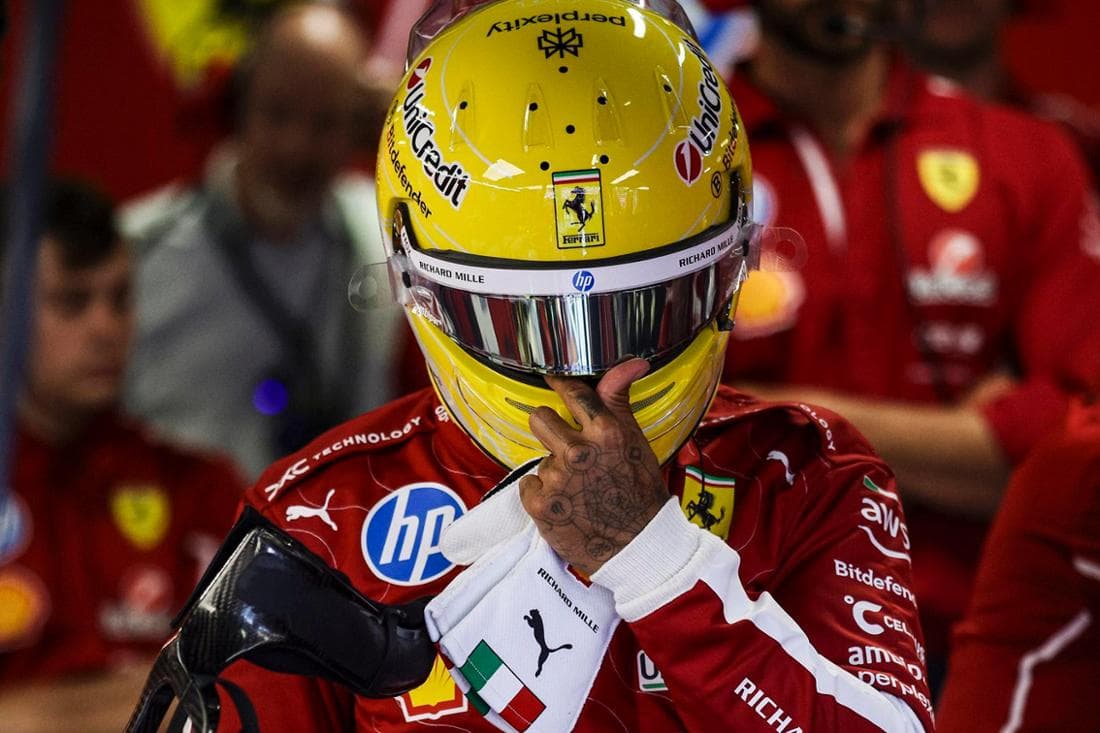
His post-race interviews in Nevada were some of the most downbeat of his career. When asked if there were any positives to take from the weekend, his response was a blunt, monosyllabic "No". When pushed on whether scoring a single point provided any satisfaction, he replied: "Zero. The most meaningless 10 places, doesn't mean anything. It's still a bad weekend."
Perhaps the most telling comment came when he was asked about his consistency throughout the year. Hamilton didn't mince words, stating he had endured "22 bad weekends" in 2025. This wasn't just a driver having a bad day; this was a driver who felt fundamentally disconnected from his machinery for the entire duration of the longest season in F1 history.
The Leclerc comparison: a changing of the guard?
While Hamilton struggled, Charles Leclerc found some potential. The Monégasque driver, often referred to as the "Prince of Maranello," asserted his dominance within the team from the very first race in Bahrain. Leclerc’s ability to "wring the neck" of the SF-25 in qualifying frequently put him on the front two rows, while Hamilton often found himself mired in the midfield, vulnerable to the "DRS trains" that have come to define modern F1 racing.

The contrast in their mentalities was also evident. After the Las Vegas race, while Hamilton was despondent, Leclerc was reflective and even somewhat positive, noting that despite a P6 finish, it was "probably the best race of the season in terms of personal performance."
This disparity has led many analysts to wonder if we are witnessing a definitive changing of the guard. Hamilton, at 40 years old, is facing a teammate in his absolute prime who has the entire Ferrari team built around his preferences. For the first time in his career, Hamilton is not the undisputed "alpha" in the garage, and the 2025 results suggest he is struggling to adapt to that reality.
Technical turmoil: why the SF-25 failed Hamilton
The technical reasons for Hamilton’s slump are complex. Insiders suggest that the SF-25’s front-end characteristics—specifically a tendency toward mid-corner understeer followed by snap oversteer on exit—clashed violently with Hamilton’s preferred driving style. Hamilton has historically favored a car with a "pointy" front end that allows him to carry high entry speed, a trait the 2025 Ferrari lacked.
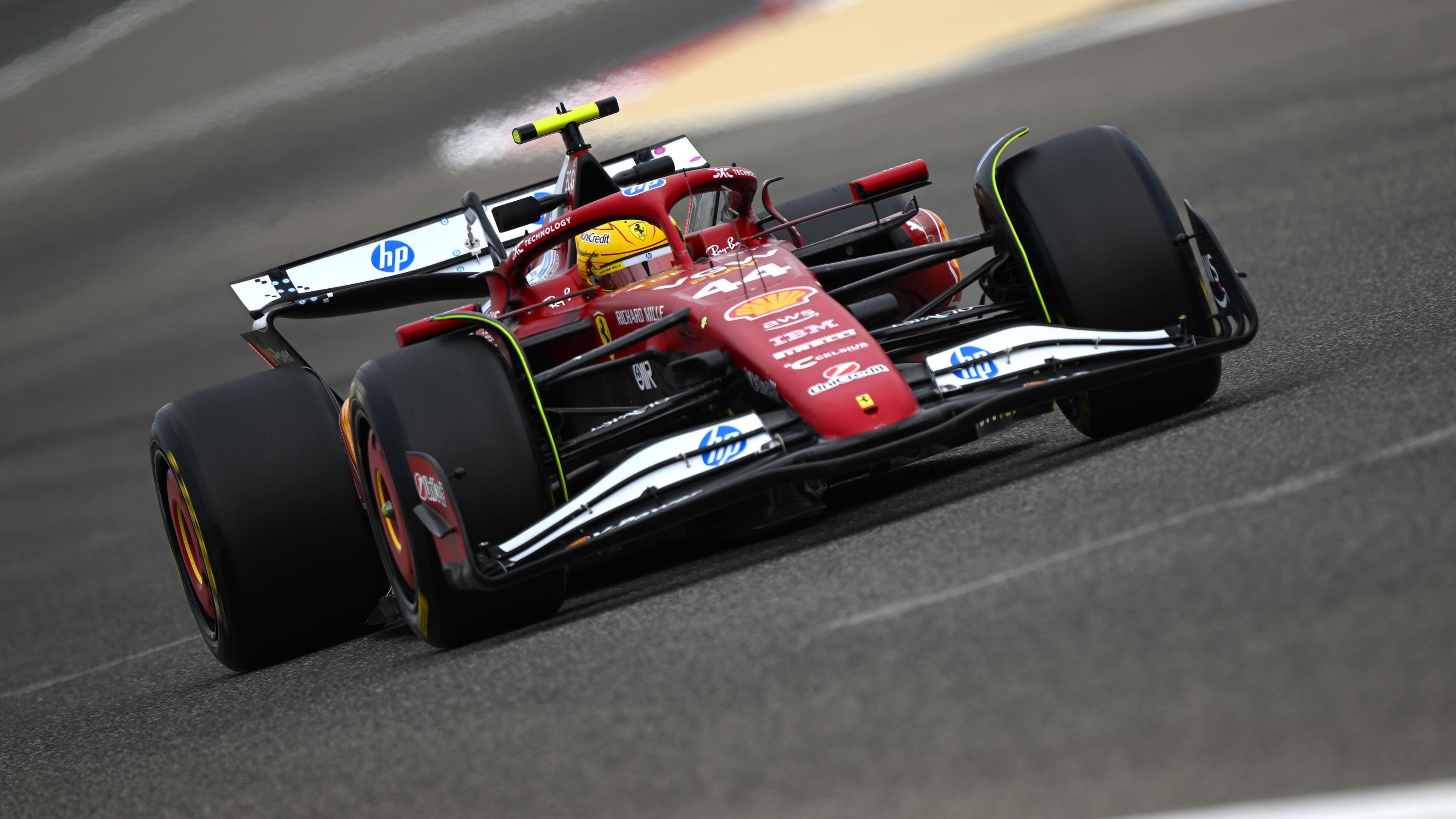
Furthermore, Hamilton’s struggles in wet or changing conditions were a recurring theme. His Q1 exit in Las Vegas was a prime example of a lack of confidence in the car’s braking stability on a low-grip surface. For a driver once considered the "Rain Master," seeing him struggle to make it out of the first segment of qualifying was a jarring sight for fans and pundits alike.
Hamilton himself admitted to trying "everything, in and out of the car" to find a solution, but the breakthrough never came. By the time the circus reached the final rounds in Qatar and Abu Dhabi, the body language suggested a driver who had simply checked out, waiting for the calendar to flip to 2026.
Looking to 2026: the final roll of the dice
As we look toward 2026, the stakes could not be higher. This will be the second year of Hamilton’s multi-year deal with Ferrari, and it may well be his last chance to prove he can still compete at the highest level.
There are reasons for cautious optimism. Ferrari is expected to bring a significantly revised aerodynamic philosophy for 2026, one that aims to provide a more stable platform for both drivers. Additionally, the 2026 season marks the beginning of the new engine and chassis regulations. Historically, Hamilton has excelled during regulation shifts, and the "clean slate" of 2026 could be exactly what he needs to bypass the inherent flaws of the SF-25.
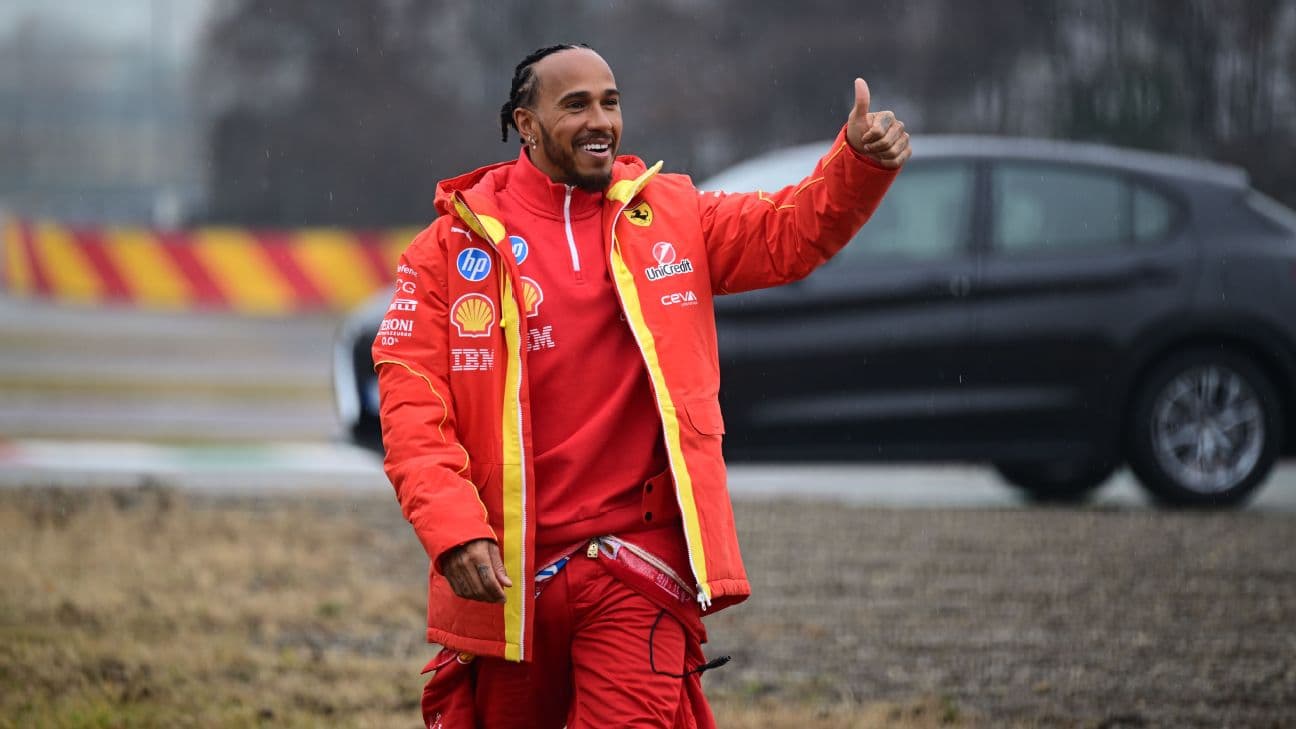
However, the psychological hurdle remains. When asked if the off-season would provide a much-needed reset, Hamilton’s haunting "I don't know" spoke volumes. To win in Formula 1, a driver needs total conviction. After 22 "bad weekends," rebuilding that wall of confidence will be the hardest task of Hamilton’s career.
Conclusion: redemption or retirement?
Lewis Hamilton’s 2025 season will go down as one of the great enigmas of Formula 1. Was it a case of a legendary driver finally hitting the "age wall," or was it a toxic combination of a difficult car and a dominant teammate?
The 2026 season will provide the answer. If Hamilton can return to the podium and challenge Leclerc, 2025 will be remembered as a difficult transition year—a "blip" in an otherwise stellar career. But if the pattern of 2025 repeats, the calls for Hamilton to hang up his helmet will become deafening.
For now, the Prancing Horse is limping. Whether Lewis Hamilton can find the spurs to make it gallop again in 2026 is the biggest question facing the sport. One thing is certain: the F1 world will be watching every lap, every corner, and every qualifying session to see if the King can reclaim his throne, or if the sun has finally set on the Hamilton era.

Simone Scanu
He’s a software engineer with a deep passion for Formula 1 and motorsport. He co-founded Formula Live Pulse to make live telemetry and race insights accessible, visual, and easy to follow.