
Mercedes' fall from dominance: four critical mistakes in the ground effect era that they can't repeat in 2026

As the Formula 1 world stands on the precipice of the 2026 regulation overhaul, the narrative surrounding the Mercedes-AMG Petronas F1 Team has shifted from one of invincibility to one of cautionary reflection. For eight consecutive years, from 2014 to 2021, the Silver Arrows were the undisputed masters of the sport, leveraging a superior power unit and a relentless development cycle to rewrite the record books. However, the transition to the ground effect era in 2022 triggered a decline that few saw coming—a four-year wilderness period marked by technical missteps, organizational stubbornness, and a loss of the "magic" that once made them untouchable.
As we look back from the vantage point of January 2026, it is clear that Mercedes' struggles were not the result of a single failure, but a series of critical mistakes that exposed the vulnerabilities of a team accustomed only to winning. To understand why Mercedes spent four years in the shadow of Red Bull and McLaren, we must dissect the four pivotal errors that defined their ground effect era.
The context: from 2021 heartbreak to 2022 hubris

The seeds of Mercedes' decline were arguably sown in the final moments of the 2021 season. The controversial loss of the Drivers' Championship in Abu Dhabi was a psychological blow, but more importantly, it distracted the team during the most critical development phase of the new 2022 regulations. While Red Bull managed to balance a title fight with the design of a revolutionary ground effect car, Mercedes entered the new era with a design philosophy that would soon become their Achilles' heel.
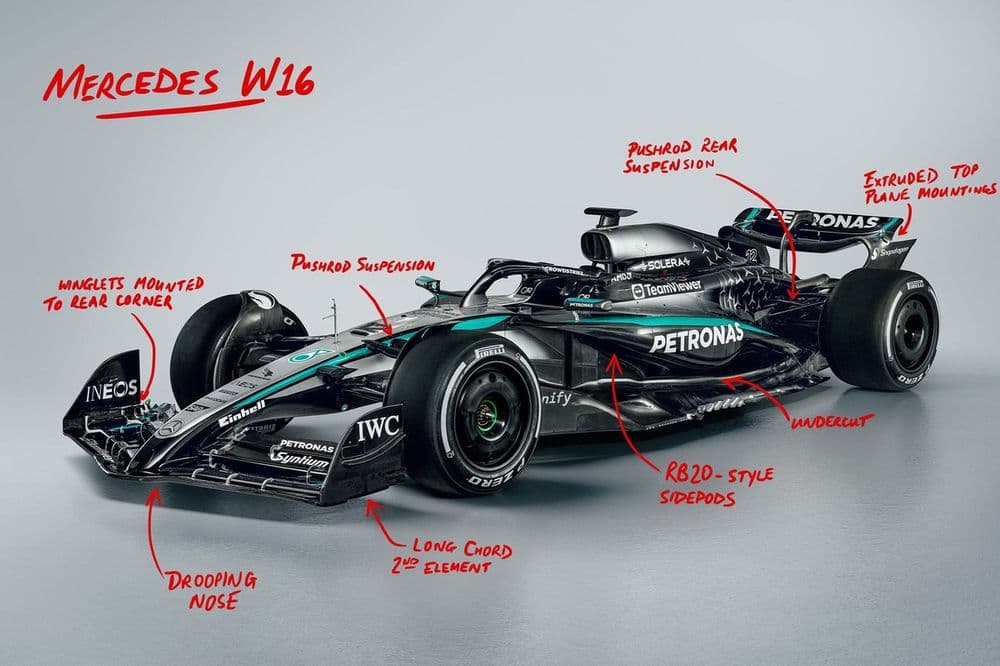
Mercedes had dominated the hybrid era by perfecting the "outwash" aerodynamic philosophy and maximizing the efficiency of their V6 Turbo power unit. When the rules changed to prioritize underbody downforce (ground effect), the team relied on their historical engineering prowess to find a "silver bullet" solution. This led to the birth of the "no-sidepod" (or "zeropod") concept—a radical design that aimed to maximize airflow to the rear of the car by shrinking the sidepod inlets to almost nothing.
Mistake one: the "no-sidepod" hubris and technical arrogance

The most glaring mistake of the Mercedes ground effect era was the decision to pursue, and then stubbornly defend, the no-sidepod design concept. When the W13 hit the track in early 2022, it was immediately clear that the car suffered from "porpoising"—a violent bouncing phenomenon caused by the aerodynamic floor stalling at high speeds.
While other teams, most notably Red Bull and Ferrari, opted for more conventional sidepod designs that provided a stable aerodynamic platform, Mercedes believed their simulations. Their data suggested that the no-sidepod design had a higher theoretical ceiling of performance. However, this performance was impossible to extract in the real world because the car was too sensitive to ride height changes.
The true mistake wasn't just the initial design; it was the organizational arrogance that followed. Despite a difficult 2022 season where they managed only one win (George Russell in Brazil), Mercedes doubled down on the concept for the 2023 W14. They believed that by fixing the mechanical issues, the aerodynamic potential of the "zeropod" would finally be unleashed. It was a catastrophic miscalculation. The 2023 season saw Mercedes fail to win a single race for the first time since 2011, proving that the concept was fundamentally flawed in the context of ground effect regulations.
Mistake two: misreading the ground effect transition

The second critical error was a fundamental misunderstanding of how ground effect aerodynamics differed from the previous era. In the 2014-2021 cycle, Mercedes excelled at managing "dirty air" and using complex bargeboards to direct flow. Ground effect, however, required a much more holistic approach to the car's floor and its interaction with the track surface.
Mercedes' technical leadership failed to recognize that the new regulations demanded a "stable" platform over a "peak" performance platform. Red Bull’s Adrian Newey understood that a car that produced 90% of its maximum downforce consistently was better than a car that produced 100% but only in a narrow window. Mercedes spent two years chasing that 100% peak, only to find that the car became undriveable for Lewis Hamilton and George Russell whenever the wind changed or the track surface became bumpy.
This misreading of the regulations meant that while Red Bull was refining a proven concept, Mercedes was constantly "firefighting," trying to understand why their wind tunnel data didn't match the track. By the time they finally abandoned the no-sidepod concept in mid-2023, they were already two years behind the development curve.
Mistake three: the illusory breakthroughs of 2024

By the summer of 2024, it appeared that Mercedes had finally turned a corner. A series of upgrades, including a new front wing introduced in Monaco and Canada, seemed to have solved the car's balance issues. Between the Austrian Grand Prix and the Belgian Grand Prix, Mercedes won three out of four races. George Russell triumphed in Spielberg, Lewis Hamilton took an emotional victory at Silverstone, and Russell (initially) led a 1-2 finish at Spa-Francorchamps.
However, these victories proved to be a "false dawn." As the season progressed into the autumn of 2024, the team's performance plummeted. The wins in early summer were aided by specific track characteristics—fast, flowing corners where the W15's front-end grip could shine—and external factors like the collision between Max Verstappen and Lando Norris in Austria.
The mistake here was a lack of critical self-analysis. The team's leadership, desperate for a return to the top, interpreted these wins as proof that the fundamental design was now correct. In reality, the car remained "on a knife-edge." When the circus moved to high-downforce, low-speed tracks like Zandvoort, Monza, and Baku, the Mercedes package was exposed once again. They had mistaken a temporary surge in form for a permanent solution to their aerodynamic woes.
Mistake four: aerodynamic balance and the race-pace paradox
The final technical nail in the coffin during this era was the inability to translate single-lap qualifying pace into consistent race pace. Throughout 2024 and 2025, the Mercedes often looked like a contender on Saturdays, only to fade away on Sundays.
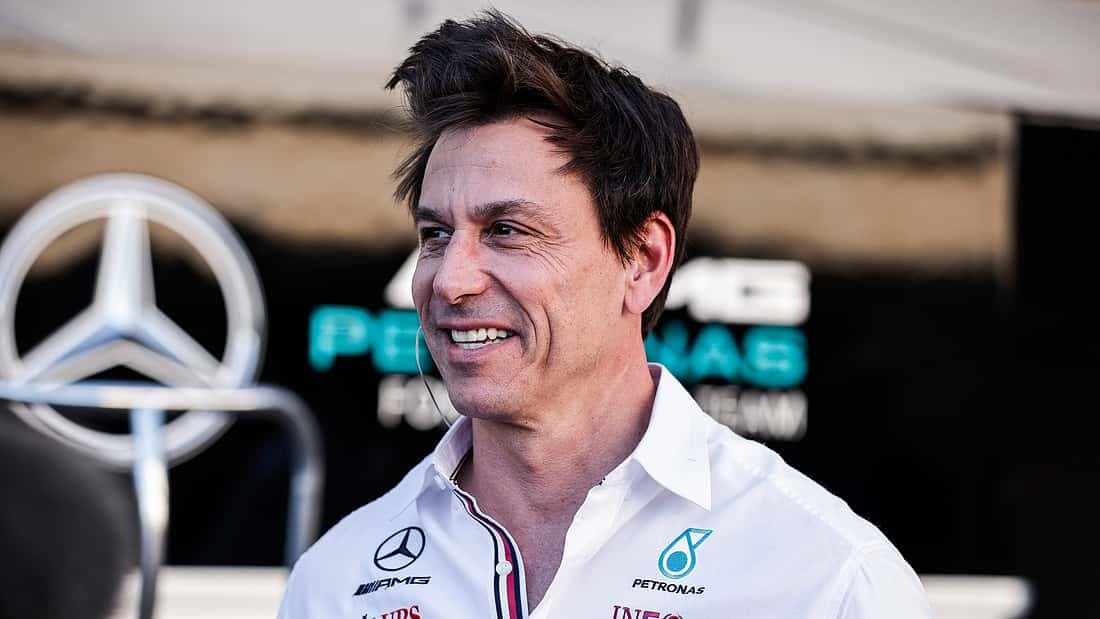
This was the "Race-Pace Paradox." To make the car fast for one lap, the engineers had to set it up in a way that was incredibly harsh on the tires. As Toto Wolff noted during the 2024 season, the car lacked the "aerodynamic balance" needed to protect the rear tires over a long stint. At tracks like Monza, the car would qualify in the top three but finish nearly half a minute behind the leaders because the drivers had to "nurse" the car through every corner to prevent the tires from overheating.
This issue was a direct legacy of the earlier mistakes. Because the team had spent so long trying to fix the fundamental "bouncing" and "instability" of the car, they had neglected the finer details of tire management and thermal degradation that Red Bull and McLaren had mastered.
Organizational culture: the failure to pivot
Beyond the technical errors, there was an organizational failure. The Mercedes of 2014-2021 was a "no-blame culture" powerhouse, but that culture was built on the foundation of having the best car. When faced with adversity, the team struggled to pivot with the speed required in the modern F1 cost-cap era.
The decision-making process appeared sluggish compared to the agile responses of McLaren, who transformed from backmarkers to race winners in a single season (2023-2024). Mercedes' reliance on their internal simulation tools—which had served them so well for a decade—became a liability when those tools failed to accurately predict the behavior of ground effect cars.
Looking ahead: the 2026 redemption arc

As we enter 2026, the slate is wiped clean. The new regulations represent the biggest change in F1 history, with a 50/50 split between internal combustion and electric power, and active aerodynamics. For Mercedes, this is more than just a new season; it is a chance to erase the memory of four years of failure.
The team has undergone significant restructuring. They have finally accepted that the "old way" of doing things—the way that won eight titles—is no longer sufficient in an era of restricted wind tunnel time and budget caps. The lessons of the ground effect era are painful:
- Humility over Hubris: No design concept is too sacred to be scrapped.
- Stability over Peak: A driveable car is faster than a theoretically "perfect" one.
- Correlation is King: If the track doesn't match the wind tunnel, trust the track.
- Adaptability: In a cost-cap world, the first team to identify a mistake and pivot wins.
Mercedes enters 2026 as an underdog—a strange position for the Brackley squad. But if they have truly internalized the mistakes of the last four years, the Silver Arrows may yet fly at the front of the grid once again. The "four years of failure" could either be the end of a dynasty or the difficult middle chapter of an even greater story. Only the stopwatch will tell.

Simone Scanu
He’s a software engineer with a deep passion for Formula 1 and motorsport. He co-founded Formula Live Pulse to make live telemetry and race insights accessible, visual, and easy to follow.