
Red Bull's civil war ends in ash: Horner's French revolution begins

If you listened closely to the wind howling through the Yas Marina paddock last Sunday, you wouldn't just hear the engines cooling after the 2025 season finale. You would hear the death rattle of a dynasty.
For two decades, Red Bull Racing was the sharpest weapon in Formula 1---a ruthless, unified warmachine built on the holy trinity of Christian Horner, Helmut Marko, and Adrian Newey. Today, that trinity is not just broken; it has been atomized. Newey is wearing Aston Martin green. Christian Horner was exiled in July. And now, in a final twist of the knife, Helmut Marko has departed, torching the earth behind him with accusations that have left the paddock reeling.
Max Verstappen lost the 2025 World Championship to Lando Norris by a mere two points. But make no mistake: Red Bull didn't lose this title on the track. They lost it in the boardroom, in the lawyers' offices, and in the bitter, ego-fueled civil war that has finally consumed them.
And from the ashes, a new and terrifying narrative is emerging. Christian Horner isn't just licking his wounds. If the whispers from De Telegraaf are true, he is preparing to buy his way back into the sport, armed with a fortune, a grudge, and an alliance with the most controversial figure in F1 history.
The July purge: how the king fell
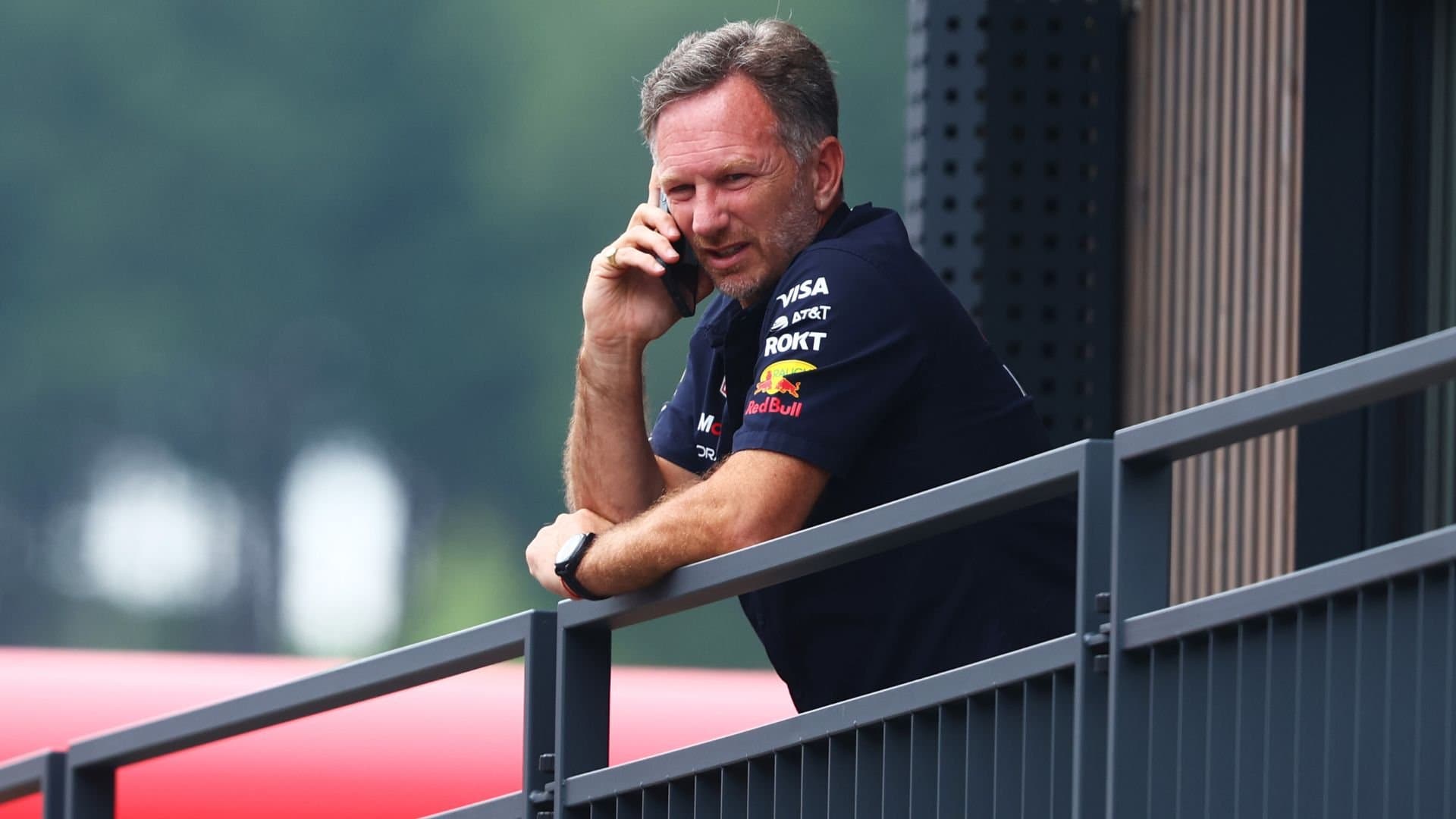
To understand the chaos of December, we must rewind to the sweltering heat of July 2025. The official press release stated that Christian Horner and Red Bull GmbH had "parted ways by mutual consent." In F1speak, "mutual consent" is usually code for an execution.
The power struggle had been simmering since the death of Dietrich Mateschitz in 2022. The vacuum left by the Austrian patriarch created a rift between the Thai majority owners (the Yoovidhya family), who had long protected Horner, and the Austrian corporate faction led by Oliver Mintzlaff. For years, Horner survived scandal and internal pressure because he delivered championships. But when the RB21 started to falter mid-season and McLaren's MCL39 began eating into their lead, the protection vanished.
Horner's exit wasn't a quiet resignation; it was a purge. He was placed on "gardening leave" until April 2026---a standard procedure designed to keep a rival's secrets off the market. But Horner, ever the operator, didn't sit idle. By September, reports confirmed a settlement in the region of $100 million was agreed upon to terminate his contract early.
Red Bull paid a king's ransom to make him go away. In doing so, they may have inadvertently bankrolled his return. That $100 million war chest is now the seed capital for what could be the most audacious takeover bid in recent history.

Marko's last stand: "he lied about everything"
If Horner's exit was a strategic strike, Helmut Marko's departure this week was a grenade thrown in a crowded room.
The 82-year-old Austrian advisor has been the shadow king of Red Bull since day one. He survived the initial purge, but the post-Abu Dhabi fallout proved too toxic. Days after watching his protégé, Max Verstappen, lose the title by the slimmest of margins (423 to 421 points), Marko walked away. But he didn't go quietly.
In a scorching interview with De Telegraaf, Marko ripped the veneer of civility off the Red Bull operation. His target? Christian Horner.
"We were increasingly able to prove that Horner was lying about everything under the sun," Marko told the Dutch publication. "Once Chalerm [Yoovidhya] realized this, he came to his senses."
Marko went further, accusing Horner of fabricating stories to destabilize him---including the infamous rumors from 2024 that Red Bull's engine program was failing and that Ford was looking for an exit. "I never said that," Marko insisted. "But Horner wanted to use that to get me suspended."
This is not just dirty laundry; this is a forensic dismemberment of their working relationship. Marko's exit leaves Max Verstappen isolated. For years, Marko was Max's shield against the corporate machinery. With Newey gone, Horner fired, and now Marko retired, Verstappen is effectively alone at a team that looks nothing like the one he signed with.
Laurent Mekies, the current Team Principal, is a capable operator. But filling the void left by these titans while managing a disgruntled superstar driver may be an impossible task for 2026.
The Alpine gambit: why Enstone?
Nature abhors a vacuum, and Christian Horner abhors irrelevance. The most explosive rumor of the winter break is not about who will drive where, but who will own what.
Sources suggest Horner is in advanced talks to acquire the 24% stake in Alpine F1 Team currently held by Otro Capital. This consortium, which includes celebrities like Ryan Reynolds and Rory McIlroy, bought in when the team's valuation was peaking. Now, with Alpine finishing dead last in the 2025 Constructors' Championship, that asset is distressed.
Why would Horner, a man obsessed with winning, want to buy into the worst team on the grid?
1. The "Distressed Asset" Strategy: Horner knows the value of a team is not just its current points tally. Alpine is a factory team (for now) with world-class facilities at Enstone. Buying in when the stock is at rock bottom is classic business strategy. He isn't looking for a job; he's looking for equity. He wants to be a Toto Wolff, not just a team boss.
2. The Mercedes Masterstroke: Here lies the supreme irony. Red Bull spent years fighting Mercedes. Horner spent a decade exchanging barbs with Toto Wolff. Yet, Alpine has confirmed they will switch to Mercedes customer engines for the new 2026 regulations, shutting down their own Viry-Châtillon engine program. Horner knows exactly how good the Mercedes power unit is. If the 2026 Mercedes engine is the class of the field---as it was in 2014---buying into Alpine gives him a "turnkey" rocket ship. He doesn't need to build an engine; he just needs to fix the chassis and the culture.
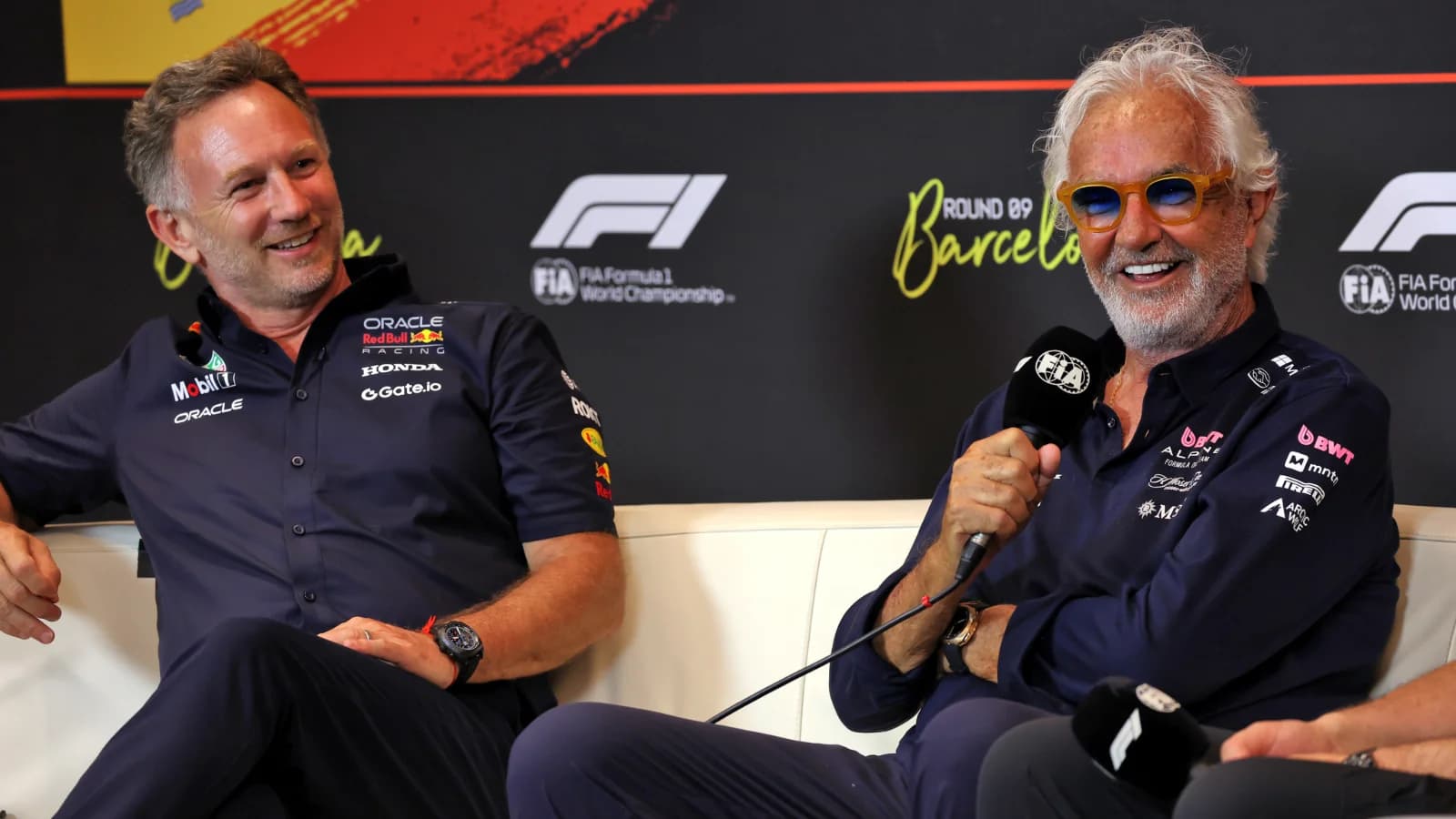
3. The Briatore Factor: This is the detail that sends shivers down the spine of the paddock. Flavio Briatore, the banned-then-unbanned flamboyant former boss of Renault, is currently the Executive Advisor at Alpine. He and Horner are close friends. They are the two most Machiavellian operators in the sport's history. A Horner-Briatore alliance would be a "Suicide Squad" of management---a chaotic, ruthless, politically savvy duo that would terrify the FIA and Liberty Media.

The 2026 landscape: a new order
As we look toward the new regulations, the board is being reset.
At Red Bull: The "Civil War" is over, but there are no winners. They have lost their visionary designer (Newey), their political heavyweight (Horner), and their driver whisperer (Marko). Laurent Mekies has to rebuild a team that has forgotten how to lose, right at the moment they need to learn how to fight again. The RB22 will be the first car of the post-Newey era. If it fails, the Verstappen exit clauses will almost certainly be triggered.
At Alpine: If the Horner buyout happens, the team transforms overnight from a laughing stock into a serious threat. Horner brings the one thing Alpine has lacked for a decade: uncompromising leadership. He knows how to build a winning culture. He knows how to massage the rules. And with Mercedes power in the back, he has a shortcut to performance.
The verdict
Formula 1 is a sport of cycles. The Red Bull cycle has been violently terminated. The team that crushed the opposition in 2023 and 2024 has cannibalized itself.
Lando Norris is the World Champion, a worthy winner who capitalized on the chaos. But the real story of 2025 isn't about the points; it's about the power.
Christian Horner was cast out of the kingdom he built. Now, he stands at the gates of Enstone, checkbook in hand, ready to build a new one. He has the money, he has the motive, and thanks to his old rival Toto Wolff, he might just have the engine.
The Red Bull dynasty is dead. Long live the Resistance?

Simone Scanu
He’s a software engineer with a deep passion for Formula 1 and motorsport. He co-founded Formula Live Pulse to make live telemetry and race insights accessible, visual, and easy to follow.