
Isack Hadjar leads secretive Barcelona shakedown as F1's 2026 era officially begins

The curtain has risen on Formula 1's transformative 2026 season, though not quite in the way fans and casual observers might have anticipated. Rather than the usual fanfare and live timing feeds that accompany pre-season testing, the sport's governing body orchestrated an unprecedented security operation at Barcelona's Circuit de Catalunya, effectively locking down the paddock and excluding media and spectators entirely from what should have been an open testing window.
The rationale behind this fortress mentality is straightforward: the 2026 regulations represent the most sweeping technical reset in recent memory. New power units—some manufacturer-developed, others bespoke creations like Red Bull's partnership with Ford—sit alongside dramatically revised aerodynamic packages. Teams require unobstructed time to understand their machinery, diagnose teething problems, and accumulate crucial mileage without the distraction of external scrutiny. Formula 1 has promised to share limited photos and videos, while teams retain permission for restricted pit lane and on-track filming, but the overall transparency has been deliberately minimized. Live timing information that briefly leaked during the opening hours was swiftly shut down by circuit officials, underscoring the sport's commitment to maintaining operational security.
Yet despite these precautions, day one of testing revealed clear early hierarchies—and some telling technical challenges—as seven teams emerged onto track to begin their 2026 odysseys.
A dominant display from Red Bull and Ford's new engine
.webp&w=3840&q=75)
Isack Hadjar's headline-making performance immediately justified the hype surrounding Red Bull's new bespoke power unit, developed in collaboration with Ford. The French driver, in his first outing with the Milton Keynes-based squad, set a fastest lap of 1:18.159 to establish himself over half a second clear of the field, despite operating in damp and cold conditions that characteristically suppress performance across the grid.
That Hadjar—rather than Max Verstappen—shouldered opening-day duties came as something of a surprise, though the decision made operational sense. Red Bull's installation run prioritized mileage accumulation and system verification over headline performances, positioning the team to maximize its three-day allocation at Barcelona before moving to the more extensive Bahrain tests scheduled for February. Hadjar's 107-lap contribution, combined with a notably aggressive setup on the soft compound tyre, signaled a team eager to establish technical baselines quickly.
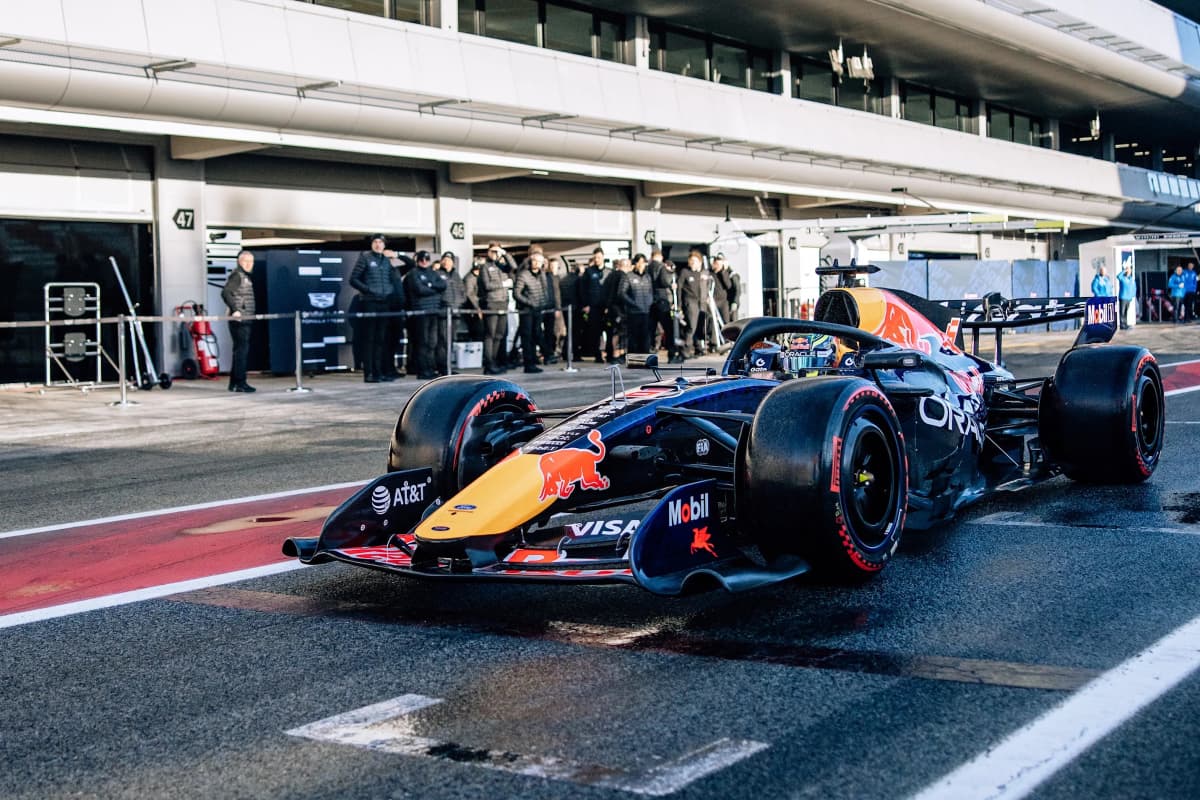
The broader significance of Red Bull's early advantage cannot be overstated. This is the first occasion in the team's modern history that it has designed and built its own power unit from the ground up. Previous partnerships—whether with Renault, TAG Heuer-Renault, or Honda—had involved external manufacturers, making 2026 a watershed moment for technical autonomy. Pirelli's tyre allocation data, which showed Red Bull overwhelmingly favoring the C3 soft compound for testing, further suggested a team prioritizing soft-tyre baseline runs rather than simulating varied race-pace scenarios.
Mercedes' W17 impresses despite sharing duties
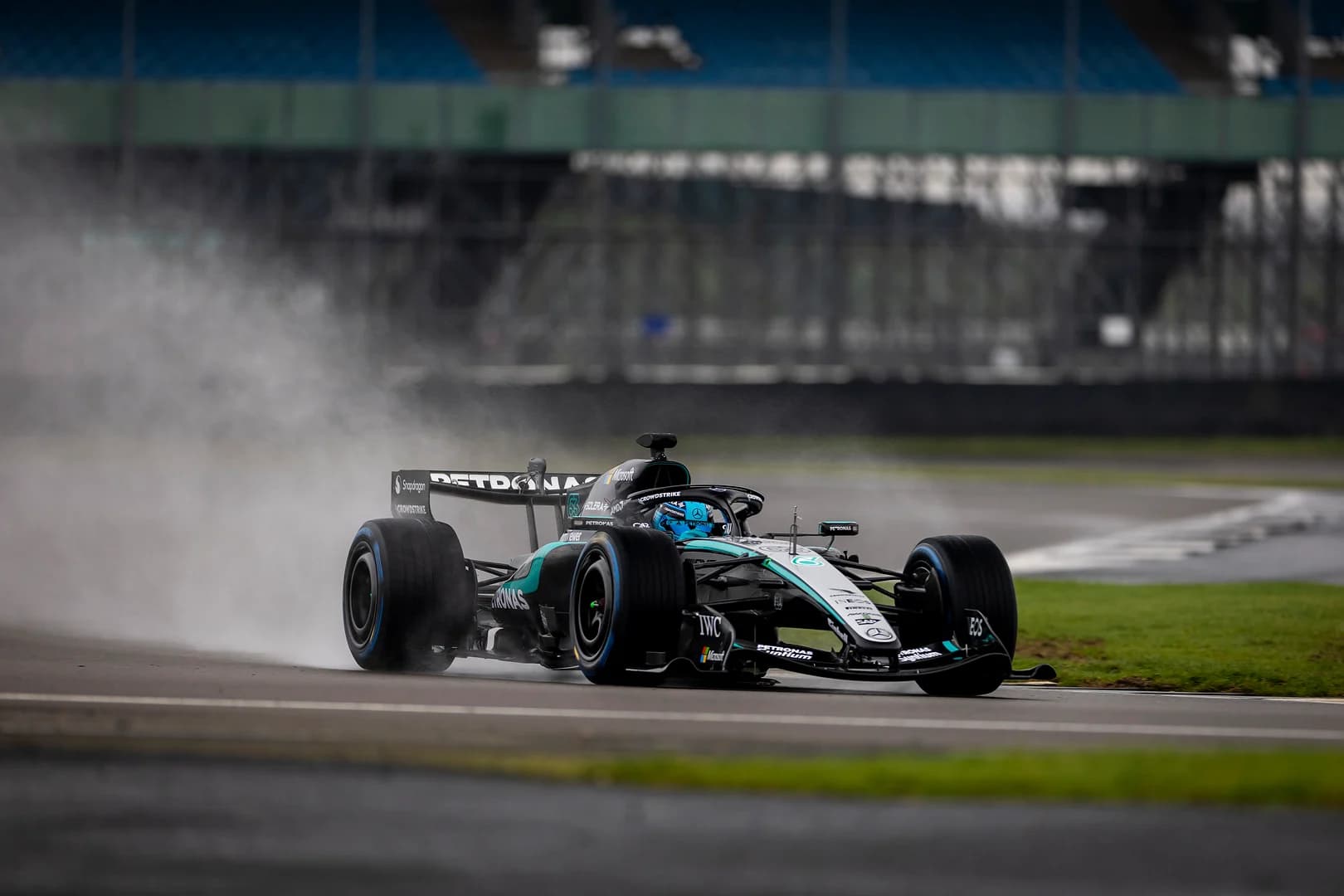
While Red Bull captured the day's fastest times, Mercedes emerged as the session's most consistent and methodical operator, with George Russell ultimately claiming second place, just 0.537 seconds adrift of Hadjar's benchmark. The Brackley team's approach demonstrated studied professionalism: Kimi Antonelli handled morning duties, presenting a genuine competitive threat throughout the early hours before Russell assumed the wheel in the afternoon.
The W17's composure proved noteworthy. Mercedes has a storied pedigree under complex power-unit-driven regulation cycles, having dominated the V6 hybrid era following its 2014 introduction. The paddock's pre-test consensus positioned the Mercedes as favourite under 2026's revamped engine landscape, and early running did nothing to diminish that perception. Sources confirmed Mercedes' immediate competitiveness, with observers present trackside noting the W17's impressive visual presentation and technical cohesion.
That Russell's afternoon effort proved marginally quicker than Antonelli's morning session speaks to the inherent difficulty in extracting meaningful performance data from day-one running. Track evolution, driver familiarity, brake temperatures, and fuel loads all conspire to render outright lap-time comparisons preliminary at best. Nevertheless, Mercedes' combined lapcount through its two drivers—93 laps by day's end—demonstrated operational proficiency and system reliability, crucial foundational markers for a new technical paradigm.
Alpine's Colapinto completes the top three; first red flags emerge

Franco Colapinto's third-place finish for Alpine (1:21.189, or +2.030s) provided early encouragement for the Enstone squad, though the Argentine driver's day proved interrupted by technical complications. Alpine triggered the day's first red flag when issues forced Colapinto to stop on track, briefly halting the session and prompting technical analysis among circuit officials.
Still, Colapinto's overall contribution—60 laps and a competitive time that exceeded expectations for a team transitioning to a new Mercedes power unit—suggested Alpine possessed sufficient preparatory depth. The team faces a challenging 2026 landscape, particularly given the arrival of new manufacturer partners and regulatory complexity, but early lap-count accumulation indicated reasonable system stability.
Audi's technical challenge and Cadillac's struggled opening
.webp&w=3840&q=75)
The day's most troubling developments surrounded the sport's two newest power-unit protagonists. Audi, having completed its takeover of Sauber and undertaking the ambitious dual challenge of integrating new ownership structures while developing a bespoke power unit, encountered early technical difficulties when Gabriel Bortoleto's car required shutdown on track. Jonathan Wheatley, the squad's team principal, later explained the decision to methodically analyze the problem rather than resume running: "We spotted it, decided to switch the car off on track. We've got plenty of testing this year and we wanted to really understand the problem, so we've been carefully analysing that."
That measured approach, while sensible long-term, left Audi with merely 27 laps—considerably below peer teams' outputs and raising questions about the team's readiness for the season's opening rounds. Gabriel Bortoleto's 1:25.296 placed the Audi ninth on the day's leaderboard, over seven seconds adrift of Hadjar's benchmark.
Cadillac's inaugural Formula 1 day proved even more problematic. The American team's entry into the sport—competing as the grid's 11th franchise—arrived with considerable fanfare and ambition, but day-one execution fell short of expectations. Valtteri Bottas logged 33 laps in an all-black testing livery, establishing a 1:24.651 effort, but Sergio Perez managed only 11 laps before technical issues curtailed his running. Bottas later acknowledged the team's developmental challenges: "Priority list now is get more laps each day, think I got a bit more than 30 laps today, some of them just installs and stuff, but we need to get some proper running in, get the mileage in, and make sure we get a reliable package for race one."
Haas' Ocon leads the lap-count wars
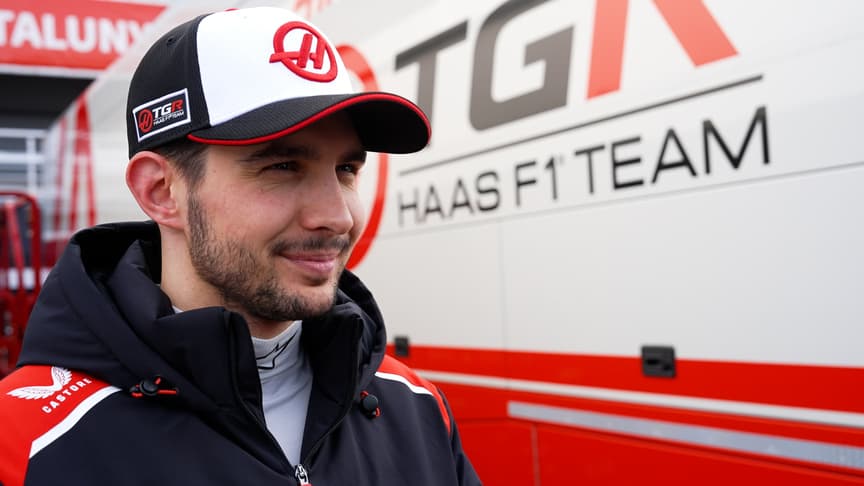
Esteban Ocon's 154 laps in the Haas emerged as the day's most prolific mileage achievement, surpassing all competitors despite finishing fifth on the timing sheets with a 1:24.520 effort. This performance-versus-mileage disconnect underscores the reality of early-season testing: raw lap count frequently contradicts competitive positioning, particularly when teams prioritize system validation and low-fuel simulations over representative-load qualifying runs.
Haas mirrored its approach from last year's opening Bahrain test, when the team similarly accumulated the highest mileage tally with 160 laps. For comparison, Barcelona's circuit is notably shorter than Bahrain's layout, making Ocon's 154-lap tally a respectable if slightly conservative achievement. The team's methodical approach—grinding out installation runs, systems checks, and brake-balance optimizations—suggested preparation and structure rather than performance dominance.
The lap-count disparity and notable absences
Beyond competitive hierarchies and technical failures, day one's standout statistical reality involved the dramatic disparity in accumulated mileage across the grid. Ocon's 154 laps dwarfed Bortoleto's 27, reflecting both the maturity disparity between established teams and newcomers and the directness of technical problems encountered by Audi and Cadillac.
Three major franchises remained conspicuously absent. Ferrari and McLaren, both confirmed to begin their testing programmes on day two, chose to sit out Monday's running, preserving their three allocated test days for later in the week. Williams, conversely, has withdrawn entirely from the Barcelona test, raising questions about the squad's preparatory timeline and 2026 readiness. Aston Martin also faces an abbreviated testing schedule, reportedly planning to begin running only on Thursday and Friday—forfeiting one of the three allocated days and further clouding the team's developmental status heading into the campaign.
These absences, whether strategic or circumstantial, have created a peculiar competitive landscape: the day's fastest times emanate from teams running in early calendar weeks, meaning lap-time credentials remain substantially untested against the full grid's machinery.
Looking forward

The 2026 season's opening salvo at Barcelona has provided early directional indicators while preserving the vast majority of genuine competitive intelligence behind locked gates and security cordons. Red Bull's early pace and Mercedes' demonstrated consistency suggest the pre-test conventional wisdom—that Mercedes would dominate under the new power-unit paradigm while Red Bull faced an uncertain transition to its Ford partnership—requires substantial recalibration.
Two additional three-day tests in Bahrain scheduled for February will provide considerably more comprehensive data, particularly once Ferrari, McLaren, and the full grid experience unified exposure and performance benchmarking. Until then, the Barcelona day-one leaderboard serves as preliminary reference point rather than predictive roadmap—a point emphasized by the cold, damp conditions that depressed absolute performance and the absence of representative race-simulation running.
The 2026 Formula 1 season has officially begun, shrouded in secrecy and pregnant with technical intrigue. What emerges from the Bahrain tests may prove substantially different from these early Barcelona impressions—as has historically been the case. For now, Hadjar's headline and Red Bull's early advantage provide the sport's opening chapter in what promises to be a transformative campaign.

Simone Scanu
He’s a software engineer with a deep passion for Formula 1 and motorsport. He co-founded Formula Live Pulse to make live telemetry and race insights accessible, visual, and easy to follow.