
Verstappen's verdict: why Max opposed Red Bull's ruthless Lawson demotion

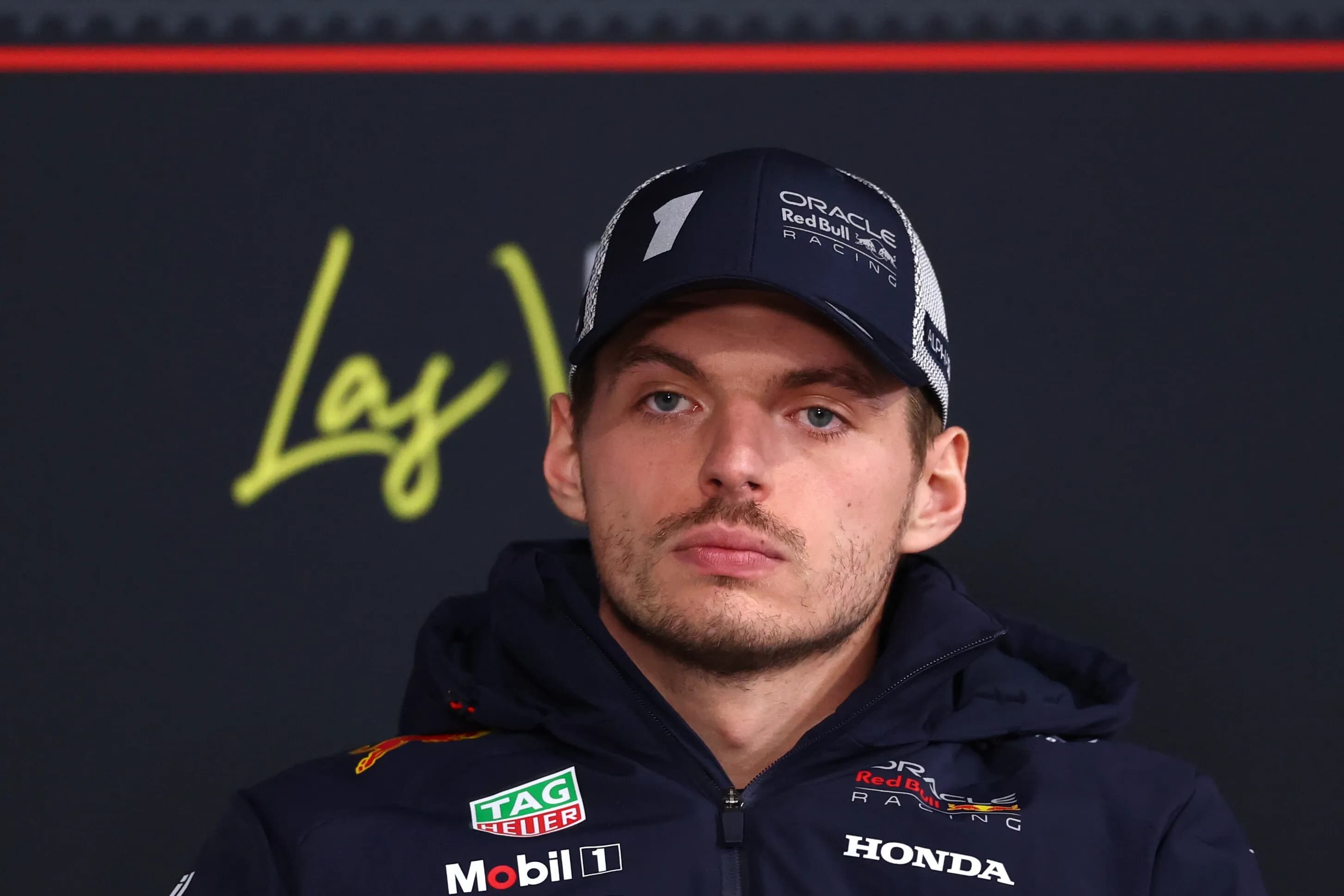
The 2025 Formula 1 season will be remembered for many things, but one of its most controversial decisions came from within Red Bull Racing itself. When the team made the shocking call to demote Liam Lawson just two rounds into the campaign—replacing him with Yuki Tsunoda in the senior seat—it sparked considerable debate within the paddock. Yet perhaps no one's criticism carried more weight than that of Max Verstappen himself. The three-time World Champion, Red Bull's de facto leader on track, reportedly opposed the decision from the outset, believing that Lawson deserved substantially more time to prove his worth alongside Formula 1's elite.
Verstappen's stance represented a rare moment of public discord within the Red Bull ranks, and it underscored a fundamental tension in modern Formula 1: the pressure to deliver immediate results versus the necessity of granting young drivers adequate adaptation time. For Lawson, the consequences were profound—a humbling demotion that tested not just his technical abilities, but his mental fortitude as a racing driver.

The promotion that promised so much
When Red Bull announced Lawson's elevation to the senior team for the 2025 season, it marked a significant endorsement of the 23-year-old New Zealander's potential. The team had invested heavily in Lawson's junior career, bringing him into their driver academy at just seventeen years old, and had watched his development through the ranks with considerable interest. His promotion represented a clear vote of confidence, a signal that Red Bull believed he possessed the raw talent to compete at the highest level.
The decision to promote Lawson over the more experienced Yuki Tsunoda was itself a statement of intent. Tsunoda, entering his fifth year in Formula 1, had delivered solid mid-field performances but had never quite managed to break through to the elite tier of drivers. Red Bull's gamble was that Lawson's youthful exuberance, combined with his potential, offered a better prospect for the future than the more measured approach of the Japanese driver.
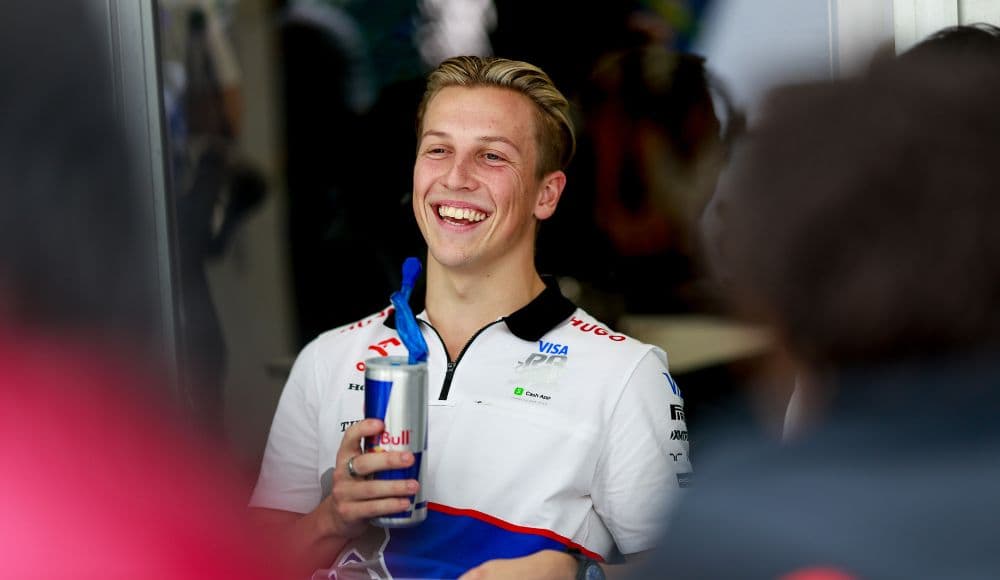
Sergio Pérez's departure left a vacancy alongside Verstappen—a seat notorious for being difficult to fill effectively. The team believed Lawson possessed the attributes necessary to rise to the challenge. It was an ambitious decision, perhaps overly so, given the immense pressure that comes with being the teammate to arguably the greatest driver of his generation.
The Australian and Chinese disaster
The fantasy lasted barely 300 kilometers. At the Australian Grand Prix, Lawson qualified eighteenth, failing to make an impression on the opening weekend. When the circus moved to Shanghai for the Chinese Grand Prix, the situation deteriorated further, with the young driver qualifying twentieth in both sessions. These were not minor setbacks; they represented a catastrophic failure to adapt to the demands of driving an RB21 at the front of the grid.
The performances were alarmingly poor for a driver who had been presented as the future of the team. Lawson's inability to extract performance from the car—a vehicle that Verstappen was piloting to regular victories—raised immediate questions about whether he belonged in that seat at all. The contrast was stark and unforgiving. In the high-stakes environment of Milton Keynes, where the "What have you done for me lately?" culture is ingrained in the DNA, Lawson was suddenly on very thin ice.
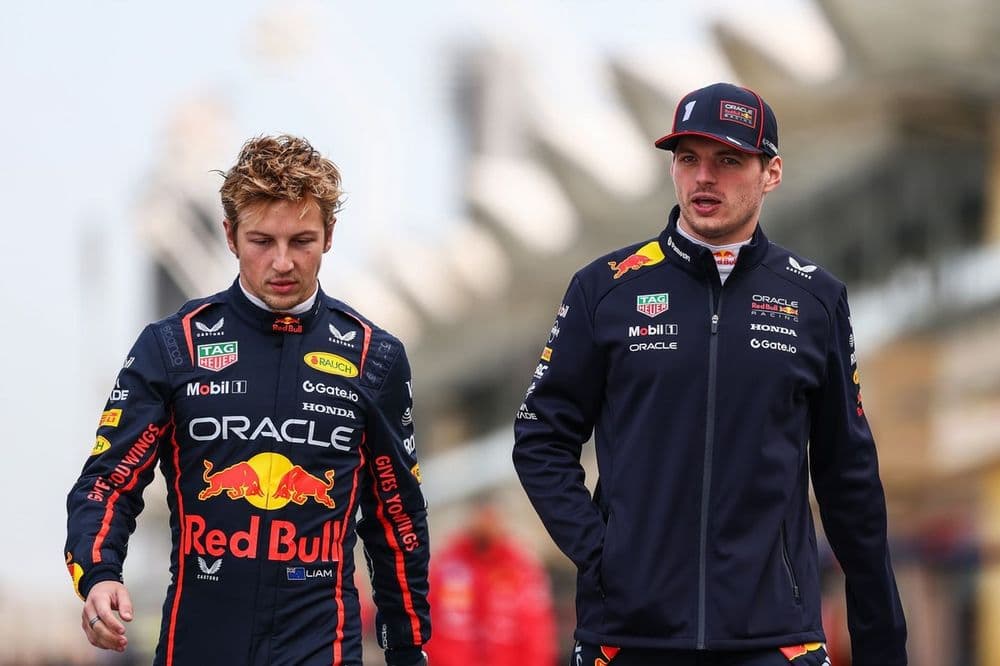
Within the Red Bull organization, the decision to demote Lawson had begun forming almost immediately after Shanghai. The team made a swift calculation: better to cut losses now and preserve what remained of Lawson's confidence than to allow the situation to deteriorate further. Racing Bulls, Red Bull's sister team, would take him back. Tsunoda would be reinstalled alongside Verstappen.
Verstappen's quiet protest
What followed was an intriguing dynamic that revealed the complexity of Verstappen's character and his understanding of the racing driver's journey. Rather than accept the decision in silence, the Dutchman voiced his reservations. While he had expressed doubts at the time of the demotion, Verstappen later doubled down on his criticism in an interview with broadcaster Viaplay, articulating concerns that extended beyond mere team politics.
Verstappen's perspective was grounded in a fundamental principle: you ruin someone's chances when you demote them so swiftly without allowing adequate adaptation time. The World Champion recognized something that perhaps others in the Red Bull hierarchy had overlooked—that a driver's confidence, particularly a young driver's confidence, is an extraordinarily fragile commodity. Once damaged by public humiliation, it requires considerably longer to rebuild than the initial trust required to construct it.
For Verstappen, Lawson's response to demotion became a testament to the mental resilience required not merely to survive in modern Formula 1, but to thrive after being publicly discarded by one of the sport's most powerful and successful organizations. The Dutchman understood that Lawson would carry the scars of this decision for the remainder of his career, whether that career ultimately proved successful or not.
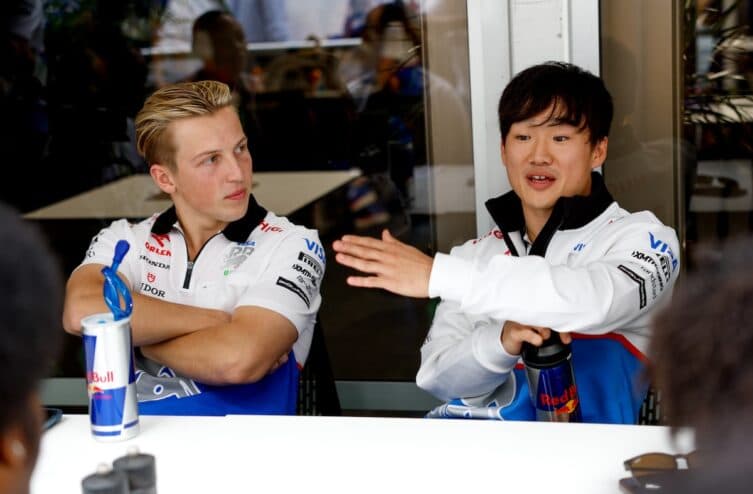
The broader context: Red Bull's second-seat curse
Verstappen's criticism existed within a larger context that made the Lawson situation even more pointed. Red Bull Racing had long struggled to fill the seat alongside their lead driver effectively. The team had cycled through numerous drivers in that position—Alex Albon, Pierre Gasly, Sergio Pérez—and while some had performed respectably, none had truly challenged Verstappen or consistently delivered the performances Red Bull expected.
The irony is that the team's impatience with Lawson was driven partly by their historical struggles to find a compatible second driver. They were desperate for stability, for a driver who could slot in and immediately contribute. When Lawson failed to do so, the trigger was pulled with stunning alacrity.
Yet here's where Verstappen's criticism gains additional force: Tsunoda himself struggled to solve the problem. The Japanese driver, despite his greater experience, scored just 30 points across the 2025 season, failing to dispel the notion of a "curse" attached to Verstappen's team-mate seat. If anything, Tsunoda's lackluster performance vindicated the notion that Lawson had not been given adequate time to adapt. It suggested that the problem might not lie solely with the driver, but with the unique challenges of the car's handling characteristics or the psychological weight of the environment.
Lawson's redemption arc
What happened next became one of the season's more compelling narratives. Sent back to Racing Bulls with his confidence shaken but not broken, Lawson began a gradual process of rediscovery. Racing Bulls CEO Peter Bayer acknowledged that Lawson had been left "sad" and "a bit puzzled" by the seat swap, emotions entirely understandable given the circumstances.
Yet over the subsequent races, Lawson's form improved markedly. By the Azerbaijan Grand Prix in autumn, his progress was undeniable. He posted his best qualifying performance to date—third on the grid on a damp Baku track—and then converted that into a fifth-place finish, demonstrating precision and pace under pressure. The transformation from the struggling driver of the opening rounds was striking.
From Japan through Canada, Lawson's one-lap deficit to rookie team-mate Isack Hadjar averaged 0.208 seconds. In the subsequent eight qualifying sessions, that margin had compressed to just 0.009 seconds, virtually eliminating what had previously been a clear performance gap. With the exception of his Dutch Grand Prix puncture following contact with Carlos Sainz, every time Lawson reached Q3, he converted it into a top-eight finish with what his team described as spotless drives.
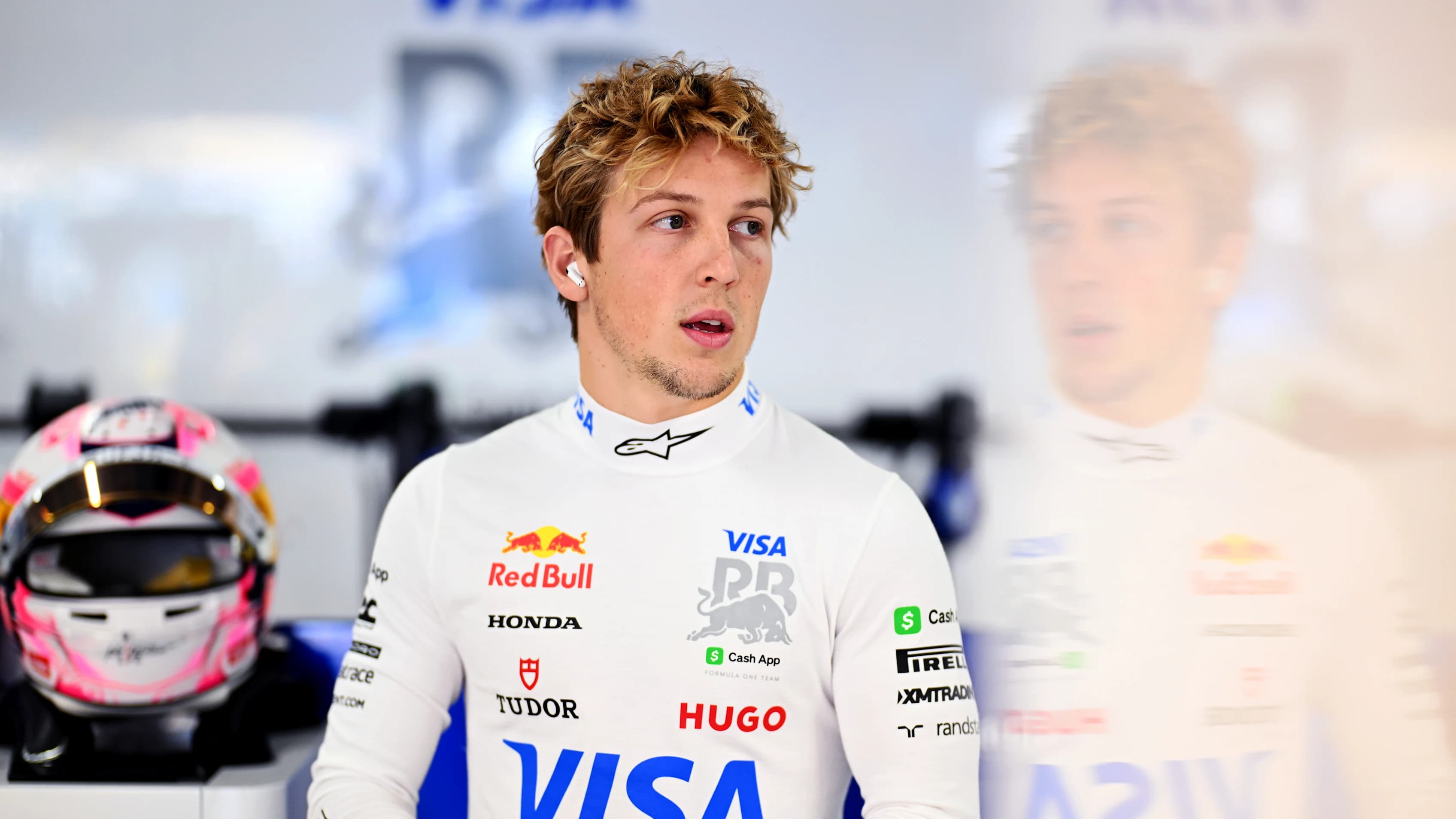
By season's end, Lawson had accumulated 26 points, making him Formula 1's eighth-best performer since the summer break—a remarkable turnaround. Only Alex Albon had scored more among midfield runners over that same period, with 28 points. His contribution to Racing Bulls was tangible; the Italian outfit jumped from eighth to sixth in the constructors' standings over the final three grands prix.
A driver transformed by adversity
Perhaps most significantly, Lawson's perspective on his career had matured considerably through this ordeal. When asked about his future at the Azerbaijan Grand Prix, he revealed a philosophical shift that suggested he had learned something valuable from the experience. He acknowledged that he had spent years—particularly since joining Red Bull as a junior at seventeen—fixated on a specific trajectory toward the senior team.
"Maybe… Not that I forgot why I do it, but that was so much of the goal," Lawson explained. "It's easier now to sit back and realise the goal has always been winning and getting to the top, and it doesn't need to be specific to where that is."
This represented a mature recognition that success in Formula 1 is not about which team you drive for, but what you accomplish and how you get there. The demotion, harsh as it was, had paradoxically liberated him from the narrow focus that had previously defined his ambitions. He was no longer desperate to prove himself to Red Bull specifically; he was focused on proving himself as a racing driver, period.
The validation of Verstappen's position
As the season progressed and Lawson's recovery became increasingly evident, Verstappen's early criticism took on a prophetic quality. The World Champion had recognized something that Red Bull's decision-makers had overlooked: that Lawson possessed the underlying talent and mental strength to overcome this setback. He had intuited that a few more races, a different technical environment, and some stability would reveal the driver who had earned his promotion in the first place.
Verstappen's willingness to publicly critique his own team demonstrated a confidence in his position within Red Bull but also a principled stance on how drivers should be treated. He understood the sport's pressures and demands, certainly, but he also recognized that there were limits to how quickly reasonable judgments could be rendered on a driver's suitability for Formula 1's premier seat.
The Dutchman's comments also served as a reminder of his own journey. While Verstappen was promoted early, he was given the space to make mistakes and grow. He saw in Lawson a peer who was being denied that same grace. By speaking out, Verstappen wasn't just defending a colleague; he was defending the integrity of the driver development process itself.
Looking forward: the Lawson question
As the 2025 season concluded, Lawson had made a compelling case for himself—not necessarily to Red Bull, but to the broader Formula 1 community. His prospects of a return to the senior team remain uncertain, with no current path back to the seat alongside Verstappen. Yet Lawson himself has articulated that this no longer represents his singular focus, a philosophical evolution that suggests he has emerged from this ordeal psychologically intact.
Red Bull's decision to demote Lawson so swiftly may ultimately prove hasty in the historical record of Formula 1. For a team that has prided itself on identifying and developing young talent, the episode represented a failure in patience and perhaps a misreading of what it takes to adapt to elite-level competition. Verstappen's criticism, measured and principled as it was, highlighted this shortcoming.
What remains undeniable is that Lawson's 2025 season—marked by promotion, humiliation, recovery, and personal growth—will shape his career trajectory for years to come. Whether he ultimately fulfills his considerable potential or remains a footnote in Formula 1 history may well depend on the degree to which he can build on the mental resilience that Verstappen recognized within him. In the end, the "ruined chance" Verstappen feared became a crucible that forged a more formidable driver.
Conclusion: a lesson in patience
The saga of Liam Lawson and Red Bull Racing serves as a cautionary tale for the modern era of Formula 1. In a sport where data is king and performance is measured in thousandths of a second, it is easy to forget the human element. Max Verstappen’s intervention was a timely reminder that even the most talented athletes require time, support, and a degree of patience to reach their peak.
As we look toward the 2026 regulations and the next generation of talent, the Lawson episode will likely be cited as a case study in how not to manage a rising star. For Lawson, the road back to the front of the grid may be long, but he has already proven the most important thing: he belongs in Formula 1. And for Verstappen, his willingness to stand up for a fellow driver only further solidifies his status as a leader within the sport, both on and off the track.

Simone Scanu
He’s a software engineer with a deep passion for Formula 1 and motorsport. He co-founded Formula Live Pulse to make live telemetry and race insights accessible, visual, and easy to follow.