
Williams' shock Barcelona absence: a stunning start to the 2026 F1 revolution

Williams has announced a shock withdrawal from the opening pre-season test of the 2026 Formula 1 season, as delays in the development of their FW48 chassis force the team to abandon the Barcelona shakedown scheduled for January 26-30. The decision represents a considerable blow to the Grove-based outfit's preparations as the sport enters its most ambitious technical revolution in years, with drivers Alex Albon and Carlos Sainz unable to participate in the opening test event.
The timing of this announcement could not be more precarious. Formula 1 is welcoming an entirely revamped technical regulations package featuring active aerodynamics and a near-50:50 split between combustion and electric power, representing one of the most significant regulatory shifts the sport has witnessed. All ten competing teams have publicly acknowledged the monumental challenge posed by these sweeping changes, yet Williams has found itself unable to meet the demanding development timeline required to debut their car at Barcelona.

The FW48 programme in distress
In an official statement, Williams confirmed the unfortunate reality: "Williams F1 Team has taken the decision not to participate in next week's shakedown test in Barcelona following delays in the FW48 programme as we continue to push for maximum car performance." The phrasing reveals the team's determination to prioritize quality over schedule—a strategy that prioritizes getting the car fundamentally correct rather than rushing an incomplete machine to circuit.
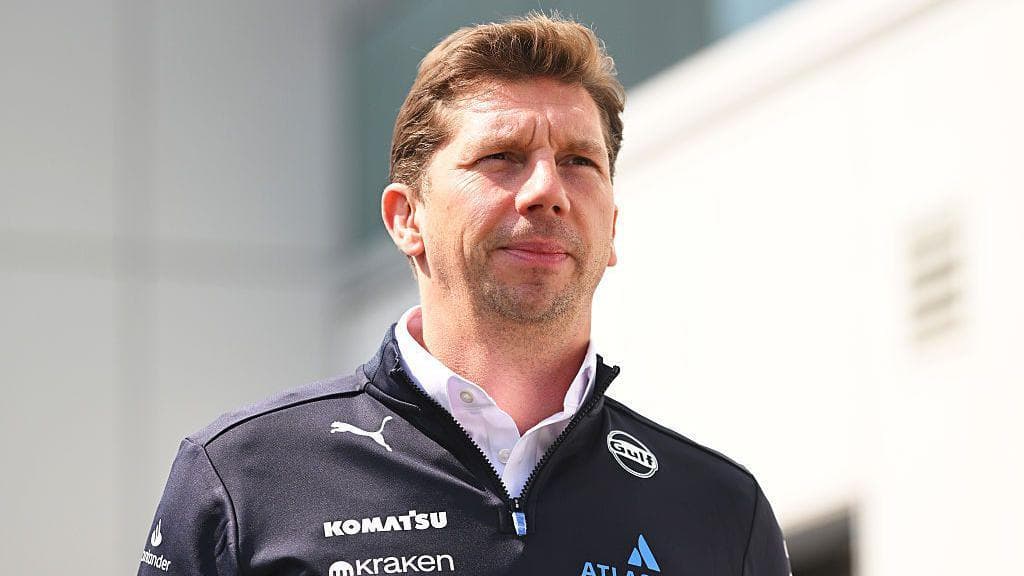
The Barcelona shakedown represents the first opportunity for all teams to debug their new challengers in a controlled, behind-closed-doors environment. Each outfit is typically allocated three days of running across the five-day event, making this preliminary test invaluable for identifying and resolving early technical issues before the official pre-season tests commence.
Alternative preparations and the Bahrain gambit
Rather than accepting complete defeat, Williams has devised an alternative strategy to bridge the preparation gap. The team will conduct extensive virtual testing using their Virtual Test Track (VTT) programme throughout next week, allowing engineers and drivers to simulate performance scenarios, tune suspension setups, and validate aerodynamic data without physical track time.
"The team will instead conduct a series of tests including a VTT programme next week with the 2026 car to prepare for the first official test in Bahrain and the first race of the season in Melbourne," the team stated. This measured approach acknowledges both the reality of their development delays and their commitment to arriving at the Bahrain test (February 11-13) with a substantially prepared car.
The timeline remains relatively forgiving. With the first official test in Bahrain beginning February 11-13, Williams theoretically retains adequate preparation time before the Australian Grand Prix season-opener on March 8. However, each day of missed track time in a regulation overhaul represents a genuine competitive disadvantage, particularly in the early-season development race.
A different crisis than 2019
This situation invokes unavoidable parallels with the 2019 pre-season, when Williams faced an entirely different catastrophe. Plagued by severe financial difficulties, the team missed its own planned shakedown and the opening two days of the collective Barcelona test, completing only limited running in subsequent sessions. That desperate scenario produced one of the most challenging seasons in modern Williams history.
However, the context today differs fundamentally. Williams is now well-funded by owner Dorilton Capital, having been rescued from financial ruin several years ago. The current delay stems not from resource scarcity but from the exceptional technical complexity of integrating entirely new power unit specifications, active aerodynamic systems, and hybrid architecture into a competitive chassis design. Moreover, the 2019 regulations remained largely stable, whereas 2026 represents a watershed moment for technical innovation across the grid.
The road ahead
Williams' decision demonstrates pragmatic leadership in acknowledging limitations rather than compounding problems through rushed development. The team finished an impressive fifth in the constructors' championship last year, with drivers Alex Albon and Carlos Sainz claiming eighth and ninth in the drivers' standings respectively, including two podium finishes for Sainz—their strongest season in over a decade.
That competitive trajectory makes losing development time particularly frustrating. Yet Williams has explicitly reaffirmed its commitment to the new era: "We are looking forward to getting on track in the coming weeks and want to thank all our fans for your continued support – there is a lot to look forward to together in 2026."
The next three weeks will prove decisive. If Williams successfully debuted a competitive FW48 in Bahrain and subsequently in Melbourne, this Barcelona absence may become merely a footnote in their 2026 narrative. If development delays persist into the official test programme, however, this decision could represent the opening chapter of a profoundly challenging season.

Simone Scanu
He’s a software engineer with a deep passion for Formula 1 and motorsport. He co-founded Formula Live Pulse to make live telemetry and race insights accessible, visual, and easy to follow.