
Vasseur defends Hamilton: why 'negative' 2025 interviews belied Ferrari's internal reality

The 2025 Formula 1 season will go down in the history books as one of the most scrutinized campaigns in the sport's modern era. It was the year the unthinkable became reality: Lewis Hamilton, the seven-time world champion, clad in the iconic scarlet of Ferrari. However, as the sun set on the season finale in Abu Dhabi, the narrative surrounding the most successful driver in history was not one of triumph, but of profound struggle.
Finishing a distant sixth in the Drivers' Championship, well behind his teammate Charles Leclerc and without a single podium to his name, Hamilton’s inaugural season with the Scuderia was statistically his worst ever. His post-race interviews became a recurring montage of frustration, self-criticism, and visible exhaustion. Yet, according to Ferrari Team Principal Fred Vasseur, the public image of a broken champion was a far cry from the man working behind the garage doors at Maranello.
The disconnect: public despair vs. internal resolve
In a candid end-of-season briefing, Fred Vasseur moved to protect his star signing from a mounting wave of media criticism. Vasseur acknowledged that Hamilton’s media appearances throughout 2025 were "decidedly negative," but he insisted these snapshots of raw emotion did not reflect the operational reality within the team.

"If you only watched the television interviews, you would think Lewis was ready to walk away from the sport," Vasseur remarked. "But inside the briefings, at the factory, and in the simulator, we saw a completely different person. He was far more upbeat, focused, and constructive than his public comments suggested. He was the first one in and the last one out, pushing the engineers to find solutions for a car that clearly wasn't giving him what he needed."
This disconnect highlights the immense psychological toll of the 2025 season. For a driver who spent over a decade at Mercedes—a team he helped build into a dominant force—the transition to Ferrari was always going to be a culture shock. When the SF-25 failed to deliver the consistent front-running pace required to challenge Red Bull and McLaren, the weight of expectation began to show.
The statistical nadir: a season without silverware
To understand why Hamilton’s public persona was so downbeat, one only needs to look at the scoreboard. For the first time in his nineteen-year career, Lewis Hamilton failed to record a single podium finish across an entire season. His previous "worst" seasons—2022 and 2023—still saw him fighting for the top three on multiple occasions. In 2025, however, the podium remained stubbornly out of reach.
The low point came during the Las Vegas Grand Prix, a race that Hamilton himself described as the "worst of his life." After qualifying at the back of the grid, he struggled to make any meaningful progress, eventually finishing outside the points. His post-race assessment was brutal: "I feel terrible. It’s been the worst season ever and no matter how much I try, it just keeps getting worse. I’m trying everything in and out of the car, but there is zero satisfaction."
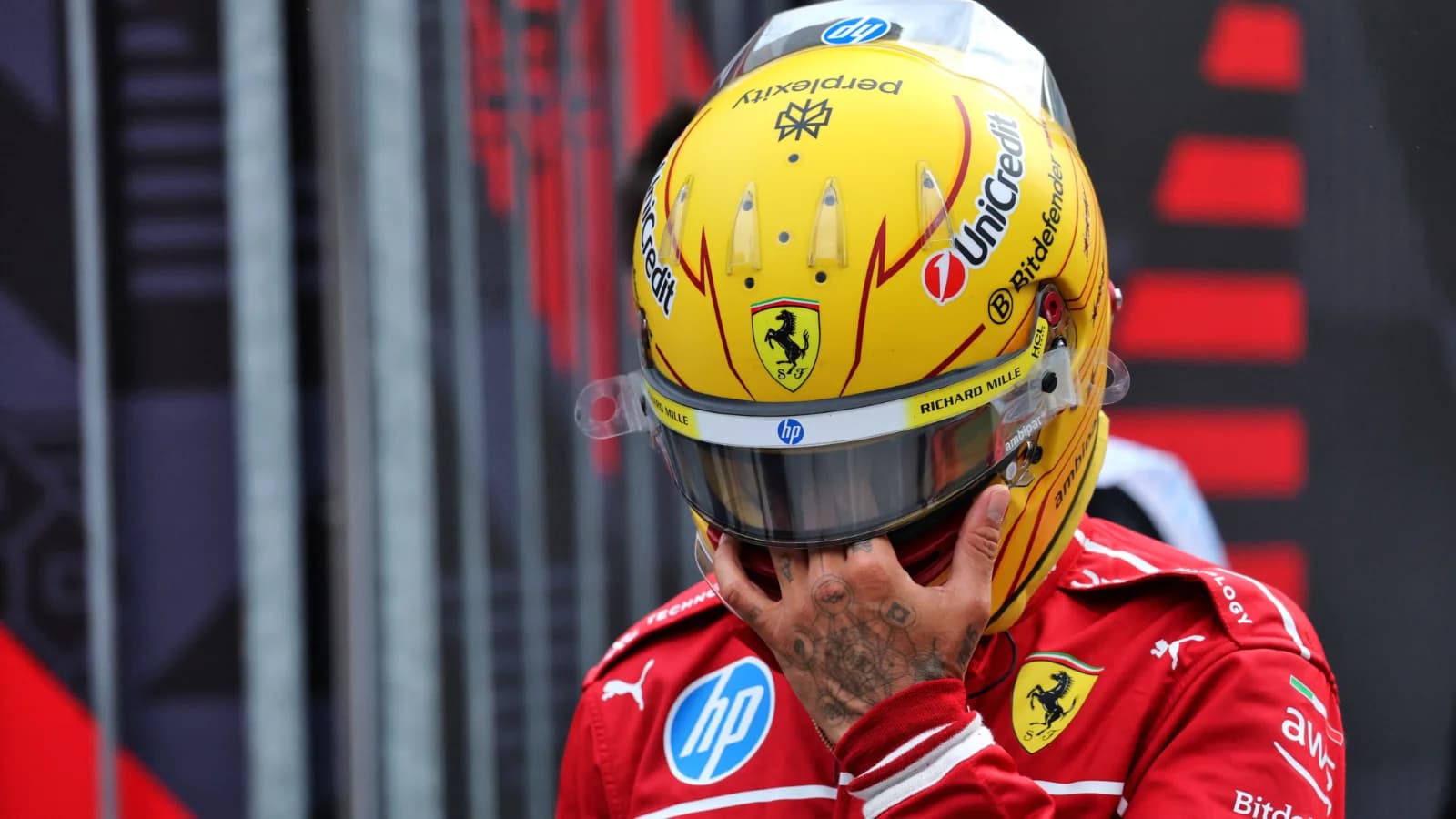
Vasseur, however, views these outbursts as the byproduct of a "winner's DNA." He argues that Hamilton’s public negativity is simply a reflection of his high standards. "Lewis doesn't come to Ferrari to finish sixth. When he doesn't win, he hurts. That pain is what the cameras see. But that same pain is what drives him to work until 2 AM with the data engineers to understand why the tires aren't switching on."
Technical gremlins: the SF-25 and the tire management crisis
A significant portion of Hamilton’s 2025 woes can be attributed to the technical characteristics of the Ferrari SF-25. While Charles Leclerc seemed able to "wrestle" the car into competitive lap times, Hamilton’s smoother, more precise driving style often left him at odds with the car’s unpredictable rear end and narrow operating window.
The tire management issues that plagued Hamilton in Las Vegas were a microcosm of his entire season. Analysis from the Vegas weekend showed that while Hamilton could maintain pace on the hard compound, the switch to the medium tires saw his performance fall off a cliff. The "undercut" strategy, which should have moved him up the order, failed spectacularly as the tires refused to generate heat.
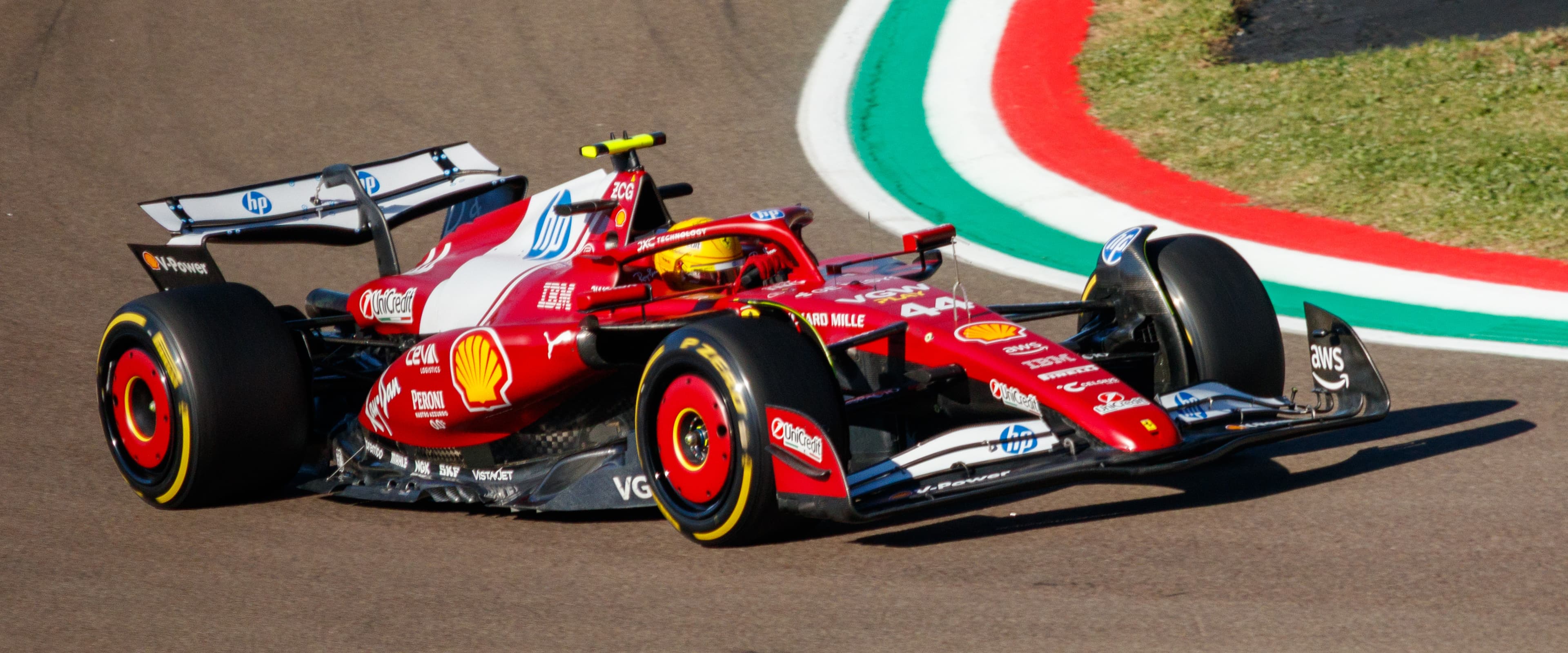
"We saw it time and again," noted technical analysts. "The Ferrari was a 'diva' in 2025, much like the Mercedes cars of 2017 or 2022. It had a very specific sweet spot, and Lewis, perhaps due to his lack of familiarity with the Ferrari philosophy, struggled to find it as consistently as Charles."
The Leclerc factor: a changing of the guard?
Perhaps the most difficult pill for Hamilton fans to swallow was the performance gap to Charles Leclerc. The Monégasque driver, who has become the heartbeat of Ferrari over the last half-decade, finished the season significantly ahead of Hamilton in the standings, securing multiple wins and pole positions.
When asked if he had any advice for his legendary teammate, Leclerc was uncharacteristically reserved. "I don't have advice for a seven-time world champion," Leclerc said. "Lewis knows what he is doing. The car was difficult this year, and sometimes it just clicks for one driver and not the other. We are working together to make sure 2026 is different."

Vasseur was quick to dismiss any talk of a "number one" and "number two" dynamic. He emphasized that Hamilton’s role in the team extends beyond the Sunday result. "Lewis brought a level of experience and a way of working that we haven't seen at Ferrari for a long time. Even in his 'negative' moments, he was teaching our young engineers how to think like champions. That value doesn't show up in the points table, but it is there."
The psychology of the transition
The move to Ferrari was never just about racing; it was about legacy. Hamilton’s decision to leave the "silver family" at Mercedes was a gamble of historic proportions. When that gamble didn't immediately pay dividends, the media narrative shifted toward "regret."
However, those close to the team suggest that Hamilton’s internal positivity stems from a long-term vision. He didn't join Ferrari for a quick fix in 2025; he joined to be part of the 2026 regulations reset. Vasseur’s defense of Hamilton suggests that the driver is fully bought into the project, even if the current results are agonizing.
"He is a perfectionist," Vasseur explained. "When he speaks to the media, he is speaking to himself as much as the fans. He is demanding more from himself. But don't mistake that for a lack of motivation. He is more motivated now than I have ever seen him."

Looking toward 2026: the path to redemption
As the F1 circus heads into the winter break, the pressure on Ferrari and Hamilton will only intensify. The 2026 season, with its radical new engine and aero regulations, represents the ultimate opportunity for redemption.
Vasseur’s public backing of Hamilton is a strategic move to settle the waters and ensure the team remains united. By clarifying that Hamilton’s internal demeanor is positive, Vasseur is sending a message to the Tifosi: the dream is not dead, it’s just in development.
For Hamilton, the challenge will be to align his public narrative with the internal reality Vasseur describes. If he can find a way to bridge the gap between his expectations and the car's capabilities, the 2026 season could provide the fairy-tale ending that 2025 so cruelly denied him.
In the high-stakes world of Formula 1, perception is often reality. But as Fred Vasseur has reminded us, sometimes the most important work happens where the cameras can't see—and for Lewis Hamilton and Ferrari, that work is only just beginning.

Simone Scanu
He’s a software engineer with a deep passion for Formula 1 and motorsport. He co-founded Formula Live Pulse to make live telemetry and race insights accessible, visual, and easy to follow.